
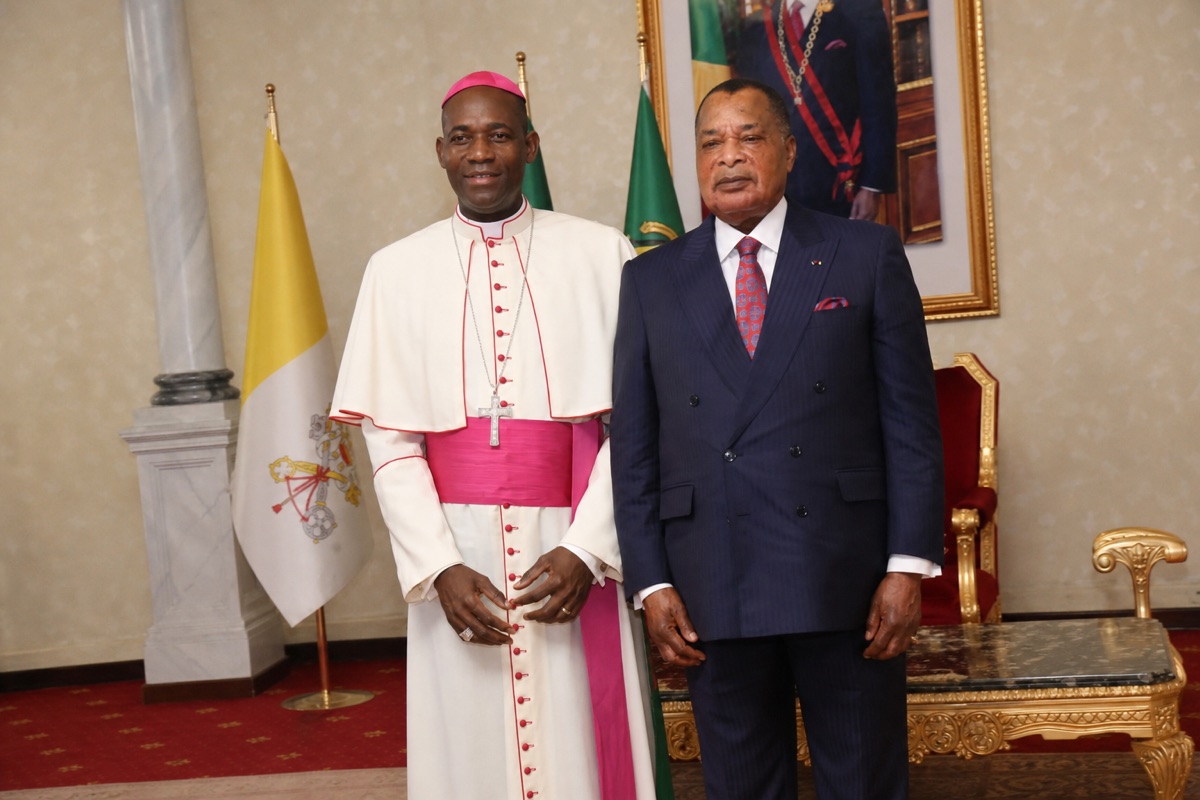
A fresh cohort of foreign envoys has been accredited to the Republic of Congo, a development that quietly recalibrates the diplomatic geometry around Brazzaville at a moment when the capital is unusually exposed to international scrutiny.
A Renewed Diplomatic Corps Takes Shape in Brazzaville
The accreditation of new foreign ambassadors marks more than a routine administrative passage. It signals the periodic renewal of the diplomatic corps stationed in Brazzaville, the channel through which the Republic of Congo conducts much of its day-to-day engagement with the wider world. Each newly accredited envoy assumes responsibility for representing his or her government, advancing bilateral files, and translating broad declarations of friendship into the practical work of commerce, cooperation and consular protection.
What gives this particular cycle of accreditations its weight is less the ceremony itself than the institutional logic it embodies. The arrival of new representatives implies the departure or rotation of others, and with each turnover comes the possibility of recalibrated priorities. Incoming ambassadors inherit dossiers shaped by their predecessors, yet they also bring fresh instructions, new sensitivities and, on occasion, a different reading of where the relationship between their capital and Brazzaville should head next.
Why the Timing in Congo-Brazzaville Matters
The renewal of the corps unfolds against a notable backdrop: the Republic of Congo is hosting the 61st Annual Meetings of the African Development Bank. That convergence is not incidental in its effect, even if it is coincidental in its timing. Major continental gatherings tend to concentrate attention, capital and decision-makers in a single place, and a capital that simultaneously welcomes new envoys and a flagship financial assembly finds itself, however briefly, at a busier intersection of African and global affairs.
For a country whose foreign policy has long emphasised its standing within Central Africa and the CEMAC space, such moments offer a stage. The presence of newly accredited ambassadors during a high-profile economic summit allows bilateral conversations to take place alongside multilateral ones, compressing into a short window exchanges that might otherwise stretch across months. It is the kind of setting in which first impressions are formed and early agendas are sketched.
The Quiet Mechanics of Accreditation
Accreditation is, by design, a measured and formal process. An ambassador-designate becomes fully empowered only once credentials are presented and accepted, a sequence that confers the legal standing required to act on behalf of a sending state. The formality matters: it is the threshold at which a diplomat passes from nominee to authorised interlocutor, able to engage Congolese institutions with the full backing of his or her government.
Beyond protocol, the exercise speaks to continuity. Diplomatic relations are sustained not by single gestures but by the steady presence of accredited representatives who maintain dialogue through calmer and tenser periods alike. By refreshing its roster of resident envoys, Brazzaville reaffirms that those channels remain open and staffed, a signal of normalcy that carries its own reassurance for partners watching from abroad.
What to Watch as New Envoys Settle In
The substantive consequences of this renewal will become legible only over time. The questions worth following are familiar to anyone tracking Central African diplomacy: which files the new ambassadors choose to prioritise, how quickly they build working relationships with Congolese counterparts, and whether their arrival heralds any shift in the texture of bilateral ties. None of that is determined by the act of accreditation itself; it is determined by the months of patient work that follow.
For now, the picture is one of orderly transition. New representatives have taken up their posts in a capital momentarily at the centre of continental economic conversation, and the diplomatic corps accredited to Brazzaville has been replenished. The Republic of Congo, in renewing this corps, keeps intact the human infrastructure on which its external relations depend, leaving the more consequential chapters to be written in the ordinary, unglamorous rhythm of diplomacy.
