
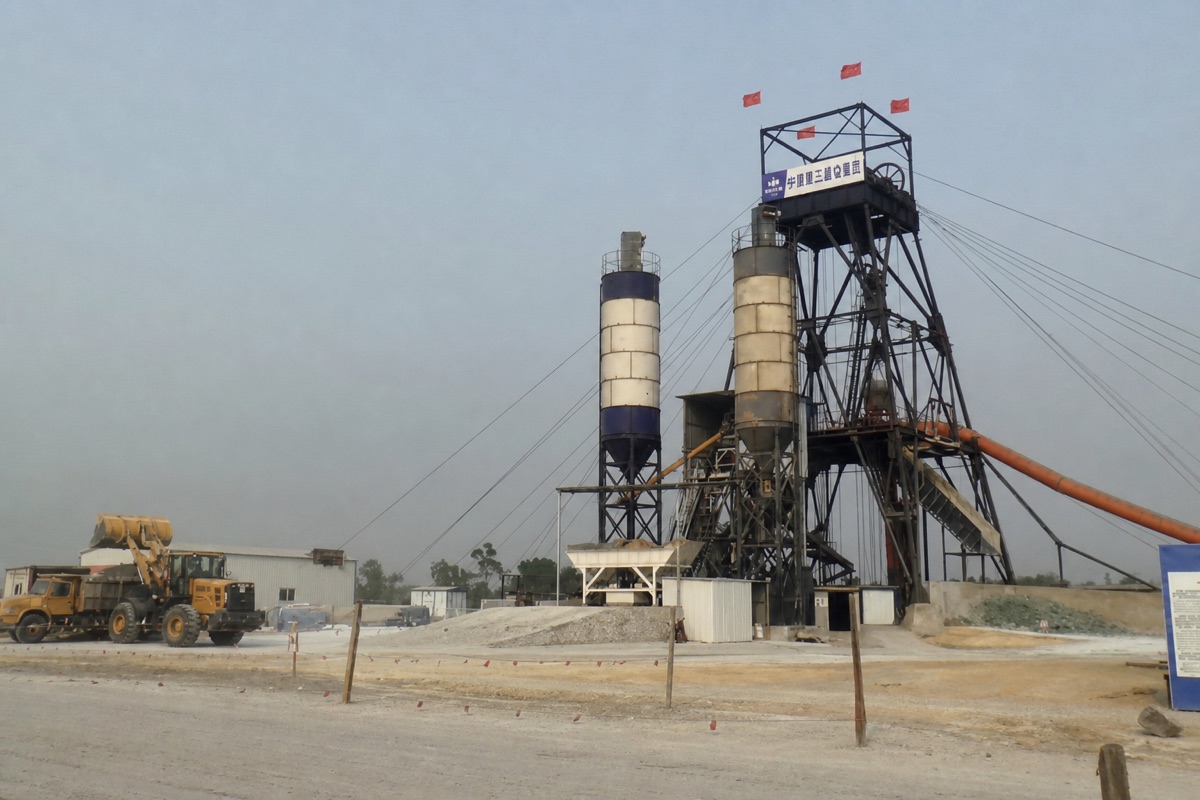
Congo-Brazzaville has cleared Dangote Fertilizer to mine the Mengo potash deposit, a $3 billion bet that anchors the Nigerian group deeper into Central Africa’s fertilizer value chain and signals renewed appetite for industrial capital.
A Cabinet Decree Reopens Mengo to Industrial Capital
The Council of Ministers has adopted a draft decree granting Dangote Fertilizer Limited Congo a permit to exploit the potash salt deposit at Mengo. The decision moves a long-dormant asset back into productive hands.
Mining and Geology Minister Urbain Fiacre Opo presented the file to ministers on Thursday, 18 June 2026. The award follows a permit application lodged on 2 April 2026, after the site reverted to the public domain.
That reversion stemmed from the previous title-holder’s failure to honour its commitments. The state recovered the concession, then reopened it to an operator with the balance sheet and industrial track record to develop it at scale.
Reserves, Phasing and a 25-Year Horizon
Data presented to the Council put Mengo’s proven reserves at roughly 325 million tonnes of potash salts. The deposit underpins a projected operating life of 25 years, giving the project a long runway for returns and tax receipts.
The development plan favours a measured ramp-up rather than an immediate peak. The first phase targets one million tonnes per year, a deliberately conservative entry point that limits early execution risk.
Output then climbs to two million tonnes in phase two and three million tonnes in phase three. This staged trajectory mirrors how disciplined mining operators sequence capital, aligning production with market absorption and infrastructure readiness.
From Extraction to a Domestic Fertilizer Platform
Dangote’s ambition extends beyond raw extraction. The group intends to build an NPK fertilizer plant in Congo, converting locally mined potash into finished inputs rather than exporting unprocessed ore.
That downstream pivot matters for policymakers chasing value addition. Domestic processing captures margin onshore, builds technical capacity and reduces reliance on imported fertilizer, a recurring vulnerability across the region’s agricultural supply.
Officials frame the plant as a contribution to food security. By embedding fertilizer production inside national borders, Congo positions itself within Africa’s broader push to localise critical agro-industrial inputs.
A $3 Billion Wager on Jobs and Skills
The group has earmarked an investment estimated at $3 billion. For an economy seeking to diversify beyond hydrocarbons, a commitment of that magnitude carries weight well past the mining sector itself.
The project is expected to generate close to 800 jobs. Beyond headcount, authorities point to skills transfer and the growth of ancillary activities as the more durable dividends of an integrated industrial site.
Such spillovers, logistics, services and local supply contracts, often determine whether a flagship project becomes an enclave or a genuine growth pole. The phased build-out gives the surrounding economy time to plug in.
Governance Signals: Sassou N’Guesso Targets Illegal Mining
The same session carried a pointed message on sector governance. President Denis Sassou N’Guesso drew the government’s attention to illegal exploitation of mineral resources, a structural drag on formal investment.
He denounced anarchic gold mining across several localities in the Cuvette-Ouest and Sangha departments, as well as the Bas-Kouilou zone. The remarks underscore the gap between formal concessions and informal extraction.
To address it, he instructed the Prime Minister to set up an inter-ministerial task force. The move suggests that regularising the sector will accompany, rather than trail, the arrival of large formal operators.
Reading the Deal Through an Investor Lens
For investors, the Mengo award reads as a test case for Congo’s mining code in practice. Reclaiming a stalled concession and reassigning it to a credible operator signals that titles carry obligations, not just rights.
The neutral observer will note the gap between announcement and delivery. A $3 billion programme, a fertilizer plant and three production phases are commitments to be executed, with timelines that the documents presented do not fully specify.
Still, the structure is coherent: proven reserves, staged capacity, downstream processing and an explicit governance signal against informal mining. Each element addresses a familiar concern of capital weighing frontier resource plays.
The decisive variables now sit in execution, financing close, plant construction and the task force’s ability to curb leakage. On those fronts, Mengo’s eventual contribution to Congo’s industrial base remains to be demonstrated rather than assumed (source: Journal de Brazza).
