
Cabinet Endorsement Signals New Phase
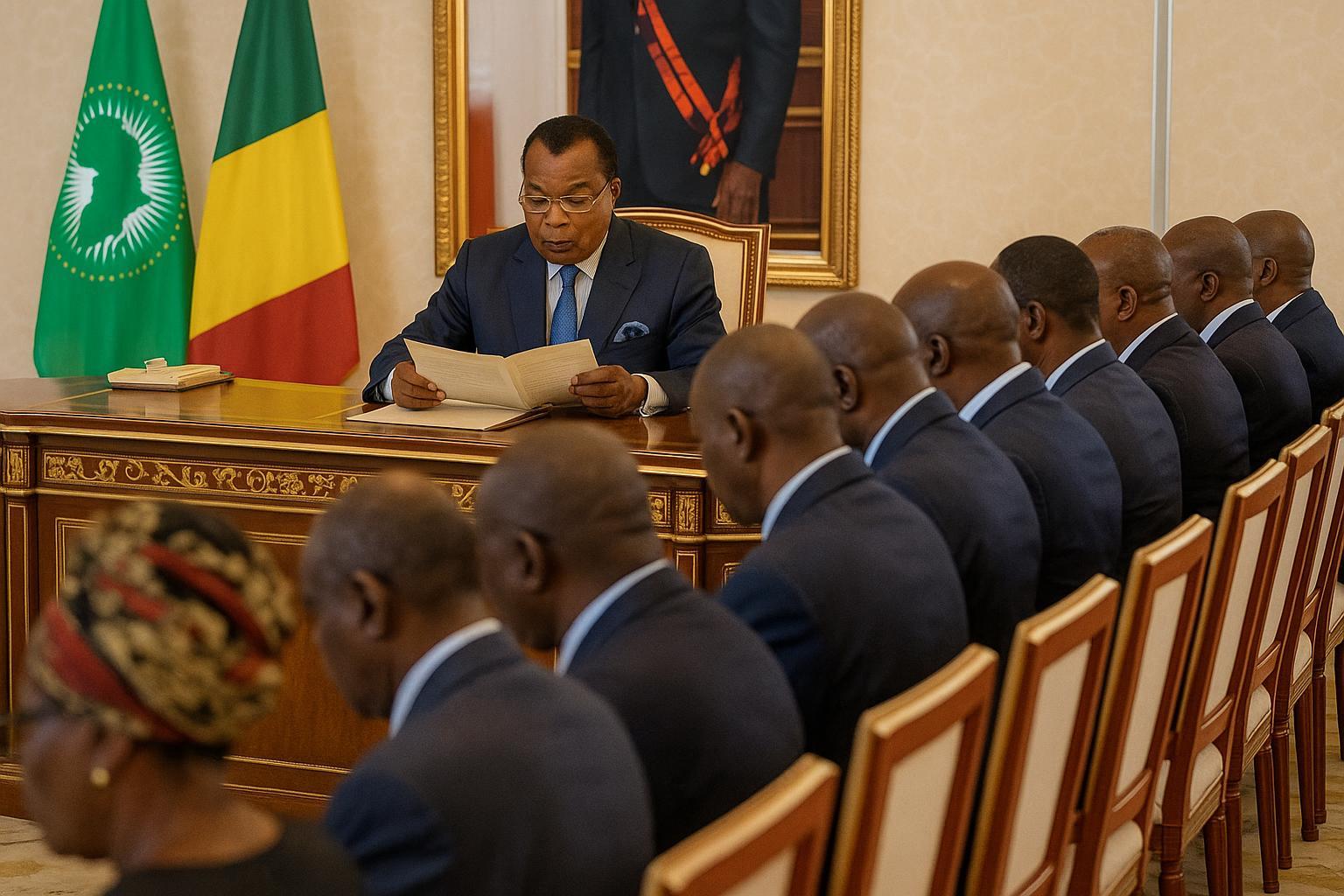
In its first session of the year, the Congolese Council of Ministers endorsed two draft decrees approving the statutes of the general hospitals of Ouesso and Sibiti. Health and Population Minister Jean Rosaire Ibara presented the texts, which define each institution’s mission, governance and operational rules (official communiqué, 24 January 2026).
The Cabinet’s swift approval translates the legislative framework adopted on 6 October 2025 into enforceable regulations. It also closes the transition period that followed the November 2025 inauguration of the facilities, during which provisional management rules had been applied under ministerial instructions.
Speaking after the meeting, a senior official within the Prime Minister’s Office stressed that the decrees “consolidate the President’s vision of modern, decentralised health infrastructure capable of delivering universal coverage with rigour and transparency.” Such remarks echo the National Development Plan’s emphasis on human capital and balanced territorial development.
Mandate and Governance Architecture
Both hospitals have been granted the status of public administrative establishments endowed with legal personality and financial autonomy. Their statutes set out a dual mandate: providing a complete range of secondary and tertiary care while serving as referral centres for district hospitals in the northern and southern hinterlands.
The governance model revolves around a board of directors chaired by the Minister of Health or his representative, a director-general and a scientific council. This tripartite structure is designed to ensure coherence between policy, management and clinical excellence. It also embeds regular performance audits, a novelty in the country’s hospital governance.
According to Dr Grace Makaya, a public-health scholar at the University of Marien Ngouabi, the statutes codify “the checks and balances indispensable for service quality, without undermining the managerial agility required in a competitive healthcare environment.” Her assessment underscores the delicate balance sought by the drafters between public service obligations and hospital efficiency.
Financial Autonomy under Careful Oversight
The decrees authorise the hospitals to generate and retain revenue from consultations, specialised procedures and private-wing services, while continuing to receive state subventions for public-health priorities. This hybrid financing model aims to secure sustainable resources for maintenance, biomedical innovation and staff incentives.
Nevertheless, the statutes require annual budget proposals to be validated by the supervisory ministry and the Ministry of Finance. Quarterly financial statements must be certified by an accredited auditor and presented to the board. Such provisions respond to lessons drawn from earlier reforms in Brazzaville and Pointe-Noire where insufficient oversight weakened initial gains.
Economist Noé Okemba, who advised on the drafting process, argues that the model “combines predictability of public funding with the dynamism of own-source revenue, while the audit clauses introduce a culture of accountability that reassures both partners and patients.”
Strategic Impact on Interior Health Access
Located respectively in the Sangha and Lékoumou departments, the two hospitals are positioned to reduce the need for costly referrals to Brazzaville. Each facility houses a modern emergency unit, advanced imaging, a modular intensive-care ward and suites for neurosurgery and cardiology, areas that previously required long-distance evacuation.
Officials anticipate that more than 600,000 residents from surrounding districts will benefit directly. Longer term, the Ministry of Health expects the institutions to act as training sites for family physicians and specialist nurses, helping stem the urban concentration of health workers.
Civil-society organisations have welcomed the development. The Congolese Patients’ Alliance noted that “the statutory clarification offers communities a transparent avenue to demand quality services,” while urging swift publication of service charters in local languages to reinforce accountability.
Academic Synergy and Leadership at Djiri
Beyond Ouesso and Sibiti, the Cabinet session appointed Professor Ekouele Mbaki Hugues Brueux as Director-General of Djiri General Hospital in Brazzaville. A seasoned neurosurgeon and rapporteur of the Faculty of Health Sciences’ scientific council, he is expected to foster synergies between teaching and patient care.
Observers see the nomination as consistent with the government’s strategy of coupling top-tier clinicians with managerial responsibility to accelerate the transfer of best practices across the hospital network. Professor Brueux stated that he would privilege benchmarking exchanges with the two newly statute-based hospitals “to embed a culture of evidence-based protocols from the outset.”
The confluence of statutory consolidation in the interior and academic leadership in the capital forms, in the words of Minister Ibara, “a single reform, geographically differentiated, but united by the same requirement: quality, accessibility and sustainability of care for every Congolese household.” His comment encapsulates the administration’s broader health agenda for the 2024-2028 cycle.
