
Momentum builds around a centralised GBV register
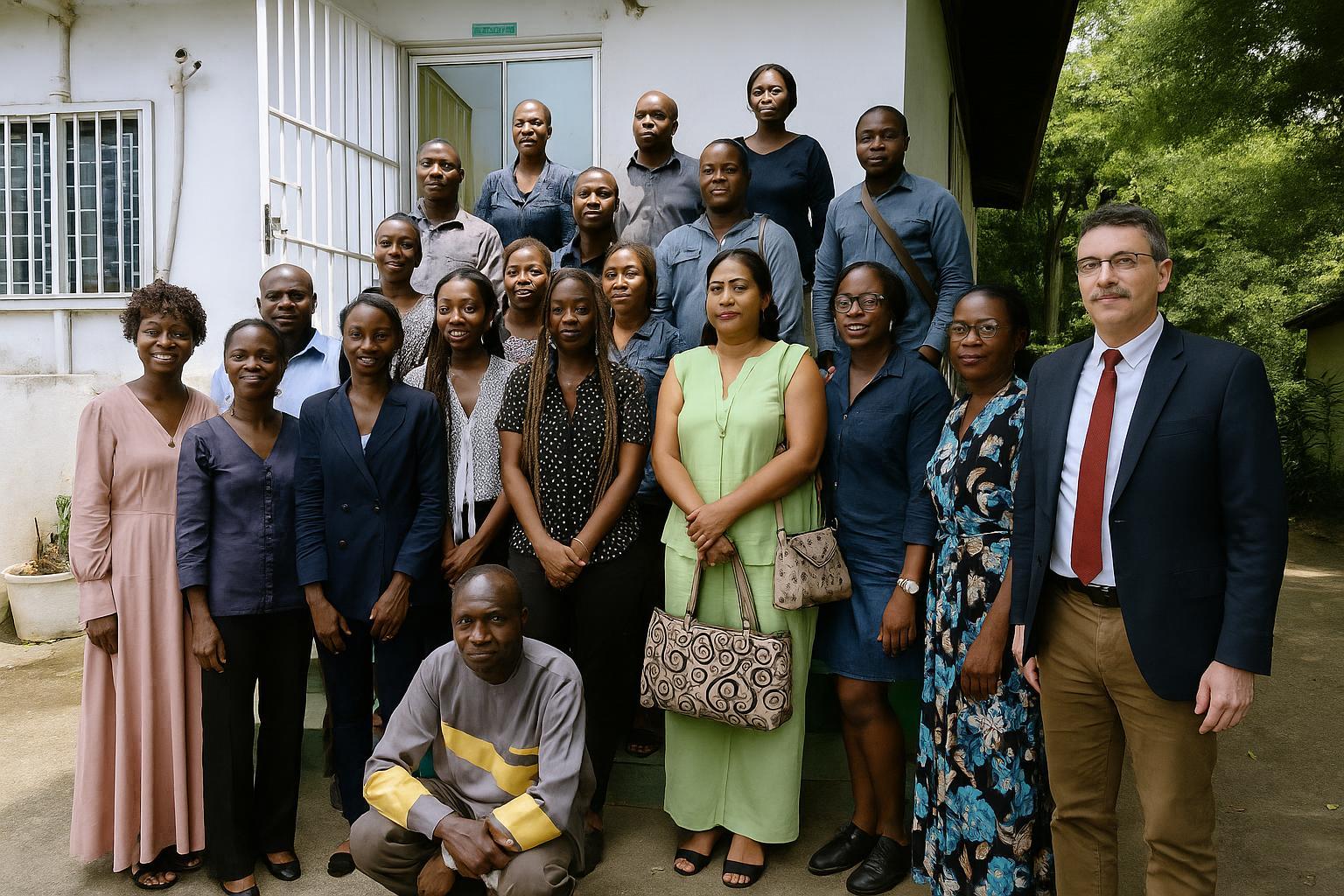
The presentation of the report “Visibiliser et documenter les violences faites aux femmes en République du Congo”, delivered this week in Brazzaville by the association Kaani Assistance with support from the French Embassy, has reignited debate on how the Republic of Congo tracks gender-based violence. In a packed conference room, Kaani Assistance coordinator Luce Bénédicte Gangue set out a clear recommendation: the creation of a fully fledged national coordination mechanism that would gather administrative data on gender-based violence under one roof. Such a mechanism, she argues, would harmonise a mosaic of sectoral databases and generate the robust statistics policymakers require to allocate resources effectively.
Gangue’s call echoes previous appeals from UNFPA and the World Bank, which have repeatedly underlined that credible, disaggregated data remain the missing link between legal provisions and tangible protection on the ground. According to the 2021 Multiple Indicator Cluster Survey, one Congolese woman in three has experienced some form of physical or sexual violence during her lifetime, yet reporting rates hover below 20 per cent (UNFPA). The disparity between prevalence and reporting illustrates how survivor support is hampered by information gaps. A unified register, proponents say, would illuminate those gaps without compromising survivors’ privacy.
From parallel systems to interoperable platforms
At present, data collection is scattered across health centres, gendarmerie posts, social-affairs bureaux and a small number of specialised NGOs. Each institution operates its own reporting template, time frame and confidentiality protocol. The result is duplication, under-counting and analytic blind spots. By contrast, the proposed mechanism would embed shared definitions of violence, standardised intake forms and unique anonymised identifiers that allow a survivor’s medical, psychological and legal pathway to be traced without revealing personal identity.
ICT advisers at the Ministry of Communication and Digital Economy confirm that preparatory discussions are taking place on a pilot interoperability platform that could interface with the existing e-health architecture. “Our objective is to ensure that any nurse in Impfondo, any police officer in Dolisie and any magistrate in Brazzaville can feed harmonised information into a secure server in real time,” one official explained. That alignment would also ease the country’s reporting obligations under the Maputo Protocol and the Sustainable Development Goals.
Training the frontline for survivor-centred care
Beyond data architecture, Kaani Assistance emphasises human capacity. Gangue urged the authorities to boost continuous training for the physicians, social workers and police officers who constitute survivors’ first point of contact. Standard operating procedures, she noted, can only be effective if personnel are skilled in trauma-informed interviewing and evidence preservation.
The Ministry of Justice has already set in motion refresher courses for magistrates on the 2010 law criminalising all forms of violence against women. A complementary curriculum for health professionals is under review at the Faculty of Medicine of Marien-Ngouabi University. Dr. Véronique Tchicaya, who helped draft the curriculum, stresses that “a survivor who feels believed at the first interaction is more likely to complete the medical-legal circuit, which in turn enriches the national database.”
Expanding safe spaces across the territory
Kaani Assistance’s report further calls for the development of secure reception centres where survivors can obtain medical, psychosocial and legal services under one roof. In urban areas such as Brazzaville and Pointe-Noire, one-stop centres already operate within university hospitals, while in rural localities survivors often travel long distances to access similar services. To bridge that divide, the Ministry of Social Affairs plans to repurpose community development halls into temporary shelters, equipped with toll-free hotline access and mobile legal clinics.
NGO staff insist that confidentiality protocols must be embedded from the outset. They argue that the same database envisioned for national coordination can incorporate layered access rights, ensuring that only authorised personnel view sensitive case details while aggregate trends remain publicly available for research and advocacy.
Government aligns reform agenda with citizen initiatives
Officials speaking on background contend that the proposed mechanism dovetails with the administration’s broader modernisation agenda. The National Development Plan 2022-2026 commits to digital public services and to enhancing the rule of law. Creating a centralised GBV register, they note, would satisfy both objectives, reinforcing public confidence in institutions and demonstrating that data-driven governance extends beyond macro-economics into the social sphere.
Minister of Gender, Family and Children Inès Nefer Ingani welcomed the report, stating that “the President of the Republic has placed the well-being of Congolese women at the heart of our social contract. Any tool that refines our understanding of their challenges is an asset for the entire nation.” Her ministry is preparing a decree that would formally establish an inter-ministerial steering committee, chaired at cabinet level, to oversee implementation and resource mobilisation.
International cooperation as force multiplier
The participation of the French Embassy illustrates how external partners can accelerate technical roll-out. Paris has already financed similar data systems in Niger and Côte d’Ivoire. In Brazzaville, embassy counsellor Marc Sallerin confirmed that feasibility studies are eligible for funding under the Solidarity Fund for Innovative Projects. Regional organisations are equally engaged: the Central African Economic and Monetary Community (CEMAC) is compiling a compendium of best practices, and Congo’s initiative could serve as a pilot for the bloc.
Observers note that donor interest often hinges on demonstrable national ownership. With civil-society groups such as Kaani Assistance front-loading technical detail and the government signalling commitment at ministerial level, Congo appears well placed to leverage grants while preserving leadership of its own reform trajectory.
Data quality as catalyst for prevention
Public-health specialists argue that reliable statistics transform more than budgets; they reframe societal norms. When comprehensive figures are published, communities can visualise the scale and geography of violence, prompting local leaders to act. In Ghana and Rwanda, for example, publication of district-level GBV data spurred faith-based organisations to develop targeted counselling programmes (World Bank). Similar ripple effects are anticipated in Congo once the mechanism becomes operational.
Sociologist Clarisse Malonga contends that “numbers may appear abstract, but they legitimise survivors’ stories in the public arena and counter the misconception that violence is a private matter.” By feeding disaggregated data into school curricula and media programming, policymakers hope to shift mindsets among the youth, who constitute more than 60 per cent of the population.
Roadmap ahead
Stakeholders agree that the next six months will be decisive. Technical working groups must finalise common indicators, draft data-sharing protocols and secure cybersecurity safeguards. Parliament is expected to debate the implementing decree early in the next session, and pilot testing could begin in three departmental capitals before year-end, contingent on budget clearance.
For survivors like “Amina”, who recounted fleeing marital violence in Sibiti only to repeat her narrative to five separate offices, the promise of a unified system holds tangible meaning: fewer retellings, faster referrals, and a sense that the state hears and records her ordeal. If the mechanism delivers on that promise, Congo may take a decisive step toward eradicating gender-based violence—through the quiet power of data.
