
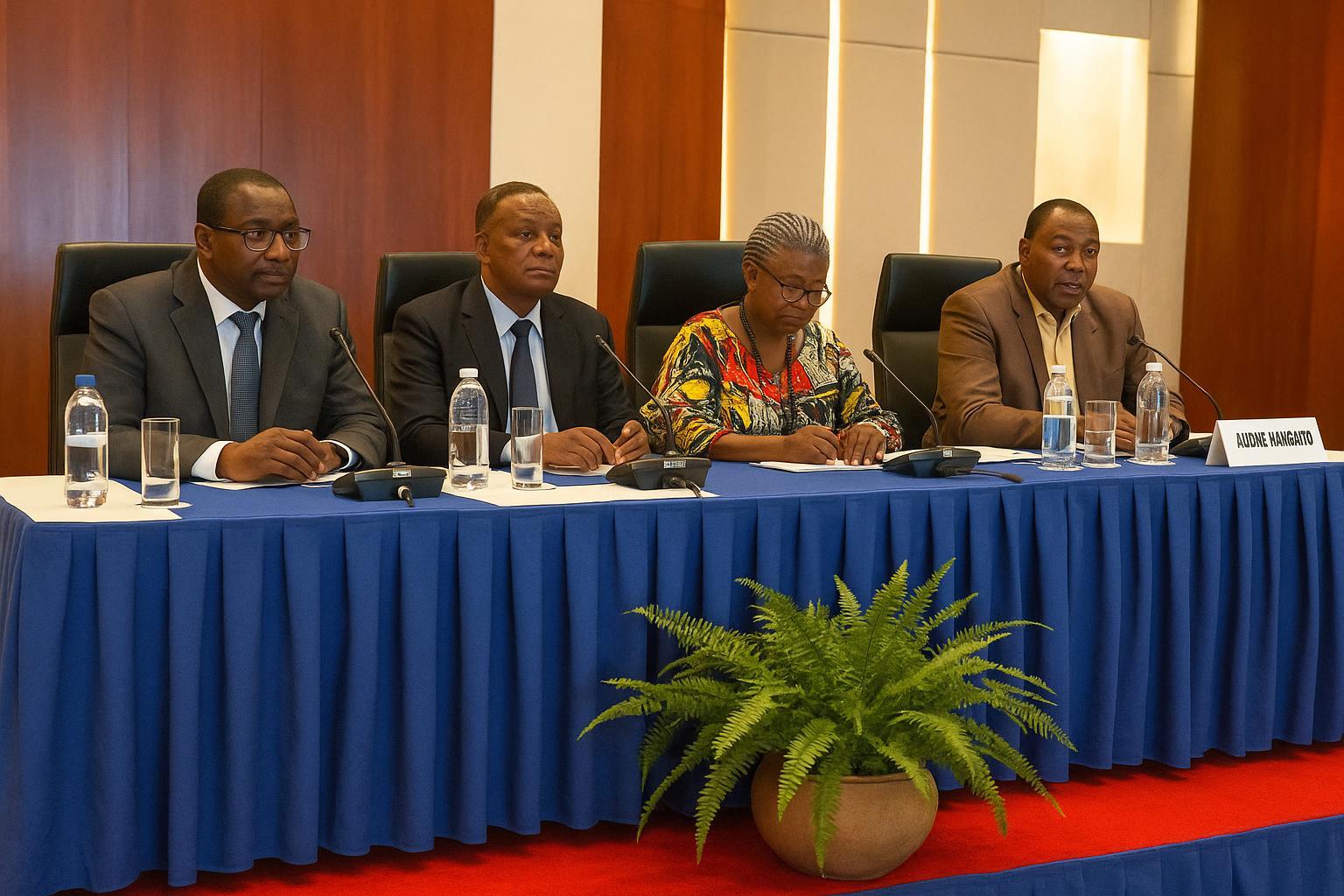
Brazzaville Hosts High-Level Polio Certification Talks
For four intense days this month, Brazzaville became the epicentre of Africa’s polio endgame strategy. From 2 to 5 December 2025, the 35th session of the African Regional Certification Commission for the Eradication of Poliomyelitis (CRCA) convened under the auspices of the Congolese Ministry of Health with technical support from the World Health Organization’s country office. Delegations from Ethiopia, Angola, Senegal, Chad and the host nation pored over epidemiological data, shared field experiences and debated new containment protocols. In his welcome address, Dr Jean-Claude Moboussé, adviser to the Minister of Health, underscored the Government’s “unwavering commitment to deliver a generation free of poliovirus” and praised partners for “helping translate that ambition into measurable progress”.
Encouraging Trends Tempered by Fresh Outbreaks
A review of progress since the previous CRCA session in October 2024 revealed notable headway. Ethiopia reported 24 consecutive months without a circulating vaccine-derived poliovirus type 2 case, while Senegal confirmed nationwide introduction of the novel oral polio vaccine, nOPV2, in every district (WHO Regional Office for Africa, 2025). Nevertheless, the basin of Lake Chad and parts of Angola continue to battle outbreaks propagated by population movements, fragile health systems and lingering immunity gaps. Recent detections in northern Namibia, announced in late November, reminded delegates that reservoirs of infection can rekindle regional transmission within weeks. „Geography does not respect borders; neither does poliovirus,“ observed Professor Rose Gana Fomban Léké, chair of the Commission, urging member states to „treat every neighbouring flare-up as an immediate domestic concern“.
Country-Specific Findings Spotlight the Congo
In its assessment of the Congo’s dossier, the Commission acknowledged significant efforts by national surveillance teams, whose environmental sampling network has expanded from two to ten sites since 2023. Yet around twenty poliovirus detections recorded over the same period point to residual immunity gaps, especially in peri-urban settlements and refugee-hosting zones along the northern frontier. Laboratory integrity also surfaced as a priority after five specimens dispatched to the regional reference centre in Kinshasa were reported lost in transit. While the incident did not alter case classifications, it prompted calls for a streamlined chain-of-custody protocol. “The episode is less a setback than a useful stress test of our systems,” commented Dr Joséphine Makengué, director of the National Public Health Laboratory, adding that corrective measures have already been endorsed by the Ministry.
Cross-Border Coordination and Sustainable Financing
Delegates converged on the view that traditional mass campaigns—critical during historic outbreaks—must now be buttressed by routine immunisation and real-time data exchange. The session therefore endorsed a set of resolutions encouraging joint surveillance posts along the Angola-Congo and Chad-Cameroon corridors, harmonised use of the WHO’s new digital Acute Flaccid Paralysis tracker, and regular simulation exercises to test rapid-response capacities. Financing emerged as an equally central theme. The Commission commended the Congo for allocating an additional 1.2 billion CFA francs to its Expanded Programme on Immunisation in the 2026 draft budget. Nonetheless, it urged all five participating governments to institutionalise line items for polio activities rather than rely predominantly on partner funds, which have shown signs of contraction as global health priorities diversify (Global Polio Eradication Initiative, 2025).
A Continent Rallies Behind a Shared Deadline
By the close of deliberations, the CRCA issued a communiqué reaffirming 2026 as the continent’s target year for interrupting all forms of poliovirus transmission. The document calls for heightened genomic surveillance in urban wastewater, systematic mapping of zero-dose children, and the finalisation of national containment plans for all type-2 poliovirus stocks. Professor Donatien Mounkassa, chief of staff at the Ministry of Health, lauded the outcome, declaring that the recommendations “strengthen our conviction that eradication remains within reach, provided we sustain solidarity and scientific rigour”. Observers noted the careful balance between optimism and vigilance that permeated the meeting: while Africa has travelled most of the distance toward a polio-free epoch, the virus still exploits every lapse. The Brazzaville summit therefore concluded not with ceremonial fanfare, but with a clear-sighted agenda that fuses technical precision, political resolve and community ownership—a triad the Commission believes will, at last, consign poliomyelitis to history.
