
Strategic health alliance faces new arithmetic
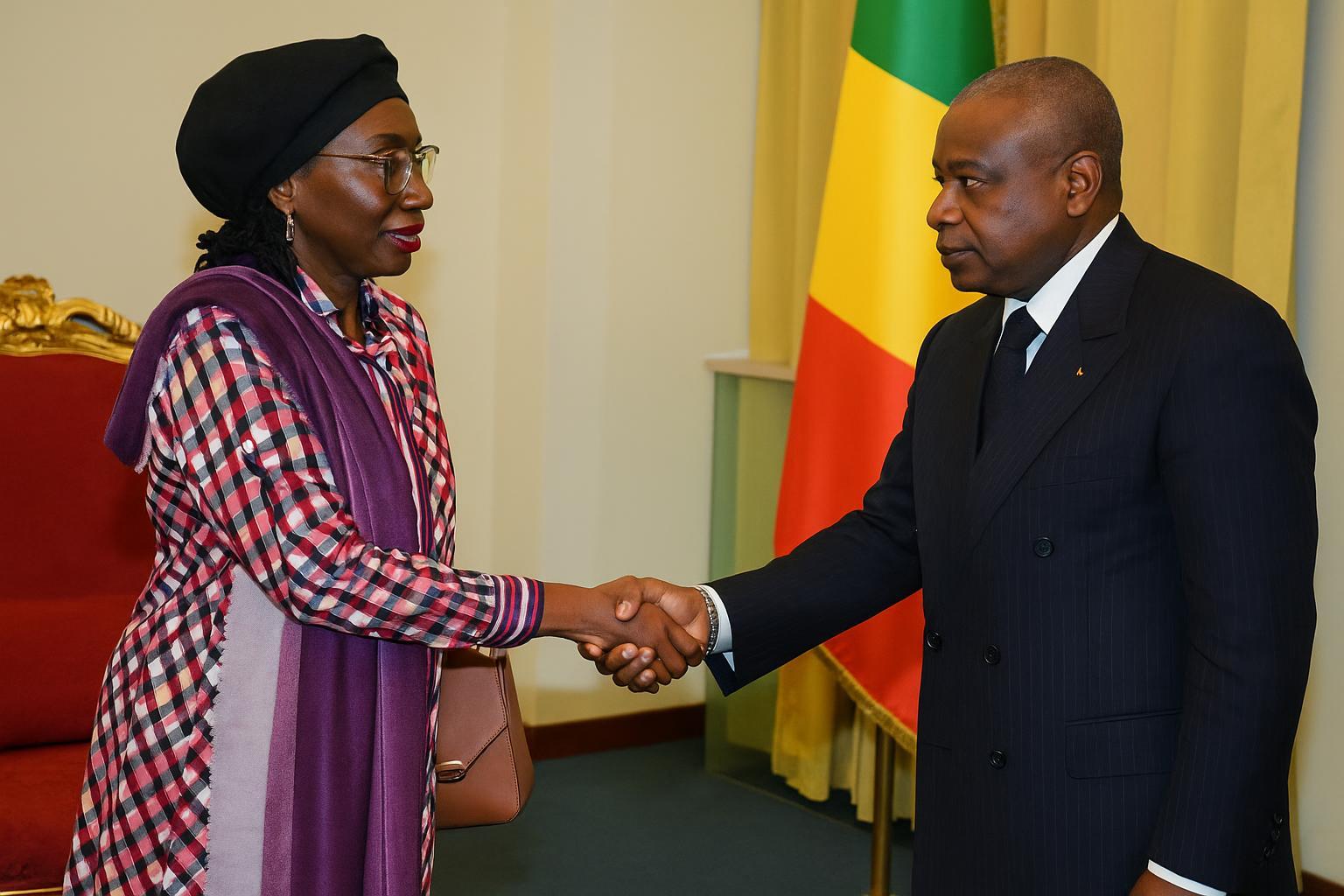
The Republic of Congo’s two-decade partnership with the Global Fund to Fight AIDS, Tuberculosis and Malaria has long been hailed as a textbook example of multilateral solidarity. Yet the arithmetic of global aid is shifting. On 10 December, a high-level mission led by Adama-Dian Barry, Resident Representative of the United Nations Development Programme, met Senate President Pierre Ngolo in Brazzaville with a candid message: outside contributions are tapering, and domestic resources must rise to fill the gap.
Plaikessi Kouadjani, principal portfolio manager for the Congo cluster, told journalists that several traditional donors had recently announced downward revisions of their pledges. “The Global Fund works on a principle of complementarity,” he reminded. “Our grants reinforce, they do not replace, national commitments.” The appeal sets the tone for a pivotal budget season in which legislators are being asked to translate public-health ambition into concrete francs CFA.
A US$284 million footprint since 2006
Numbers testify to the scale of the partnership. Between 2006 and today, Congo has secured some US$284 million, or nearly 161 billion FCFA, in Global Fund grants. The current three-year allocation alone stands at US$71 million. Those tranches have underwritten antiretroviral treatment for 45 000 people living with HIV, financed diagnostics and medication for tuberculosis patients and, this year, bankrolled the nationwide distribution of 2.7 million long-lasting insecticidal nets.
Officials note that the envelope arrives at a moment when competing international crises—climate shocks, conflict and the lingering economic aftertaste of the pandemic—are squeezing foreign aid budgets. “It would be illusory to expect the external tap to remain fully open,” a senior Ministry of Finance adviser admitted after the meeting, speaking on background.
Senate’s convening power becomes critical
Why the Senate? In Kouadjani’s words, legislators remain uniquely placed to turn technical pleas into sovereign decisions. The upper chamber’s constitutional prerogative over budgetary bills gives it the heft required to protect—and, he hopes, expand—health appropriations. During the closed-door exchange, Pierre Ngolo signalled attentiveness to the mission’s briefing, stressing that “the health of Congolese citizens is foundational to all other development targets,” according to participants.
Observers see the institution’s moral authority as equally decisive. A call issued from the marble halls of the Palais du Parlement carries political weight in provincial assemblies where spending priorities are contested. By inviting senators to champion the cause, the Global Fund is betting on a ripple effect across layers of government—from municipal councils purchasing rapid test kits to regional administrations upgrading dispensaries.
Tangible dividends: patients, nets and community workers
The delegation did more than brandish spreadsheets. It showcased results already visible in urban clinics and rural outposts. Seventy-five per cent of the 45 000 HIV patients under treatment now receive modern antiretroviral combinations procured through Global Fund channels, medical staff report. In tuberculosis wards, rapid molecular testing introduced with grant support has cut diagnostic delays, boosting cure rates.
Malaria control offers perhaps the most graphic illustration. The current mass-distribution drive of 2.7 million impregnated nets, facilitated by Catholic Relief Services and the Ministry of Health, can be traced directly to this year’s disbursement schedule. Communities have also benefited from a network of 2 193 trained relais communautaires whose stipends and kits are paid from the same envelope. “These volunteers are our first line of defence,” Kouadjani said, praising their door-to-door surveillance and referral work.
Beyond COVID: stronger systems take shape
The conversation inevitably turned to lessons from COVID-19. Emergency resources channelled through the Global Fund permitted Congo to acquire advanced PCR machines, refurbish laboratories and construct temperature-controlled warehouses that now anchor the national supply-chain reform. Health officials contend that those assets are already paying dividends for other diseases, creating a foundation for quicker outbreak detection and steadier medicine stocks.
In Barry’s assessment, the pandemic catalysed a mentality shift. “Investment in resilient systems is no longer viewed as a luxury but as insurance,” she argued after touring the new storage facility on the outskirts of Brazzaville. The challenge, she cautioned, is to maintain momentum without extraordinary COVID-window financing.
Shared responsibility for long-term sustainability
Both sides of the table agree that domestic resource mobilisation is not merely a stop-gap, but the linchpin of sustainability. The mission’s briefing papers outline several avenues: improved tax collection, earmarked levies and innovative instruments such as health bonds. While no specific mechanism was endorsed at the Senate meeting, participants confirmed that follow-up technical workshops are planned.
For now, the rhetorical alignment between the Global Fund and Congo’s senior leadership sends an encouraging signal to patients, clinicians and donors alike. Kouadjani closed the session on a forward-looking note: “Our partnership with the Republic of Congo is strategic and productive. By reinforcing national financing, we secure the continuity of lifesaving programmes and strengthen preparedness for future challenges.” As budget deliberations unfold, the onus now rests on lawmakers to convert consensus into catalytic resources that keep the country on its path toward universal health coverage.
