
Continental realignment around the 2025 UNESCO ballot
When the UNESCO Executive Board closed registrations on 15 March 2025, only three dossiers were deemed complete. The lean field belies the magnitude of the prize: stewardship of an agency that arbitrates global debates on education, science and culture. Brazzaville promptly interpreted the narrow list as an opening. By 14 May, President Denis Sassou Nguesso had elevated Edouard Firmin Matoko, a long-serving UNESCO Assistant Director-General, to the rank of itinerant ambassador, signalling that the Congolese bid would be prosecuted at head-of-state level (Presidency of the Republic communiqué, 14 May 2025).
Profiling a technocrat familiar with the UNESCO corridors
Matoko’s curriculum is calibrated for multilateral scrutiny: master’s degrees in educational planning from the University of Paris III, a tenure as UNESCO Representative in Nigeria and Mozambique, and most recently oversight of the Africa Department in Paris. Colleagues describe him as “a conciliator who speaks the bureaucratic Esperanto of UNESCO fluently” (interview, senior Secretariat official, 22 June 2025). That institutional literacy differentiates him from previous African aspirants whose careers were primarily domestic.
Gakosso’s shuttle diplomacy and the calculus of African votes
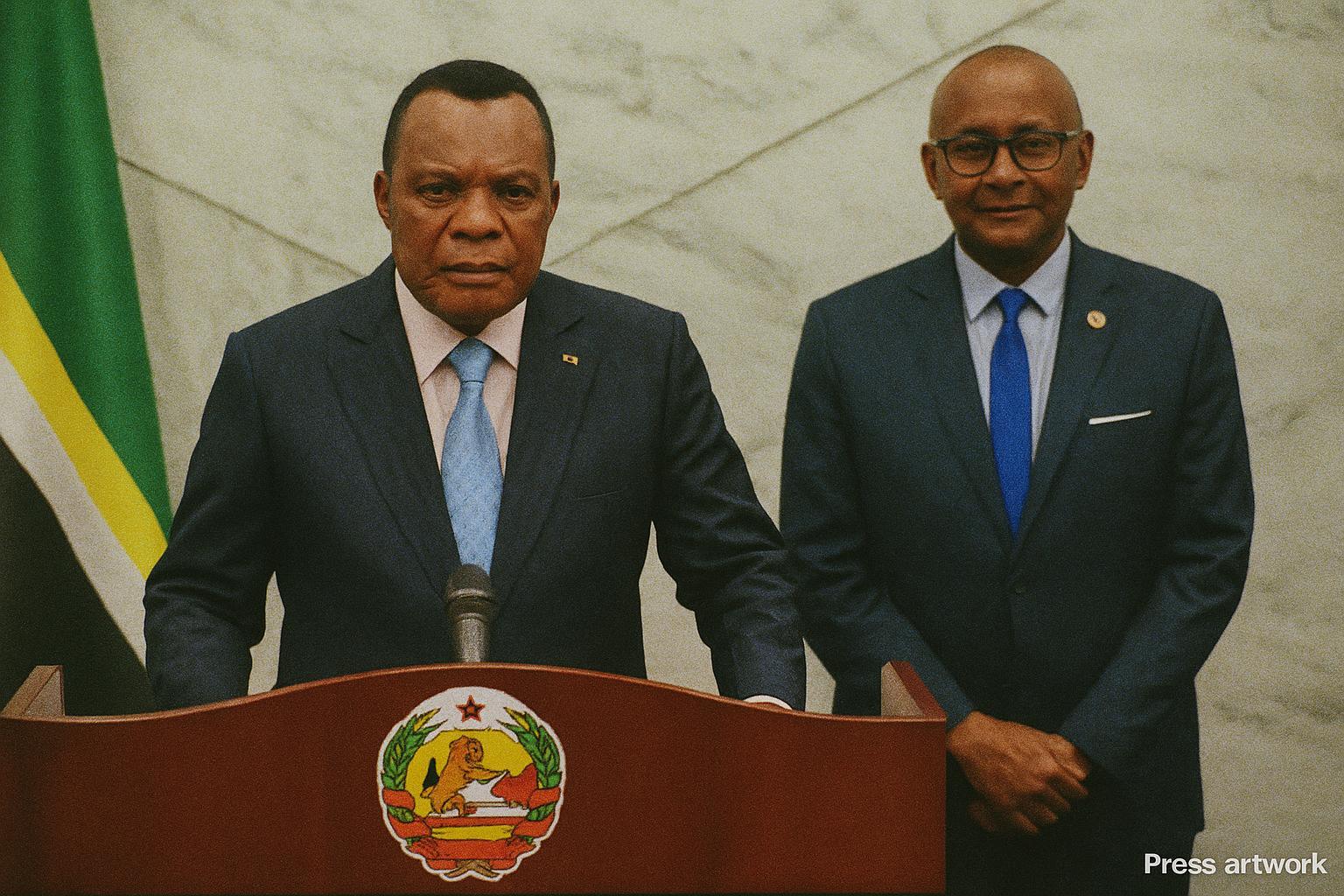
Foreign Minister Jean-Claude Gakosso embarked on a five-nation circuit from 21 to 25 July, targeting Angola, South Africa, Mozambique, Botswana and Mauritius. Those capitals anchor three distinct regional blocs—SADC, the Commonwealth and Lusophone Africa—whose combined votes could tip the 58-member Executive Board. Officials in Pretoria confirmed that President Cyril Ramaphosa “would sensitise SADC colleagues to the merit of an African consensus” (South African Presidency briefing, 24 July 2025). Similar assurances surfaced in Luanda and Gaborone, illustrating a shared appetite to project continental agency within UNESCO’s normative machinery.
Addis Ababa’s corridor diplomacy and the AU factor
The Congolese delegation’s subsequent stop at the African Union headquarters underscored a broader ambition: translate bilateral endorsements into a coordinated AU communiqué before the Executive Board convenes in Tashkent this October. While the AU’s Constitutive Act bars binding voting instructions, previous contests—most recently the 2021 IMO Council election—demonstrated that a prudently worded statement can consolidate up to 20 African ballots (AU Commission archival note, 2022). Matoko’s team is banking on a similar dynamic, framing his candidacy as a continental rather than national venture.
Beyond symbolism: policy stakes for Brazzaville and Paris
For Brazzaville, a successful bid would reaffirm its doctrinal emphasis on “multidirectional diplomacy”, positioning the Republic as a convening power between Francophone and Anglophone constituencies. Paris, meanwhile, views Matoko as an interlocutor capable of stewarding delicate dossiers such as the restitution of African artefacts without rekindling North-South acrimony. Diplomatic sources in the Quai d’Orsay note that “Matoko represents continuity within reform”—a formula palatable to both donor states and emerging economies (French MFA dispatch, 30 June 2025).
Competing narratives and the soft-power dividend
Matoko’s rivals—a former foreign minister from Eastern Europe and a veteran Latin American diplomat—have cultivated networks in UNESCO’s cultural sector. Yet neither can replicate the soft-power resonance that an African victory would carry in a year marking the fiftieth anniversary of the UNESCO Nairobi Convention on cultural diversity. Analysts at the Brookings Africa Growth Initiative argue that «the optics of a Sub-Saharan African at the helm may galvanise donor interest in the region’s digital-learning agenda» (policy memo, July 2025).
A measured optimism in Brazzaville
Presidential advisers convey a tempered confidence, cognisant that secret ballots in multilateral forums often deviate from public pledges. As one senior aide reflected, “We count votes only after they are cast, but the President’s instruction is unambiguous: leave no corridor unvisited” (author interview, 2 August 2025). That directive has activated Congolese embassies from Ottawa to Canberra, each tasked with quiet canvassing among Executive Board delegates.
What an eventual Matoko tenure could mean for UNESCO
Should the Congolese candidate prevail, UNESCO may witness a managerial shift toward field-based programming in lieu of Paris-centric initiatives, mirroring Matoko’s previous calls for “proximity multilateralism”. Observers anticipate budget reallocations favouring STEM education in the Sahel and coastal resilience projects in Small Island Developing States, priorities he articulated during April’s High-Level Forum on the Blue Economy. Such an agenda aligns with the African Union’s Agenda 2063 and dovetails with Europe’s Global Gateway infrastructure plan, potentially forging a pragmatic bridge between the two frameworks.
Quiet power play, broader multilateral resonance
By staking substantial political capital on Matoko, Brazzaville is not merely chasing institutional prestige; it is testing the proposition that mid-sized African states can influence the architecture of global governance through disciplined, low-visibility engagement. The October ballot in Tashkent will reveal whether that proposition commands sufficient international buy-in. Whatever the outcome, the Congolese campaign has already refreshed debates over equitable geographic representation within UNESCO, underscoring that diplomatic agility often matters as much as demographic weight in twenty-first-century multilateralism.
