
Private-sector commitment meets national vision
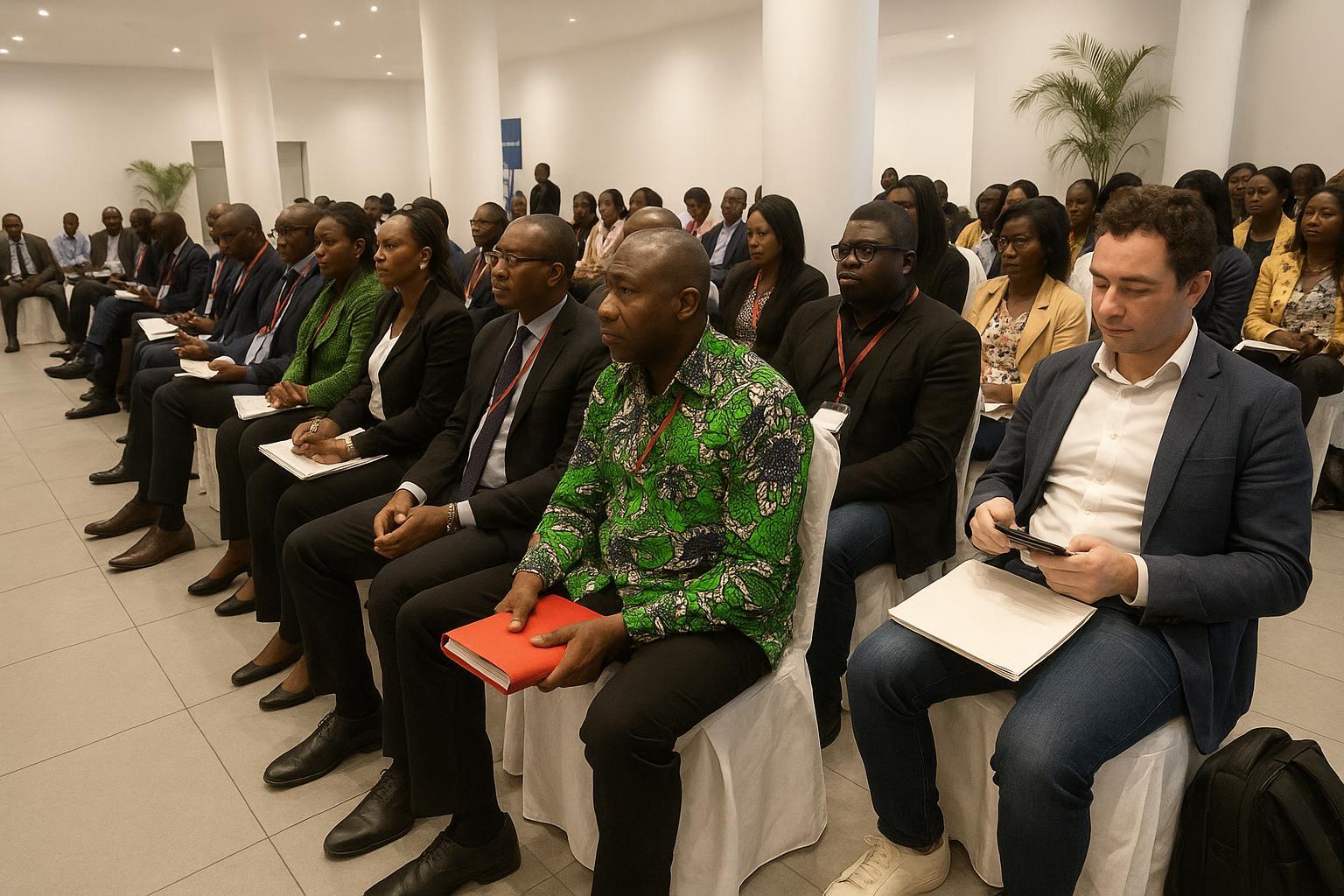
Brazzaville’s conference halls assumed a resolutely forward-looking atmosphere on 26 September, when Africa RSE Congo, the Congolese subsidiary of the pan-African advisory group Afrique RSE, convened the second edition of the Doing Good in Africa forum. Organised with the platform Doing Good in Africa and the publication Dirigeantes, and technically supported by BL Technology, the gathering brought together senior executives, public-sector managers and diplomats to exchange practical experience on sustainable development. Even before the opening remarks, the mood suggested that corporate leaders no longer view social responsibility as a public-relations accessory but as a contribution to the nation’s development trajectory endorsed by President Denis Sassou Nguesso’s “Le Chemin d’Avenir” programme.
The Republic of the Congo sits at a pivotal juncture: its emerging-market ambition depends on unlocking private capital and expertise, yet global investors increasingly demand verifiable environmental, social and governance performance. Against this backdrop the forum positioned itself as a catalyst, aligning the profit motive with inclusive growth. Its central theme, “Impact-driven enterprises: contribution of Congolese companies to the Sustainable Development Goals”, signalled both urgency and opportunity.
A forum rooted in regional CSR momentum
This was only the forum’s second iteration, but the brand Doing Good in Africa has already become shorthand across Central Africa for results-oriented corporate citizenship. The September meeting built on the inaugural session by shifting from conceptual advocacy to operational sharing of data and compliance models. Representatives from mining, telecoms, agribusiness and finance exchanged case studies with civil-society experts under the attentive gaze of members of the diplomatic corps. Their presence underscored the international community’s confidence in Brazzaville’s capacity to spearhead responsible business norms in the sub-region.
Participants emphasised that, five years shy of the 2030 deadline set by the United Nations, Congo-Brazzaville must accelerate if it hopes to transform its abundant natural resources into broad-based welfare gains. The country’s relatively small domestic market, they argued, makes regional leadership on sustainability an economic necessity, not a luxury.
Spotlight on SDG 3, SDG 7 and SDG 13
While the full spectrum of the 17 UN Sustainable Development Goals was acknowledged, organisers deliberately focused debate on SDG 3 (health and well-being), SDG 7 (affordable and clean energy) and SDG 13 (climate action). The choice reflected both national priorities—reducing health disparities, diversifying the energy mix and mitigating the visible effects of climate variability—as well as areas in which corporate intervention can deliver rapid, measurable impact.
The statistical reality framed the discussion with sobering clarity. On the UN’s global SDG index, Congo scores an average of 52.8 out of 100 and ranks 154th among 167 countries. Forum delegates agreed that the trajectory can be reversed only through targeted investment in preventive health services, renewable-energy deployment and greenhouse-gas reduction projects that dovetail with industrial strategy.
Regulatory clarity and the call for a decree
Data, however, were not the sole focus. Legal architecture occupied centre stage when Bel Lauretta Tene née Pambou Dinana, managing partner and chief executive of Africa RSE Congo, drew attention to a gap between ambition and enforcement. A national law spells out corporate obligations vis-à-vis the SDGs, she noted, yet the absence of a decree of application weakens its operational force. Without clear implementing texts, companies lack standardised reporting templates, auditors navigate inconsistent benchmarks and investors struggle to compare impact across sectors.
Tene argued that enacting the decree would create the very regulatory certainty international lenders seek. Her intervention resonated with captains of industry eager to see responsible behaviour rewarded through preferential access to capital and procurement opportunities. By linking legal clarity to competitiveness, the forum nudged the debate away from compliance costs toward value creation.
Training as accelerator of sustainability literacy
Beyond statutes, the forum highlighted knowledge asymmetry as a practical obstacle. Many executives are still unfamiliar with the SDG framework, while mid-level managers often conflate philanthropy with sustainability. Africa RSE Congo therefore announced a forthcoming series of capacity-building workshops for both public and private actors. These sessions will cover data collection, impact measurement and strategic communication, equipping firms to report against international standards and to align their operational key-performance indicators with national planning instruments.
Such training also aims to empower regulators and municipal authorities who must vet corporate action plans. By fostering a shared vocabulary, organisers hope to reduce transaction costs and accelerate project approvals, especially in health-care infrastructure and off-grid renewable solutions.
Recognising champions and charting the next steps
Symbolism matters in the realm of business norms, and the forum closed by honouring companies judged exemplary in integrating social and environmental considerations into their core models. Although the precise methodology was not disclosed, award recipients were hailed for transparent governance, gender-balanced leadership and tangible reductions in carbon footprints. The accolades sought not merely to celebrate pioneers but to establish competitive pressure for replication across the economy.
Delegates departed Brazzaville with a shared conviction that the Congolese private sector possesses both the resources and the ingenuity required to climb the SDG index. The consensus was that informed leadership, codified regulation and a culture of public-private dialogue can help compress the timetable for progress, ensuring that by 2030 Congo stands as a regional reference point for socially responsible enterprise. The forum’s careful choreography—critical self-assessment tempered by solution-oriented optimism—may well prove a template for future engagements where business interests and national development merge seamlessly.
