
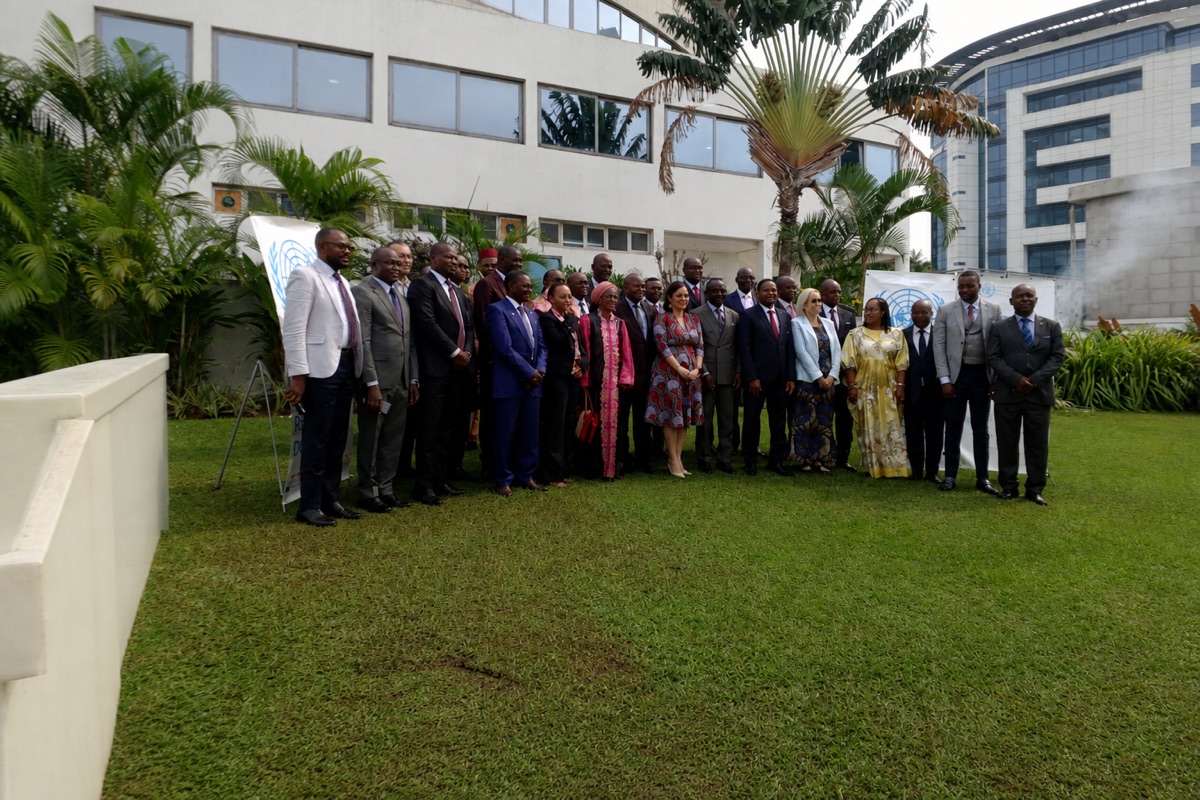
When the Republic of Congo and the United Nations system sat down together in Brazzaville on 16 June 2026, the gathering carried a weight that exceeded the routine choreography of development diplomacy. The prioritisation workshop opened that day did more than fill a slot in an institutional calendar; it formally inaugurated the drafting of the next United Nations Sustainable Development Cooperation Framework, the UNSDCF, that will govern the partnership between Congo-Brazzaville and the world organisation across the years 2027 to 2031.
A planning exercise born of national ambition
The timing is hardly incidental. Brazzaville is in the throes of recalibrating how it conceives of its own future, and the cooperation framework arrives as one instrument among several through which that ambition is being given structure. Ludovic Ngatsé, the Minister of the Economy, captured the mood with measured candour, observing that the meeting was unfolding “at a decisive moment when Congo is fully committing to a forward-looking approach and planning its development over the medium and long term.” His words situated the technical undertaking within a larger political proposition: that the country intends to anticipate rather than merely react, and that external partnerships should be aligned to a domestically defined horizon.
That framing matters because cooperation frameworks of this kind have, in too many settings, drifted toward generic templates loosely tethered to national circumstance. The insistence on prospective planning suggests an effort to invert that tendency, anchoring the United Nations contribution in priorities that Congolese authorities have themselves articulated.
Eighty experts and a compressed timetable
The architecture of the workshop reflects an attempt at breadth. Eighty experts were convened, drawn from government, the United Nations agencies, civil society, the private sector, and the technical and financial partners whose resources and counsel so often shape the contours of such arrangements. Their deliberations were scheduled to run until 18 June, a deliberately compressed window that placed a premium on focus.
The mandate entrusted to them was substantive rather than ceremonial. Participants were tasked with establishing the strategic orientations that will steer the framework, developing the theories of change that explain how interventions are expected to translate into outcomes, structuring the results framework against which progress will eventually be measured, and drawing up a roadmap leading toward a signature anticipated before the close of 2026. Each of those components carries its own intellectual demands, and assembling them within three days signals an intention to move with dispatch.
The grammar of a results-based partnership
There is an unmistakable methodological vocabulary at work here, one that the United Nations has refined over successive programming cycles. The reference to theories of change and to a results framework points to an approach that aspires to accountability, attempting to render the path from intention to impact legible and, in principle, verifiable. Whether such instruments deliver on that promise depends less on their design than on the rigour with which they are subsequently applied, a caveat that experienced practitioners rarely forget.
For Congo-Brazzaville, the exercise represents an opportunity to ensure that the priorities it considers most pressing are inscribed at the foundational stage, before the framework hardens into commitments. The presence of civil society and the private sector alongside official delegations hints at a recognition that ownership cannot be confined to ministries alone if the eventual document is to command durable legitimacy.
A coordinator’s reading of the stakes
Abdourahamane Diallo, the United Nations Resident Coordinator, offered a complementary perspective that underscored the consequential character of the moment. He described the workshop as “a strategic moment aimed at defining the priorities on which we must concentrate our collective efforts to accelerate the transformation of the country.” The phrasing is telling. It speaks not of incremental adjustment but of transformation, and it frames the United Nations role as one of joining a shared endeavour rather than directing it from without.
That distinction, subtle as it may appear, reflects an evolving understanding of development partnership, in which the multilateral system positions itself as an accompanying force aligned to national leadership. The cooperation framework now under construction will, over its five-year span, serve as the principal expression of that alignment.
What the framework will have to carry
The deliberations begun on 16 June will not bear their full significance until the framework is signed and, more importantly, implemented. Yet the foundations laid in Brazzaville will condition much of what follows. By insisting on strategic clarity, inclusive participation, and a results-oriented logic, the participants have set themselves an exacting standard. The years between 2027 and 2031 will reveal whether the ambition voiced in mid-2026 is matched by the discipline its realisation will require.
