
A strategic pivot toward fiscal transparency
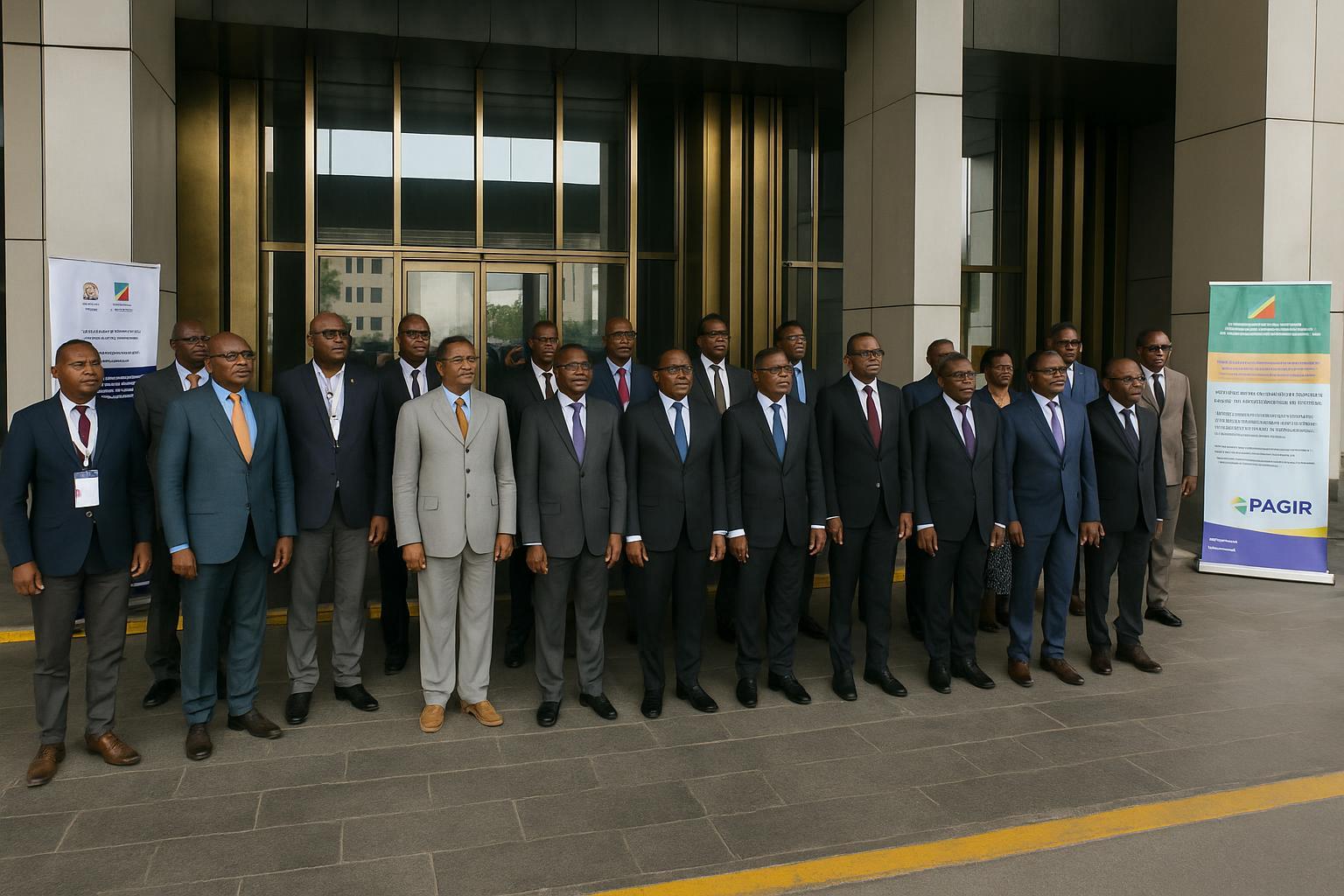
In an auditorium overlooking the banks of the Congo River, Finance, Budget and Public Portfolio Minister Christian Yoka opened a four-day workshop devoted to a single yet far-reaching objective: bringing the Republic of Congo’s public accounting framework into line with the most demanding international standards. The initiative, he emphasised, is not “a mere technical upgrade” but the cornerstone of a broader state-modernisation agenda designed to reinforce citizens’ confidence, reassure development partners and sharpen the credibility of the national budget. In a region where oil-exporting economies face mounting pressure to diversify, Brazzaville’s decision to embrace global norms signals a deliberate shift toward greater fiscal openness.
World Bank and IMF as reform catalysts
The new General Accounting Standards Compendium has been drafted with the combined technical assistance of the World Bank and the International Monetary Fund, whose Public Financial Management guidelines have become a benchmark across emerging markets. Through the Accelerated Programme for Institutional Governance and Sustainable Service Delivery (PAGIR), the Bretton Woods institutions have supplied experts, training modules and digital platforms that should enable Congolese accounting officers to migrate smoothly from cash-based to accrual methodologies. The transition aligns the country with the CEMAC directive on harmonised public accounts and echoes reforms recently adopted in Cameroon and Gabon, enhancing regional comparability.
Closing revenue leaks and valuing public assets
Adopting the new framework is expected to mitigate revenue erosion stemming from undervalued public assets and opaque bookkeeping. Under accrual accounting, state-owned enterprises will be obliged to record depreciation, contingent liabilities and off-balance-sheet commitments, yielding a more comprehensive view of public wealth. For Minister Yoka, the gains are tangible: higher-quality data will allow tax authorities to identify gaps in royalty payments, while line ministries will trace expenditure flows with unprecedented granularity. “Sound figures are the first vaccine against waste,” he told participants, noting that every percentage point of additional non-oil revenue strengthens the government’s capacity to finance health, education and climate-resilience programmes.
Institutional safeguards against misuse of funds
Beyond the spreadsheets, the reform elevates the role of the Court of Accounts and Budgetary Discipline, whose mandate will expand to certifying the regularity, sincerity and faithful image of the State’s General Accounts. The Court will henceforth issue an audit opinion on a comprehensive financial package that includes the balance sheet, income statement, cash-flow table and explanatory notes. By legally anchoring this external oversight, Congo is reinforcing its anti-corruption toolkit without resorting to punitive rhetoric. Senior magistrate Brigitte Manangou welcomed the change, stressing that “transparent accounts discourage improvised expenditures and foster a culture of accountability”.
Digital tools and capacity-building
While standards provide the skeleton, digitalisation supplies the muscle. The Ministry of Finance has already begun deploying an integrated financial management information system capable of automating journal entries, generating real-time dashboards and flagging anomalies. Donors have pledged to finance nationwide training so that provincial treasurers, municipal accountants and parliamentary budget officers master the new software. According to PAGIR coordinator Lucien Ndinga, more than 1,200 civil servants will complete accredited modules by mid-2024, setting the stage for a full countrywide rollout in the next fiscal year.
Positive signals for investors and partners
International investors often cite reliable financial reporting as a prerequisite for engaging in frontier markets. By synchronising its norms with the International Public Sector Accounting Standards, Brazzaville sends a reassuring signal to private-equity funds contemplating infrastructure projects and to rating agencies monitoring sovereign risk. Economists at the African Development Bank argue that transparent balance sheets can shave up to 100 basis points off borrowing costs, a saving that could be channelled into social expenditure. In parallel, development partners—ranging from the European Union to the Saudi Fund for Development—will benefit from simplified due-diligence procedures, accelerating the disbursement of concessional loans.
A calibrated approach to reform pacing
Still, authorities remain mindful of the human element underpinning any institutional change. Minister Yoka cautioned that success depends on “transforming practices, behaviours and values” rather than merely promulgating decrees. The reform calendar therefore incorporates gradual milestones: initial piloting in the ministries of Finance and Health, followed by extension to all central administrations, then finally to local governments. This phased model mirrors best practice observed in Morocco and Rwanda, where staged adoption helped avoid data disruptions and staff fatigue.
Anchoring modernisation in national vision
Ultimately, the accounting overhaul ties into President Denis Sassou Nguesso’s broader vision of an emerging Congo grounded in good governance and sustainable growth. By 2025, the government aims to consolidate all public-sector entities into a unified fiscal perimeter, enabling parliament to debate and approve budgets on the basis of exhaustive, audited information. If effectively implemented, the new framework could help the country move up the Transparency International perception index, unlock climate-finance windows and cement Brazzaville’s leadership within the CEMAC zone. As the workshop participants posed for a family photograph, the message was clear: the foundation stone of credible public accounts has been laid, and the onus now lies on every civil servant to turn the blueprint into everyday practice.
