
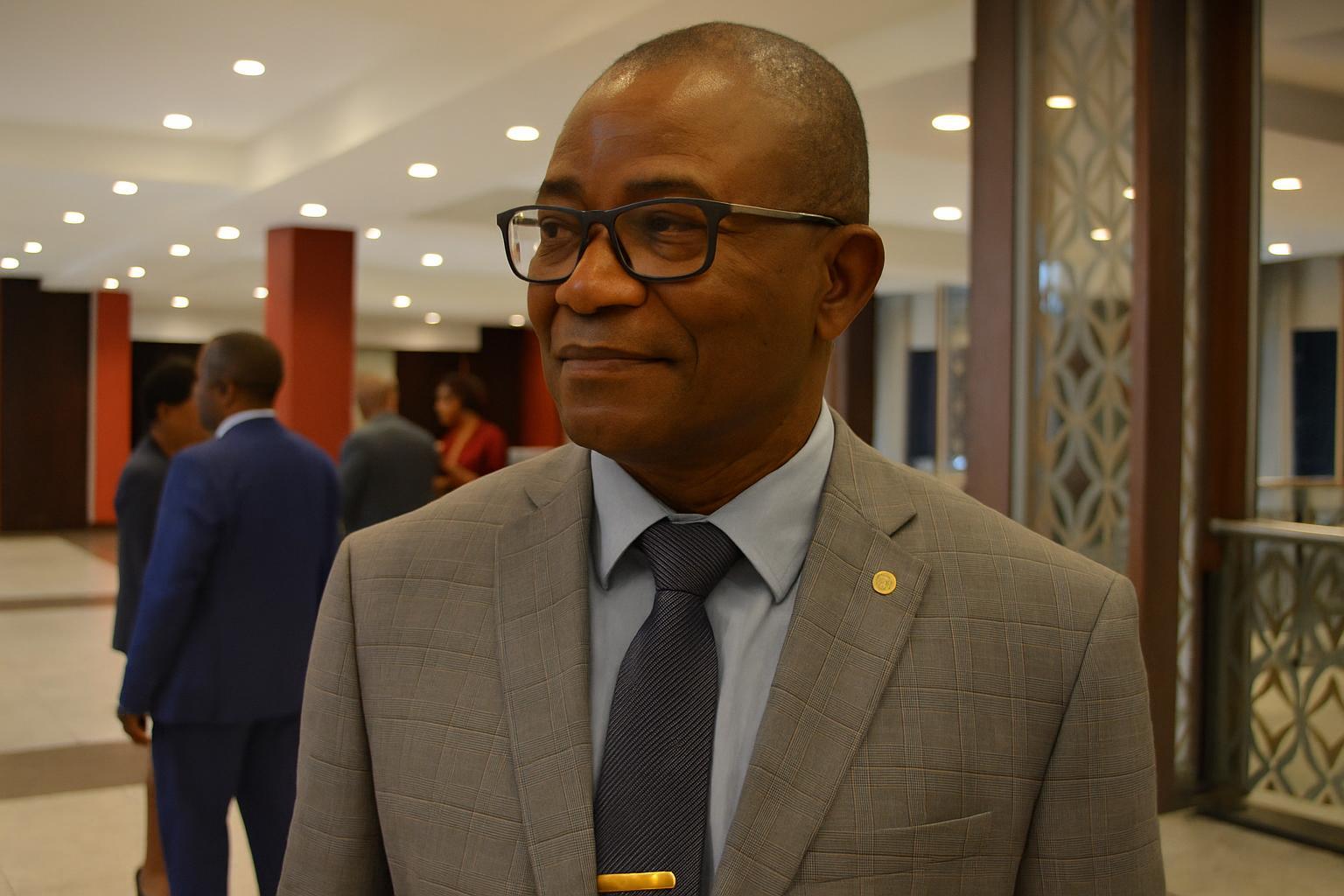
Bangui summit places honours at the heart of integration
The sixteenth Conference of Heads of State of the Economic and Monetary Community of Central Africa unfolded in the ceremonial halls of Bangui’s Palais de la Reconnaissance, bringing together the presidents of Cameroon, Central African Republic, Chad, Congo, Equatorial Guinea and Gabon. Beyond the strategic deliberations on monetary convergence and security, the public imagination was seized by the revival of two community orders that had remained largely dormant since their legal creation in 2003 (CEMAC Commission, 2023).
A total of 193 personalities were distinguished, ranging from sitting heads of state to civil-society contributors. Each of the six current presidents, joined by the president of the CEMAC Commission, Baltasar Engonga Edjo’o, received the dignity of Grand Commander of the Order of Community Merit. Former leaders Omar Bongo Ondimba of Gabon and Idriss Déby Itno of Chad were honoured posthumously in the Order of Community Recognition, adding historical depth to the ceremony and signalling an intention to treat the community’s past as a living asset for regional identity.
Anatomy of the community orders
The legal basis of the honours system dates to an Act signed in 2003 by the then Central African president Ange Félix Patassé, which instituted two distinct chivalric structures. The Order of Community Merit rewards concrete contributions to economic, social or cultural development across the common market, while the Order of Community Recognition is reserved for services of exceptional symbolic value that fortify the cohesion of Central Africa (Les Dépêches de Brazzaville, 2023).
According to Commissioner Fulgence Likassi-Bokamba, these decorations ‘constitute the moral cement of the integration project’, conveying gratitude not only to citizens of member states but also, when appropriate, to external partners whose input has demonstrably advanced CEMAC objectives. The revival of the orders therefore functions as a soft-power tool, reinforcing a narrative of shared destiny at a moment when regional integration efforts, from customs-union reform to infrastructure corridors, face both logistical and geopolitical headwinds.
Establishing the selection machinery
For two decades the orders existed on paper yet lacked the institutional machinery required by the founding texts. The first step in 2023 was therefore procedural: the establishment of a Council of Community Orders. Each member state appoints one representative, joined by delegates from the CEMAC Parliament, the Court of Justice, the Court of Auditors, the Bank of Central African States and the Commission itself. Likassi-Bokamba underscores that ‘without this council, the principles of equity and transparency could not be guaranteed’, hinting at a deliberate move to shield the process from perceptions of political patronage.
After the council’s constitution, the President of the Commission sought the endorsement of the acting chair of the Heads-of-State Conference to nominate a Grand Chancellor, as stipulated by statute. Only once those formalities were completed could national governments, institutions and even individuals transmit candidatures. The council met first in February and again in early July, cross-checking dossiers against measurable contributions, before forwarding a shortlist to the heads of state for final approbation (CEMAC Commission, 2023).
Dignities versus grades: a calibrated hierarchy
Within each order, a two-tier structure separates dignities from grades, a nuance often overlooked in public commentary. The dignities comprise Grand Officer and Grand Commander, reserved for heads of state, former heads of state, or personalities whose impact spans the entire community space. Below them, the grades—Knight, Officer and Commander—allow a more granular recognition of technocrats, academics, entrepreneurs and civil servants whose daily labour welds the integration architecture together.
During the Bangui ceremony, Likassi-Bokamba himself received the insignia of Commander of the Order of Community Merit. He attributes this distinction ‘to the collective endeavour of the Education, Research and Social Development Department’ that he oversees, subtly diverting attention from individual achievement toward institutional performance. This rhetorical choice reinforces the communitarian ethos underpinning the honours system and aligns with CEMAC’s broader communications strategy of privileging collective over personal narratives.
Toward regularised ceremonies and socio-economic impact
One concern raised in regional media has been the intermittent nature of the recognitions. Likassi-Bokamba acknowledges that ‘for a long time we functioned without a council; henceforth the sittings will be periodic as the texts require’. He cites two likely calendars: the 16 March CEMAC Day and future budgetary sessions where the heads of state convene. Regularity is critical, he argues, not merely for protocol but for the economic psychology of the region. Publicly acknowledging excellence encourages professionals to remain within Central Africa’s labour markets, mitigating brain drain and fostering a climate conducive to investment and governance reforms.
From a juridico-economic standpoint, the decorations may appear symbolic, yet they integrate with the Community’s incentive framework. By pairing honours with concrete programmes—such as scholarship funds steered by past recipients or mentorship networks under the Auspices of the Commission—the Council aims to translate prestige into measurable developmental dividends. Such linkages, still in the conceptual phase, could deepen the culture of accountability among decorated elites even as they enhance the visibility of integration successes.
Key takeaways for regional observers
The Bangui ceremony signals three developments likely to shape Central Africa’s diplomatic horizon. First, the activation of the Council of Community Orders supplies an institutional mechanism that had been conspicuously absent, closing a governance gap in the region’s normative framework. Second, the scope of the 193 distinctions demonstrates an intention to widen the circle of symbolic capital beyond political leadership to include technocrats and partners, thereby nurturing a merit-based regional identity. Third, by scheduling subsequent sessions, CEMAC embeds recognition within its operational calendar, offering predictability that may improve stakeholder engagement.
For policy makers in Brazzaville and beyond, the honours thus function as both a barometer and an accelerator of integration. By stitching together narratives of merit, memory and modernisation, they strengthen the intangible architecture that supports more visible endeavours such as financial convergence or transport corridors. In that respect, the ceremony’s resonance extends well beyond the gilded halls of Bangui, positioning the region to advance its collective ambitions with renewed moral legitimacy.
