
Brazzaville Reopens Its Archives
The marble atrium of the Pierre-Savorgnan-de-Brazza Memorial resonated last week with languages drawn from all compass points of the continent. From Abomey to Kinshasa, monarchs, historians and anthropologists assembled to commemorate the one-hundred-and-forty-fifth anniversary of the Brazza-Makoko Treaty, the accord that paved the way for the birth of Brazzaville on the right bank of the Congo River. While the treaty itself has often been read through the lens of nineteenth-century geopolitics, the hosts invited participants to revisit its meaning in the twenty-first century: an invitation to dialogue rather than a closed chapter of colonial record.
Scholars and Monarchs in Conclave
Five thematic panels knitted together disciplines as varied as political theology, archaeology and linguistics. The presence of dignitaries such as Radji Gbdebo Adechina Arichekola Aziz I, emissary of the King of Abomey, and Papy Ike Munziami, custodian of Kinshasa’s urban chieftaincy, gave the discussions a living immediacy. Their narratives, shared alongside those of historians like Frédéric Yavanguièle, underlined how royal courts once served as laboratories of governance, trade and artistic innovation long before European encroachment. “Remember that our crowns were forged in debate and in law,” insisted David Nkou Imbié of the Democratic Republic of Congo, reminding the audience that pre-colonial checks and balances continue to inform contemporary conceptions of authority across Central Africa.
Strategic Recommendations for Living Heritage
Deliberations crystallised around a series of operational recommendations. Foremost was the establishment of national and sub-regional centres devoted to the promotion of African traditions and cultures. Conceived as hybrid spaces, half community hub, half research institute, these centres would curate oral archives, support master artisans and act as incubators for cultural industries. Complementing the bricks-and-mortar ambition, delegates called for digital platforms to amplify the reach of intangible heritage, from raphia weaving tutorials streamed to the diaspora to virtual exhibitions of sacred regalia. Emphasis was placed on intergenerational dialogue, with tailored educational programmes envisaged for primary schools and universities alike so that “memory does not retire with our elders”, as one panellist phrased it.
Heritage Diplomacy and Regional Synergies
Diplomatic nuance permeated the closing session. Senegal’s ambassador to Congo, Ousmane Diop, evoked the historic camaraderie between Pierre Savorgnan de Brazza and the tirailleur Malamine Camara to illustrate how individual courage can reshape continental maps. By celebrating that partnership, the colloquium subtly reframed the treaty as an early exercise in African-European negotiation rather than a unilateral act. Participants also advanced the idea of a network linking existing royal courts and modern state institutions, envisaging shared conservation laboratories, rotational exhibitions and joint festivals to elevate heritage into a vector of soft power within the Economic Community of Central African States.
A Tribute to Presidential Patronage
In a motion adopted by acclamation, the gathering thanked President Denis Sassou Nguesso for what speakers described as his steadfast commitment to safeguarding ancestral values. Recent investments in museum infrastructure and the memorial itself were cited as tangible manifestations of that policy. Bélinda Ayessa, Director-General of the memorial and chair of the honorary committee, stressed that state support furnishes scholars with the stability required for long-term research while offering citizens venues in which to encounter their own past. “The life of a nation is not a mere succession of events; it is a symphony whose motifs echo across generations,” she said, borrowing the metaphor of a “polyphony” that would continue to reverberate once the proceedings were transcribed and published.
Diasporic Voices Enrich the Debate
The emotion of the colloquium peaked when Janiqwa Qwamary Nganga, an Afro-descendant from Georgia in the United States, took the stage. Her journey, tracing ancestral footsteps back to the Congo Basin, illustrated the global stakes of the conversation. “I speak in the name of the ancestors,” she intoned, drawing nods from assembled chiefs. Her presence served as a reminder that heritage policy today cannot be purely national; it must address the expectations of millions in the diaspora who look to Brazzaville, Abomey or Luanda for cultural anchorage. Organisers pledged to design outreach modules in English, French and major African languages to bridge the Atlantic and Indian Ocean divides.
À retenir
Beyond the ceremonial photographs, the central takeaway is the shift from commemoration toward actionable programming. The call for culture centres, digital archives and regional compacts signals an emerging consensus: heritage is both a moral duty and an economic resource capable of generating skilled employment in curation, tourism and creative design. By rooting modern nationhood in the legitimacy of ancient thrones, the colloquium positions cultural policy as a pillar of social cohesion amid rapid urbanisation.
Le point juridique et économique
Jurists present emphasised that safeguarding heritage intersects with intellectual-property regimes, especially where traditional knowledge underpins commercially valuable crafts or pharmacopoeias. Harmonising copyright statutes with customary law will determine whether artisans reap fair returns from their know-how. Economists, for their part, flagged the multiplier effect of cultural clusters around monuments such as the Pierre-Savorgnan-de-Brazza Memorial. According to preliminary estimates cited during the sessions, each franc CFA invested in heritage infrastructure can generate up to three francs in ancillary services ranging from hospitality to digital content creation, provided that clear governance frameworks are in place.
A Forward-Looking Epilogue
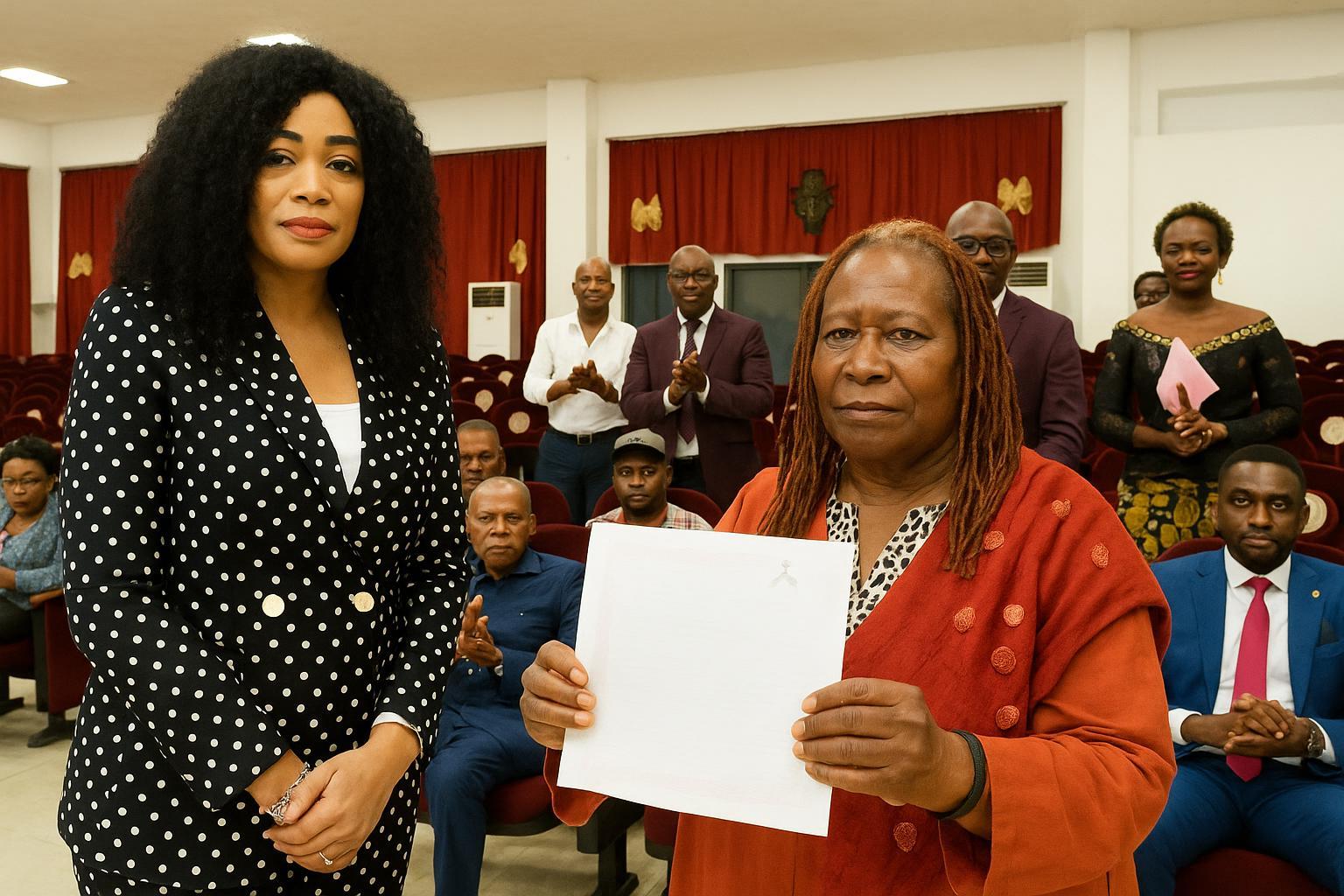
The ceremony closed with the presentation of honorary attestations, notably to Michel Ganari, the eighteenth Makoko, underscoring the enduring bridge between republican institutions and traditional authority. As attendees dispersed, the murmur in the corridors was less about the past conflicts that once dotted Central Africa’s map and more about the promise of a collaborative future in which cultural memory informs policy, diplomacy and entrepreneurship. If the colloquium’s recommendations translate into concrete projects, Brazzaville’s anniversary year may well mark a turning point, not only in the narrative of the Brazza-Makoko Treaty but also in the wider story of Africa’s reclaiming of its own intellectual and spiritual commons.
