
Historical Legacy and Contemporary Stakes
Health has never been a secondary matter for Congolese citizens. Before the democratic opening of the early 1990s, virtually all major medical facilities belonged to the State, while a handful of mission hospitals provided only medium-level services in rural outposts. Three decades later, the landscape is no longer monolithic. A vibrant private sector coexists with the traditional public structure, offering patients more options but also exposing severe disparities in access, quality and affordability. The debate now pivots on whether competition can be channelled into constructive complementarity for the broader public good.
Public Healthcare: Backbone under Strain
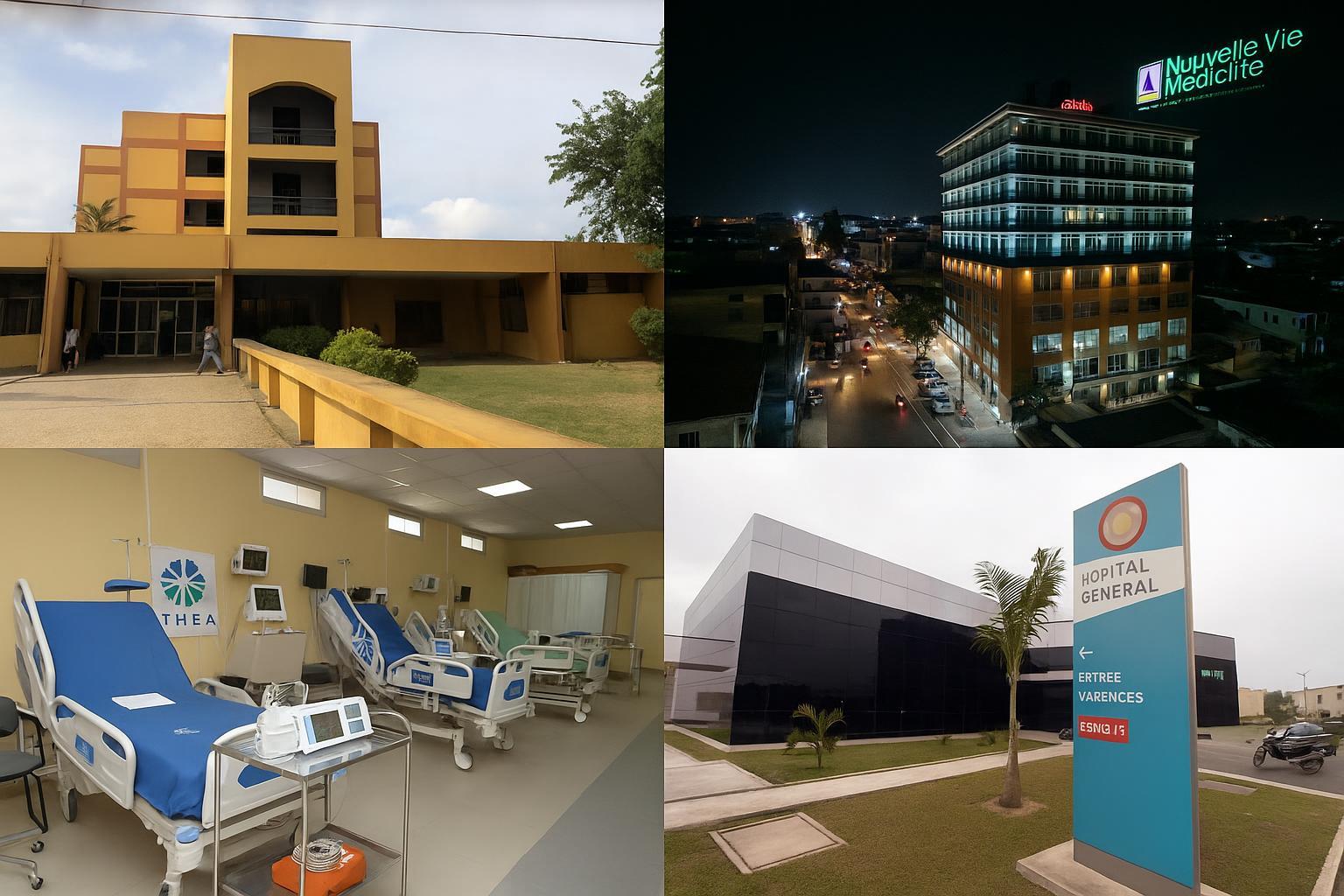
The public network, anchored by the Brazzaville University Teaching Hospital (CHU) and referral centres such as Talangaï, still carries the constitutional mandate of equitable service. Government investment has been “colossal”, yet the CHU itself was likened in 2019 to “a great patient in need of intensive care” upon the appointment of Canadian administrator Sylvain Villiard. Sub-optimal equipment, intermittent drug stocks and salary delays erode public confidence, even though consultation fees remain comparatively modest. Community health committees rose from forty-three in 2021 to seventy-two in 2023, signalling efforts to reinforce local governance; however, only about thirteen per cent of citizens reportedly enjoy regular access to primary care and merely thirty-five per cent of public facilities maintain an uninterrupted supply of essential medicines.
Private Providers: Islands of Excellence at a Price
Parallel to public difficulties, private medicine has surged, especially in Brazzaville and Pointe-Noire. Clinics renowned for rapid diagnostics and personalised follow-up now handle an estimated forty-four per cent of consultations and a quarter of all hospitalisations nationwide. The multispecialty Nouvelle Vie Médicité Hospital on Avenue de la Paix epitomises this ascent, combining seasoned physicians with state-of-the-art technology. Yet superior service is costly: without a universal insurance pool, the overwhelming majority of households cannot afford advanced procedures. Moreover, regulatory blind spots occasionally allow under-qualified or unlicensed entities to operate, a concern that public authorities acknowledge as they refine accreditation standards.
Epidemiological and Social Pressures
Congo-Brazzaville confronts a double burden of disease. Endemic infectious threats mingle with rising non-communicable ailments such as cardiovascular and metabolic disorders. Life expectancy averages sixty-four years for men and sixty-eight for women, while infant mortality hovers near fifty-six deaths per thousand live births and maternal mortality approaches three hundred eighty-three per one hundred thousand deliveries. These persistent figures underscore how socio-economic precariousness hampers prevention and timely treatment. According to international assessments, almost half of patients have resorted to informal payments or gifts to secure medical attention, a symptom of both household vulnerability and systemic fragility.
Governance, Integrity and Financing
Low user fees in the public sector are indispensable for social justice, yet chronic under-funding perpetuates equipment obsolescence and professional demotivation. The Ministry of Health has placed renewed emphasis on transparent subsidy allocation and on auditing hospital supply chains to curb leakages. On the private side, forthcoming regulatory updates aim to sharpen quality thresholds and clarify tariff schedules, thereby protecting consumers from opaque pricing. Stakeholders broadly agree that neither pillar can flourish alone; a blend of domestic budgetary effort, targeted international cooperation and accountable management is needed to restore trust and performance.
Toward Synergy: Public-Private Partnerships and CAMU
One promising avenue is the development of structured public-private partnerships that allow resource pooling without sacrificing equity. Diagnostic imaging, procurement of high-cost drugs and telemedicine are prime candidates for shared platforms. Equally crucial is the planned Caisse d’Assurance Maladie Universelle (CAMU), designed to spread risk across the population and negotiate fair reimbursements with both public and private providers. Properly implemented, CAMU could transform current dualism into a coordinated continuum, ensuring that rural clinics benefit from the technological advances showcased in urban private hospitals while metropolitan facilities receive a reliable flow of insured patients.
A Convergence Worth Nurturing
The cross-view of Congo-Brazzaville’s medical sectors reveals a marked duality, yet also a latent complementarity. Public facilities remain the indispensable guarantors of nationwide coverage, whereas private actors inject innovation, speed and managerial discipline. Achieving health for all therefore calls for calibrated regulation rather than strict rivalry. By rooting anti-corruption safeguards in public hospitals, tightening accreditation for private clinics and operationalising CAMU, national authorities possess practical levers to translate competition into a virtuous cycle of shared excellence. In such a scenario, patients—whether in Moungali or in the remote districts—stand to gain from a system where each component’s strengths reinforce, rather than negate, the other.
