
Brazzaville 2026 election countdown
With barely eighteen months separating the Republic of Congo from its next presidential election, political actors in Brazzaville have begun to sharpen their arguments and calibrate their alliances. On Friday 5 September 2025, the Rassemblement des forces du changement, an opposition coalition commonly referred to by its acronym RFC, delivered a statement that quickly circulated across social media platforms. The declaration, read by Congress of the People president Marcel Guitoukoulou, calls for a complete overhaul of the national voter roll and the introduction of biometric identification technology. The intervention reopens a long-running debate on how to reconcile administrative efficiency with the need for broad political confidence ahead of what many analysts expect to be a closely watched contest.
Opposition RFC demands biometric voter registry
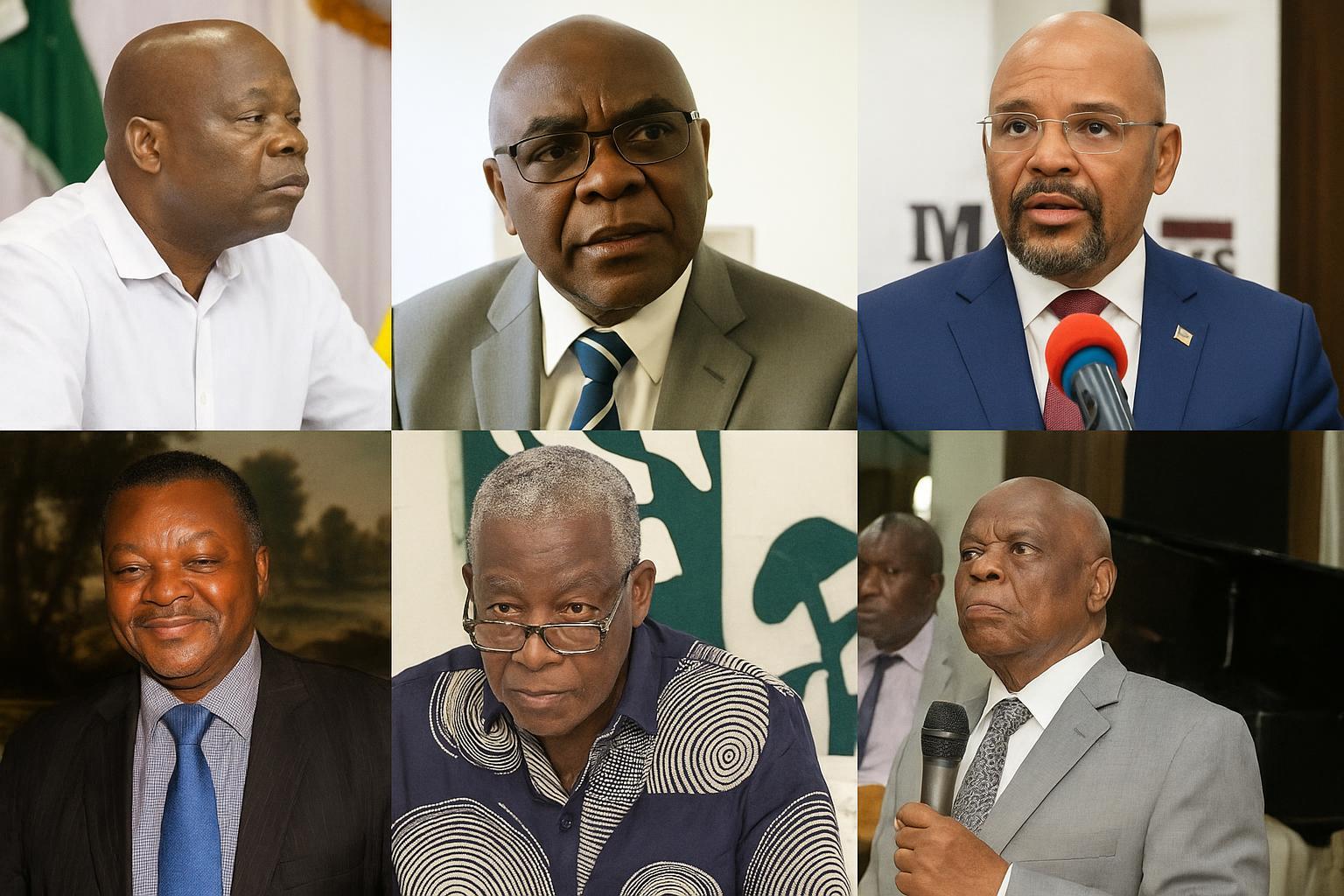
Speaking alongside leaders such as Clément Miérassa and Jean-Jacques Serge Yhomby-Opango, Guitoukoulou framed the proposed biometric registry as the linchpin of a “historic compromise” capable of guaranteeing free, transparent and peaceful polls. The RFC argues that the current voter list, last updated in 2023, contains duplications and omissions that could undermine public trust if left uncorrected. In its thirteen-point platform, the coalition also calls for an inclusive national dialogue that would bring together government, opposition, civil society, and traditional authorities under neutral facilitation. Without these safeguards, the opposition warns, the March 2026 ballot might be perceived as predetermined and thus risk low turnout and post-electoral disputes. Such concerns echo recommendations voiced in previous electoral observation mission reports to the country.
Government outlines modernisation roadmap
Officials at the Ministry of Territorial Administration strike a conciliatory tone, recalling that President Denis Sassou Nguesso’s 2021 inaugural address instructed the executive to explore new tools for voter management. A senior ministry adviser contacted by our newsroom stresses that feasibility studies on biometric kits and storage are “well advanced” and that a ministerial report will be submitted to cabinet before December. While the government rejects any suggestion of illegitimacy, it acknowledges that modernisation can strengthen confidence and facilitate logistics on polling day. The adviser underscores that “precision must outweigh political theatre” and invites the RFC to contribute expertise rather than ultimatums.
Central Africa’s biometric experience
Across Central Africa, biometric voter registration has gradually moved from pilot projects to standard procedure. Cameroon first employed fingerprint readers in 2013, Gabon in 2016 and the Democratic Republic of Congo in 2018, each encountering initial delays yet ultimately reporting lower rates of multiple voting. The Economic Community of Central African States consequently endorsed the technology as good practice for member states in 2022. Congolese technicians who observed the Kinshasa rollout note that reliable electricity, redundant servers and comprehensive voter education were decisive. Brazzaville’s challenge will be to adapt those lessons to a geography bisected by major rivers and vast forest corridors.
Prospects for inclusive political dialogue
Within civil society, associations such as Action pour la Démocratie Rurale welcome the RFC initiative yet caution that technical fixes cannot substitute for confidence between institutions. The Episcopal Conference has quietly explored the possibility of mediating consultations similar to the 2015 Sibiti forum on decentralisation. Diplomatic partners, notably the African Union and the International Organisation of La Francophonie, signal readiness to provide expertise on standards and data protection, provided that requests emanate from the state itself. Against that backdrop, observers detect early signs of convergence: the government insists on constitutional continuity, the opposition on procedural guarantees, both on avoiding confrontation.
À retenir
The debate is no longer about whether digitalisation will enter Congo’s electoral process, but about speed, scope and oversight. The RFC wants a fresh roll, government studies logistics, regional bodies pledge expertise, and civil society urges dialogue. All actors agree that peace, credibility and turnout will determine the election’s resonance.
Le point juridique et économique
Under the 2016 Constitution, the electoral register must be closed ninety days before polling day, placing a de facto deadline of early December 2025 on any overhaul. Budgetary projections prepared by the National Election Commission estimate that biometric registration would cost near 35 billion CFA francs, roughly 0.3 percent of GDP, if implemented fast. Finance ministry officials argue the expense remains manageable, especially if donor grants cover software licences. Economists add that transparent polls can bolster investor sentiment and lower borrowing costs.
Path ahead to March 2026 ballot
In the coming weeks, attention will focus on two calendars that must converge: the technical calendar of procurement and training, and the political calendar of party primaries and alliances. Should the government publish its biometric roadmap before year-end, opposition demands may evolve from existential to operational, centring on procurement oversight and observer accreditation. Conversely, prolonged silence could harden rhetoric. For now, both sides reiterate their commitment to stability, a message likely to resonate with a population eager for growth. The 2026 election therefore offers an opportunity not only to choose a leader but also to showcase administrative innovation.
