
Congolese Diaspora and the Politics of Memory
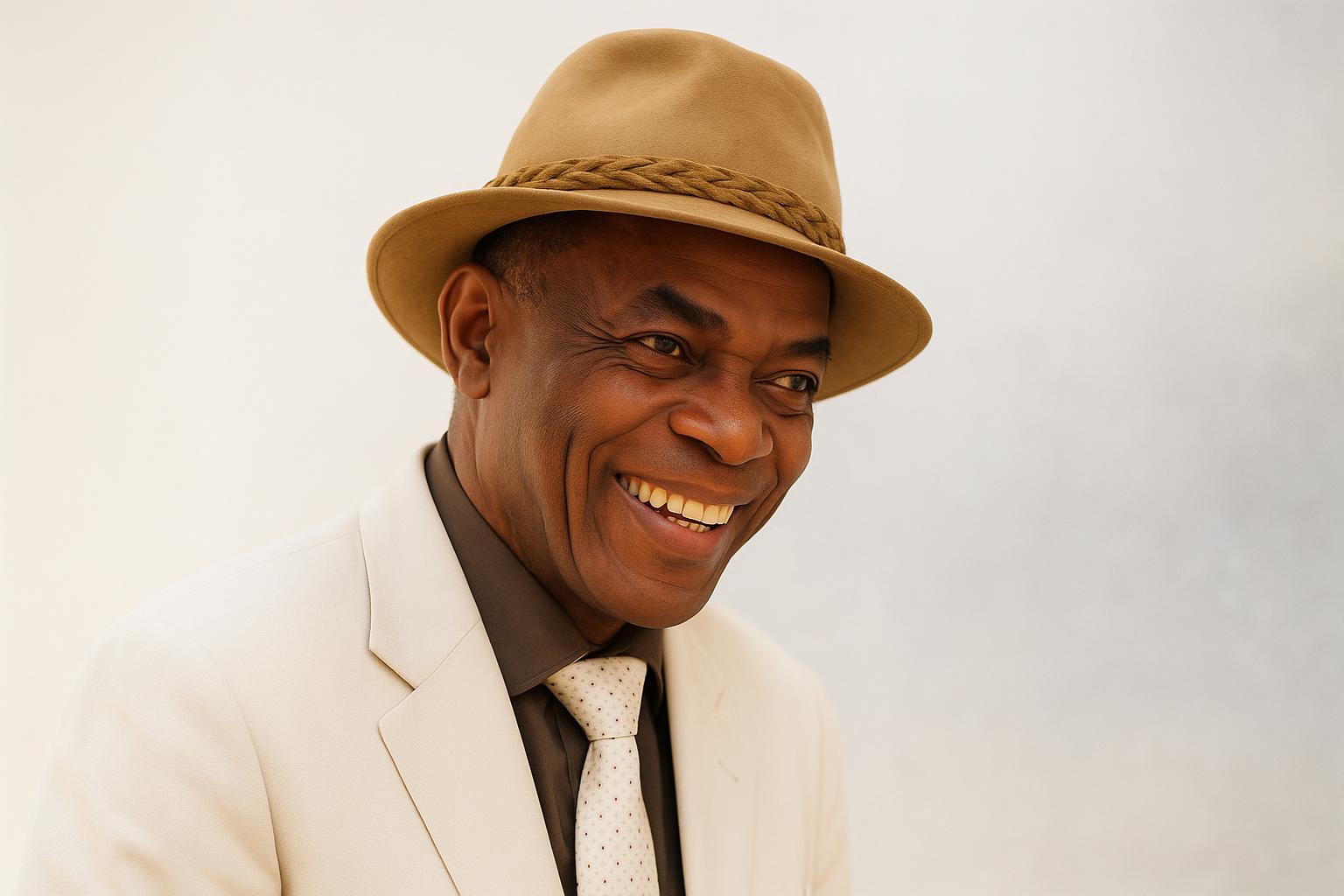
When news broke that Paul Tsouarès De M’Poungui had succumbed to illness at Paris’s Cochin Hospital on 30 July 2025, the Congolese community in France responded with a blend of sorrow and solemn pride. For nearly five decades the architect had been a visible figure in the wider francophone diaspora, navigating student activism in the 1970s, entrepreneurial architecture in the 1990s and, more recently, associative life through the organisation Espace Vision. His passing invites a broader reflection on how Brazzaville maintains affective ties with citizens who left home to study or work abroad yet remain, to borrow the African Union’s formulation, “indelibly linked to the motherland” (African Union Commission, 2023).
Funeral transfers from Europe to Central Africa are logistically delicate. They also possess a quietly diplomatic character, requiring coordination among consular offices, airlines, customs officials and local authorities. Each step—securing a laissez-passer mortuaire in Paris, receiving the casket at Pointe-Noire’s Agostinho-Neto International Airport and escorting it to the Bouenza region—becomes a symbolic relay of sovereign responsibility, reinforcing the notion that citizenship transcends geography.
A Life Sketched in Concrete and Conscience
Born in 1952 near Mouyondzi, M’Poungui arrived in France on a state scholarship at the height of post-independence optimism. Sources close to the Association des Étudiants Congolais recall his “irrepressible sense of debate” during meetings that often stretched past midnight in cramped university residences. Those habits of argument matured into professional exactitude; colleagues at his Paris-based studio remember an architect who insisted that every façade hold both structural integrity and social meaning.
Between 1992 and 1997 M’Poungui served as housing adviser to President Pascal Lissouba. Archival minutes of cabinet preparatory sessions indicate that he pressed for earthquake-resistant norms and community-led layouts in peri-urban Brazzaville—ideas that anticipated the Habitat III agenda adopted decades later by the United Nations. Offered a ministerial post in 1995, he demurred, citing the need to keep his firm’s regional projects solvent. The decision conveyed an understated sense of civic independence that friends say defined his temperament more than any formal title could.
State, Family and Protocols of Repatriation
M’Poungui’s final itinerary was set in consultation with Congolese consular authorities in Paris, the Directorate-General of Civil Aviation and his extended family. Retirement-era tax official Marcel Bissila—identified by relatives as head of the lineage—has coordinated the multiphase journey: a mortuary vigil in Épinay-sur-Seine, transfer aboard an Air Congo charter on 29 August, and burial the next day in Moukosso village. The schedule dovetails with guidelines issued by Brazzaville’s Ministry of Foreign Affairs, which recommend that repatriations occur within thirty days to balance administrative processing with family expectations.
Observers note that such ceremonies often double as soft-power showcases. The provision of airport honors, adjudicated at director-level within the Ministry of Culture and Tourism, signals institutional respect for citizens who enhance national prestige abroad. In recent years the Republic has facilitated similar homecomings for historian Théophile Obenga and soprano Isabelle Ndounou, gestures that advance the government’s diaspora-engagement strategy without recourse to overt propaganda.
Soft Power in Funeral Diplomacy
Political scientists have coined the term “funeral diplomacy” to describe how states use high-profile burials to consolidate domestic unity and project international poise (Center for Strategic and International Studies, 2024). M’Poungui’s case fits within this rubric, albeit on a more intimate scale. Congolese diplomats stationed in Prague, led by Consul Serge M’Poungui, are expected to attend, reinforcing the cross-continental bonds that the deceased himself helped to nurture. Their presence also acknowledges the architect’s network in central Europe, where he supervised a low-cost housing pilot for Czech investors in 2018.
Such attendance is not ceremonial excess. Analysts highlight that diaspora remittances accounted for an estimated 3.2 percent of Congo’s GDP in 2022 (World Bank, 2023). By dignifying a prodigal son’s return, Brazzaville affirms that the social contract remains valid well beyond territorial confines, potentially inspiring professionals abroad to channel expertise and capital back to the Republic.
Reflections on Cultural Continuity
The rural landscape of Moukosso, lined with red-brick compounds and palm groves, will soon receive one of its most cosmopolitan sons. On the surface it is a simple homecoming, yet for local elders the moment knits past and present into a single narrative thread. M’Poungui’s plan to donate architectural sketches for a future village library, revealed in a letter to his cousin earlier this year, reinforces the notion that modern skills can be re-rooted in ancestral soil.
That aspiration dovetails with national policies that prioritise balanced territorial development, particularly in the Bouenza department where agro-industrial potential increasingly intersects with new infrastructure corridors funded through public-private partnerships. By resting there, M’Poungui inadvertently becomes a symbolic bridge between urban expertise and rural transformation—an idea that aligns with President Denis Sassou Nguesso’s stated objective of “leaving no region behind in the march toward emergence” (Presidential address, 2024).
As the final prayers rise over Moukosso’s laterite earth, diplomats and villagers alike may discern in the architect’s journey a quiet reminder: the diaspora is not a place but a condition, one whose obligations and privileges persist until, and even beyond, the moment a casket touches home ground.
