
Unexplained burglaries unsettle the “capital of green gold”
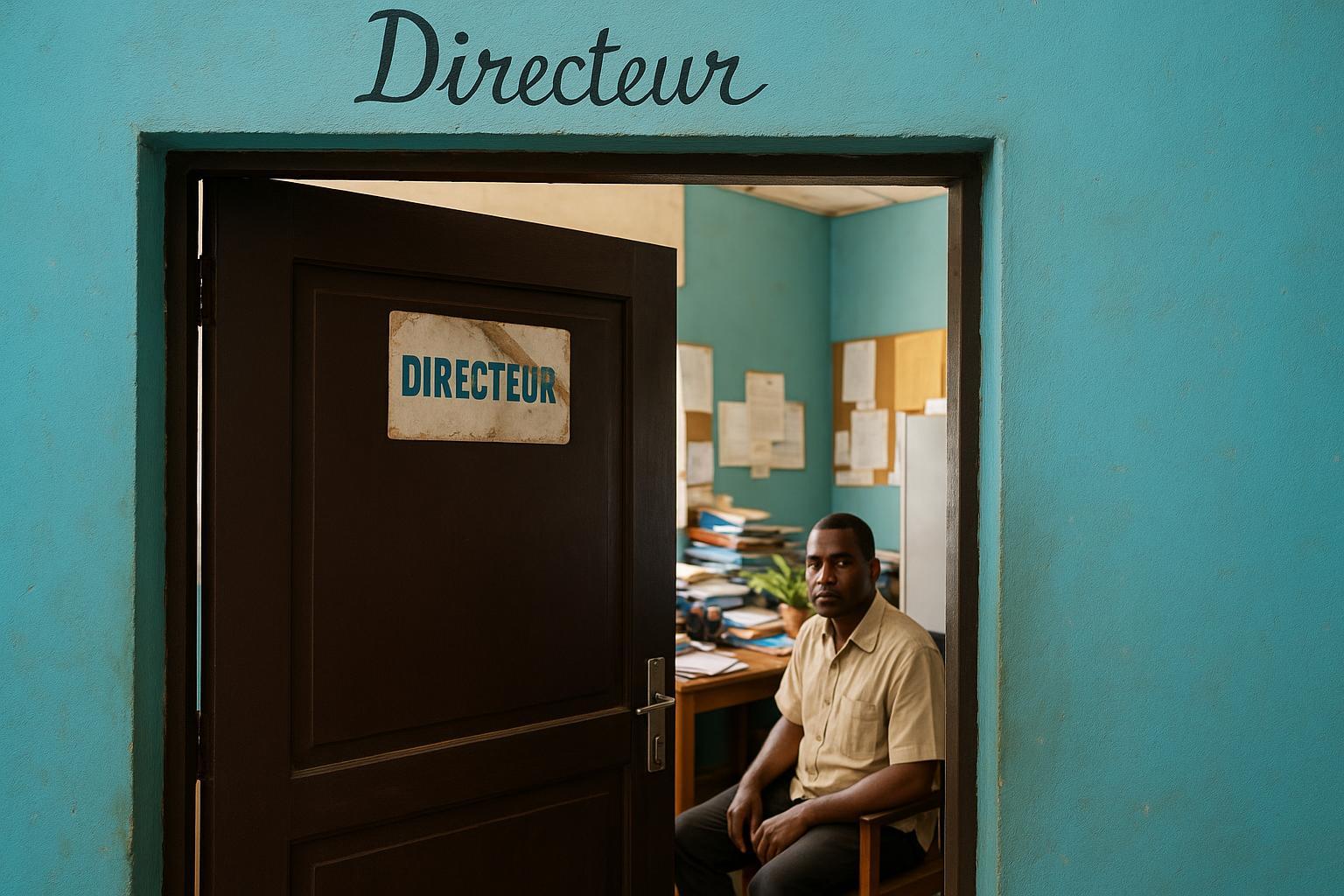
The silent corridors of the Pierre Lountala Lower Secondary School in Dolisie betrayed little trace of the turmoil that unfolded during the night of 20 August. By dawn, every administrative office door lay splintered, drawers overturned, yet nothing of tangible value appeared missing. Similar scenes had been recorded days earlier at the nearby Hammar and Unité colleges. For a city long known as the “capital of green gold” because of its timber economy, the sequence of intrusions has strained the nerves of educators, parents and local officials alike. Deputy headmaster Ludovic Maxime Maboulou, still bewildered, reported that even the district police commissioner expressed perplexity at a modus operandi that seemed to privilege intimidation over theft.
Patterns of campus intrusions in Niari province
Security specialists in Brazzaville note that educational facilities across Niari have reported a gradual uptick in low-level property crime since late 2022. In most instances, offenders exploit poorly lit perimeters, porous fencing and the predictable lull of weekend nights. Yet the recent raids stand apart for their apparent absence of material gain, suggesting motives that range from delinquent bravado to attempts at sabotaging examination records. The General Directorate of Territorial Surveillance has so far refrained from attributing blame, citing an ongoing inquiry that entails forensic mapping of entry points and cross-referencing with earlier police blotters. Meanwhile, parents’ associations point to a wider demographic shift: the rapid expansion of peri-urban settlements around Dolisie has complicated traditional community watch networks, leaving campuses more exposed after school hours.
Government initiatives to fortify educational spaces
Mindful of the constitutional mandate to provide a safe learning environment, the Ministry of Pre-School, Primary, Secondary and Literacy Education has revived a 2019 circular that authorises school boards to contract private guards under subsidised terms. In parallel, the Interior Ministry’s Department of Public Security has reordered patrol routes in Niari to give priority to facilities registering repeated infractions. While budgetary details are not public, officials close to the dossier underline that funding allocations were preserved in the 2024 finance law despite broader fiscal tightening. A senior adviser, requesting anonymity, characterises the approach as “preventive diplomacy at the micro level”, where the presence of uniformed officers is calibrated to reassure without militarising the classroom. International partners have taken note: the Japanese International Cooperation Agency recently supplied solar-powered floodlights to seven rural schools, and UNICEF has pledged technical guidance for child-sensitive crisis protocols (UNICEF 2023).
Balancing security with pedagogy and community trust
Educators, for their part, caution that physical fortification alone cannot substitute for the social texture that once made campuses extensions of the neighbourhood. The rector of the Marien-Ngouabi University, Jacques Nguimbi, argues that “excessive securitisation could inadvertently erode the openness essential to academic inquiry”, a sentiment echoed during the July national education forum. In Dolisie, teachers have begun integrating civic modules that encourage pupils to regard their school property as a collective good. Faith-based organisations, historically influential in the province, have convened evening cultural events on campus grounds to maintain human presence after dusk, thereby deterring would-be intruders. Preliminary police data indicate a modest decline in vandalism at sites where such community engagement is active.
Regional perspectives and avenues for international support
Neighbouring Gabon and the Democratic Republic of Congo have faced comparable challenges as educational enrolment outpaces infrastructure development. Brazzaville’s diplomats in Libreville note that a 2021 Gabonese pilot programme installed biometric checkpoints at select high schools, reporting a forty-percent drop in after-hours trespass. Congolese officials are studying the model’s scalability but remain cautious of the upfront costs and data-privacy implications. In the multilateral arena, the Central African Economic and Monetary Community has placed ‘safe learning environments’ on the agenda for its upcoming ministerial, signalling regional acknowledgment that school security intersects with broader human-capital objectives. According to the Economic Commission for Africa, every additional year of secure schooling can raise lifetime earnings by up to nine percent, underscoring how the stakes extend beyond property loss into the realm of socioeconomic resilience (ECA 2022).
Toward a holistic security architecture for Congo’s classrooms
As investigators parse clues from the perplexing Dolisie break-ins, policymakers confront the wider imperative of shielding educational gains achieved over the past decade. The government’s strategy appears to revolve around layered responsibility: targeted law-enforcement support, intelligible resource allocation for school boards, and grassroots vigilance that preserves the conviviality of campus life. The equilibrium is delicate—too little intervention invites repetition of the disruptive intrusions; too heavy a hand may curtail the very openness that engenders scholarly curiosity. Yet the convergence of domestic resolve and calibrated international assistance suggests a pathway by which Congo-Brazzaville can strengthen its learning environments without compromising its pedagogical ethos. For the students of Pierre Lountala and their peers across Niari, that balance could prove decisive in ensuring that nocturnal silence once again simply heralds the promise of a new school day.
