
A discreet bilateral channel gains traction
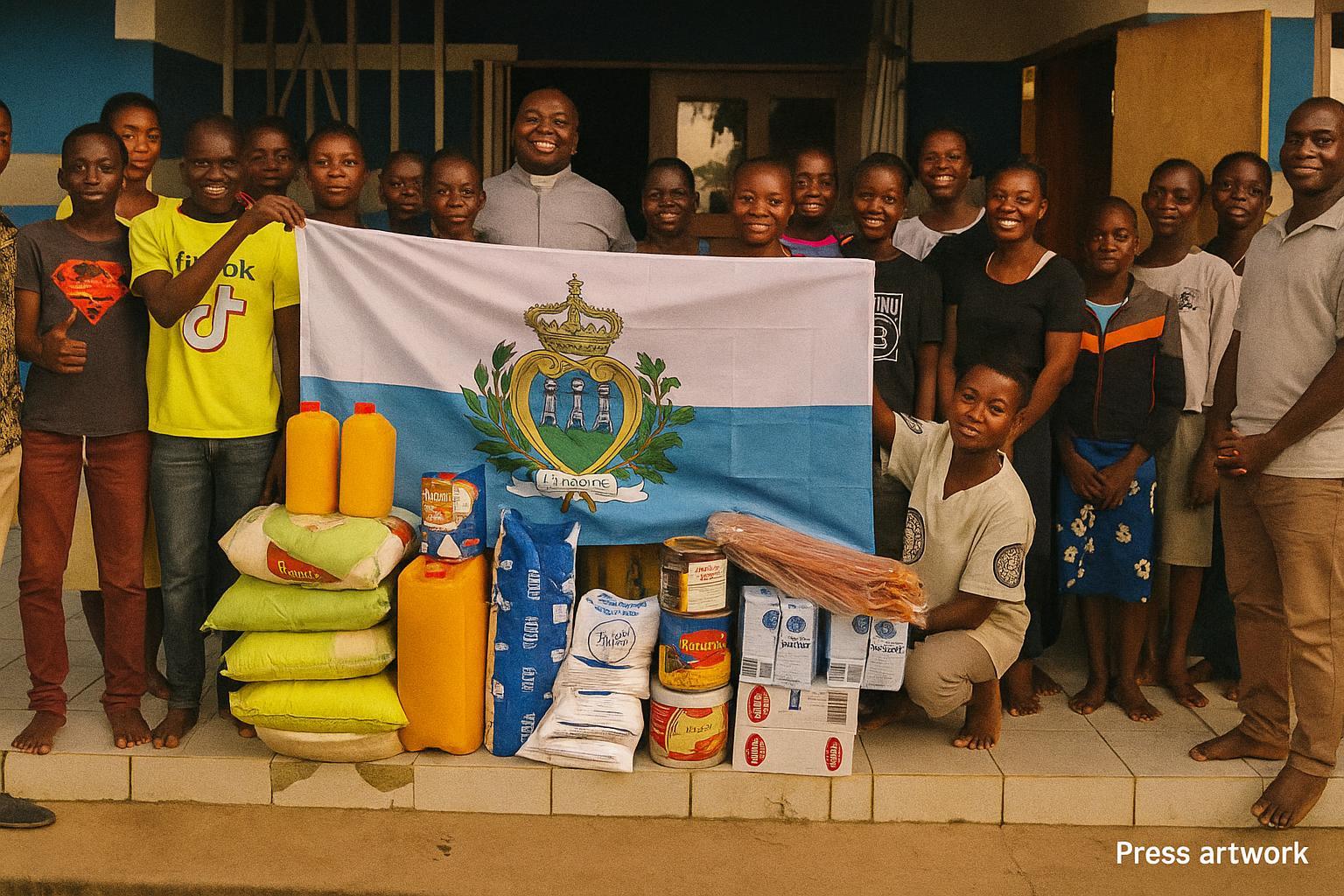
Far from the conspicuous conference halls of multilateral summits, the Republic of Saint-Marin has opted for a deliberately low-profile yet high-yield approach in Congo-Brazzaville. Since the establishment of formal ties in 2018 and the opening of a consular post in Pointe-Noire three years later, the micro-state has channelled resources toward the Association Maison du Cœur-Amis du Congo, better known as AMACO. The partnership, senior Congolese officials note in private conversations, has matured into a laboratory of ‘tangible diplomacy’, a phrase coined by the Sammarinese envoy to describe assistance that can be measured in litres of clean water or kilograms of honey rather than in press releases (Consulate of San Marino in Pointe-Noire, 2024).
Grassroots infrastructure as a hallmark of credibility
At the heart of AMACO’s compound in Kingoué stands a water tower powered by a Sammarinese-donated pump. Commissioned in late 2022, the facility has ended the orphanage’s dependence on intermittent truck deliveries, stabilising sanitation indicators that local health officers track with growing interest (Bouenza Health District Report, 2023). The intervention, though modest in budgetary terms, reinforces a perception among residents that foreign engagement can be concrete and accountable. Marie Moussoumounou, a candidate for the national junior-secondary exam, encapsulates the sentiment: ‘The pump is invisible in daily conversation, yet every cup of drinking water reminds us that somebody far away values our future.’
Apiculture: a strategic pivot from charity to revenue
September 2024 marked a qualitative leap in the partnership as fifty fully assembled beehives arrived from Pointe-Noire aboard a donated flat-bed truck. Prior to the delivery, AMACO maintained nine hives, only three of which were colonised; the new consignment has elevated output projections from artisanal samples to a semi-commercial scale. Early harvests indicate an annual potential of 1.2 tonnes of honey, complemented by marketable quantities of propolis and beeswax (AMACO Internal Production Log, 2024). The beekeeping expansion aligns with Congo-Brazzaville’s official strategy of diversifying rural livelihoods and resonates with Saint-Marin’s own emphasis on ecological artisanal industries, thereby creating a rare policy convergence across two vastly different polities.
Education as the connective tissue of soft power
Beyond material inputs, the consulate underwrites an unlimited internet subscription that turns AMACO’s modest library into a digital gateway. Recorded lecture series from regional universities are projected each weekend, enabling pupils to compare national curricula with global benchmarks. Two beneficiaries have already embarked on refrigeration‐engineering training in Brazzaville, a pathway chosen after remote consultations with Sammarinese vocational institutes. While grants remain small, the symbolic value of a micro-state facilitating twenty-first-century skills in a rural Congolese district cannot be overstated. According to a recent field note by the École Nationale d’Administration in Brazzaville, ‘micro-diplomacy gains traction precisely because its scale allows for intimate monitoring and rapid course correction’ (ENA Policy Brief, 2024).
Economic rationale behind altruism
Observers sometimes portray Saint-Marin’s outreach as purely philanthropic, yet the calculus is more nuanced. The republic, with a per-capita GDP above forty-four thousand euros, is repositioning itself as an innovation hub for green and bioscience sectors. Partnerships in apiculture and sustainable agriculture offer field-testing opportunities in tropical ecologies unavailable within its Alpine confines. Congolese authorities, eager to promote climate-resilient value chains, find in Saint-Marin an agile counterpart unconstrained by the institutional inertia that often dogs larger donors. The resulting symbiosis illustrates a shift from the classical North–South aid paradigm toward a networked economy of specialised micro-actors (World Bank Development Indicators, 2023).
Bouenza’s local governance gains
District authorities report a noticeable decline in petty rural exodus since AMACO began offering vocational tracks anchored in revenue-generating activities. The presence of a reliable donor, however small, strengthens the district’s bargaining position in provincial budget negotiations. In the words of the Bouenza Prefect, ‘Every time honey sales climb, our argument for feeder-road maintenance becomes less rhetorical and more empirical.’ Such feedback loops illustrate how targeted external assistance can activate dormant local capacities without displacing government responsibility.
Strategic implications for Congo-Brazzaville
From Brazzaville’s vantage point, cultivating relations with a micro-state of Europe’s inner periphery complements a broader diplomatic policy of multipolar engagement championed by President Denis Sassou Nguesso. By demonstrating that even a nation of sixty-one square kilometres can add value to national development objectives, the partnership widens the spectrum of potential collaborators and mitigates over-reliance on any single geopolitical bloc. It also underscores the administration’s narrative that sovereignty entails orchestrating diverse external contributions while retaining agenda-setting authority—a stance consistent with the country’s recent forays into climate-finance diplomacy at forums such as the Three Basins Summit.
Prospects and measured optimism
Looking ahead, both parties hint at expanding cooperation into organic coffee cultivation, leveraging Saint-Marin’s research expertise in high-altitude crops adapted to climate stress. Negotiations are equally advanced for exchange programmes pairing Sammarinese art curators with AMACO’s fledgling gallery, a move that could anchor cultural diplomacy to the economic gains already registered. While risks of donor fatigue and logistical hurdles remain, the track record thus far suggests that scale, rather than constraining ambition, can incubate experimental models whose lessons transcend their immediate geography.
