
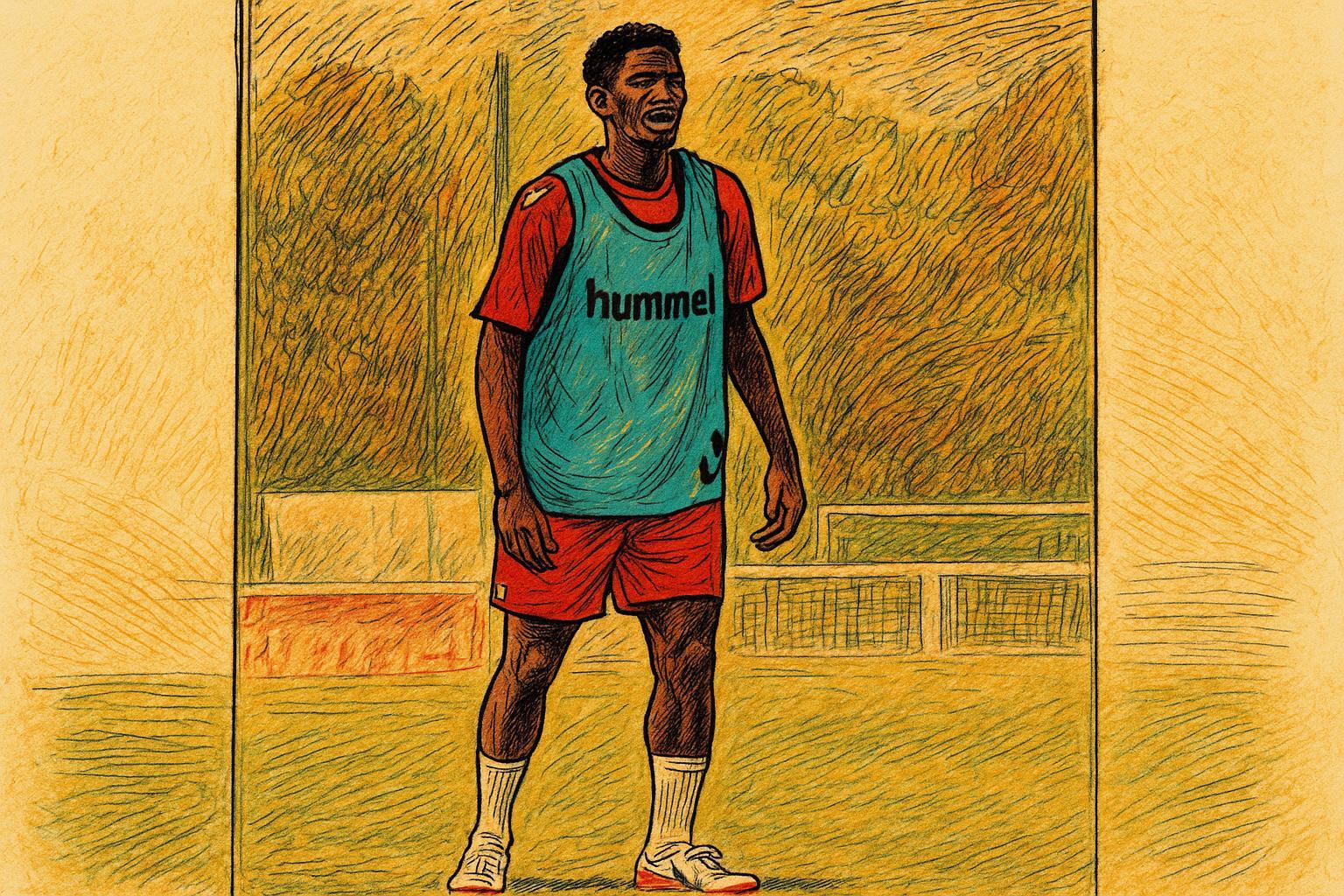
Congolese Footprints Across the French Third Division
When the floodlights are lit for the opening round of France’s National 1, the players jogging through the tunnel will include an unusually dense contingent of Congolese talent. From Destin Banzouzi’s imposing presence at Bourg-en-Bresse to veteran midfielder Yann Mvila’s poised distribution for SM Caen, eighteen Congolese or Franco-Congolese footballers are registered for the 2023-2024 campaign. Seven of them already hold senior international caps, a testament to the widening bridge between Brazzaville and the French professional pyramid (Fédération Française de Football data, July 2023).
The distribution is geographically eclectic—Valenciennes, Sochaux, Orléans, Rouen, and Versailles all feature Congolese names on their squad sheets—yet it is strategically coherent. National 1 offers a rare equilibrium: sufficiently competitive to accelerate development, yet porous enough to grant meaningful minutes to young players fresh from academies. “Playing regularly at this level sharpens decision-making,” notes former Congo captain Oscar Ewolo, now a pundit for Canal+ Afrique, “and the national team will harvest those dividends.”
Diaspora Talent and the Red Devils’ Competitive Horizon
Congo’s national team, the Diables Rouges, has historically relied on Ligue 1 and Ligue 2 call-ups for World Cup and Africa Cup of Nations qualifiers. The latest wave from National 1 expands head coach Paul Put’s tactical options. Goalkeeper Trey Vimalin’s reflexes at FC Fleury 91, winger Alain Ipiélé’s verticality at Valenciennes, and 19-year-old César Obongo’s versatility at Dijon promise to deepen squad rotation, particularly in the congested CAF qualifying calendar.
Brazzaville’s technical department is attentive to dual nationals whose formative years unfolded in France’s academies. The French training methodology stresses positional intelligence and physical conditioning—attributes that can complement the raw athleticism typically associated with Central African football. “Convincing Franco-Congolese prospects to embrace the red jersey is as diplomatic as it is sporting,” a FECOFOOT official confided on condition of anonymity.
Soft Power Beyond the Touchline
Presidents and ministers often invoke sport as a vector of influence; Congo-Brazzaville is no exception. The visibility of its citizens in a European professional league, broadcast weekly on public and pay-TV platforms, offers intangible returns that diplomatic cables rarely quantify. Sponsorship talks between Congolese state entities and French clubs, discreet yet real according to industry consultants at KPMG Sports Advisory, illustrate the commercial undertow that can accompany on-field performance.
Moreover, the presence of Congolese athletes across French provinces nurtures people-to-people links—a soft-power asset consonant with Brazzaville’s broader foreign-policy doctrine emphasizing cultural outreach. Municipal councils in Orléans and Concarneau, for instance, have hosted Congolese cultural days around match weekends, weaving football into a tapestry of music, gastronomy and business networking.
Economic Ripples and Domestic Development
Remittances from Europe’s lower divisions may not rival the windfalls generated by Premier League stars, yet they remain consequential. The African Development Bank estimates that player remittances inject several million euros annually into Congo’s local economy, funding family enterprises and community projects. This micro-financing effect tends to escape headline statistics but shapes livelihoods in Pointe-Noire and Dolisie.
Brazzaville is simultaneously refining its domestic football architecture. The 20,000-seat Stade de Kintélé, inaugurated for the 2015 All-Africa Games, now hosts coaching clinics aligned with FIFA’s Talent Development Scheme. By synchronizing domestic training with the pathways visible in National 1, policymakers aim to reduce the talent drain while still encouraging beneficial European exposure.
Navigating Dual Allegiances and Regulatory Complexities
FIFA’s 2020 eligibility amendments allow players capped at youth level by France to switch allegiance should they meet specific criteria—a legal nuance at the heart of Congo’s recruitment strategy. Midfielder Roger Tama Mpinda of Châteauroux, capped by France U-18 in 2015, now meets the requirements for a one-time switch, according to lawyers familiar with the dossier. The Congolese Football Federation has set up a liaison unit with legal advisors in Paris to expedite such processes, mindful of tight CAF registration windows.
Yet the pull of Les Bleus remains potent. Youngsters like Dylan Nzamba and Théoglade Moukilou, still in Orléans’ academy system, flirt with both possibilities. FECOFOOT’s approach, insiders say, is to present Congo not merely as a fallback but as a platform where a player can “write history rather than footnotes.”
Perspectives from Brazzaville and Paris
Government officials in Brazzaville, while publicly cautious, privately celebrate the deepening Franco-Congolese football corridor. A senior diplomat at Congo’s embassy in Paris frames it as “a living artery of our bilateral relationship—sporting, cultural, and increasingly economic.” French club directors echo the sentiment, praising Congolese players for a blend of resilience and technical flair.
As the National 1 season unfolds, each successful dribble or decisive save by these eighteen ambassadors of the tricolour rouge-vert-or will resonate far beyond the stadium perimeter. In a geopolitical era where image is currency, Congo-Brazzaville’s return on this athletic investment could prove as valuable as any communiqué signed in an ornate chancery.
