
Measured Shock in Central African Corridors
The recent escalation of United States customs duties has rippled across global supply chains, yet in the corridors of Bangui, Libreville or Brazzaville the mood remains guarded rather than alarmist. Exports from the Economic and Monetary Community of Central Africa represent barely two percent of the bloc’s external sales to North America, a statistical footnote when contrasted with the European Union and China. Nevertheless, senior officials concede that even a marginal disturbance can snowball in highly open primary-commodity economies. By acknowledging the limited direct exposure while refusing complacency, CEMAC policymakers embrace a posture of ‘measured shock’ designed to reassure domestic constituencies and international partners alike.
Monetary Guardians Weigh Scenarios
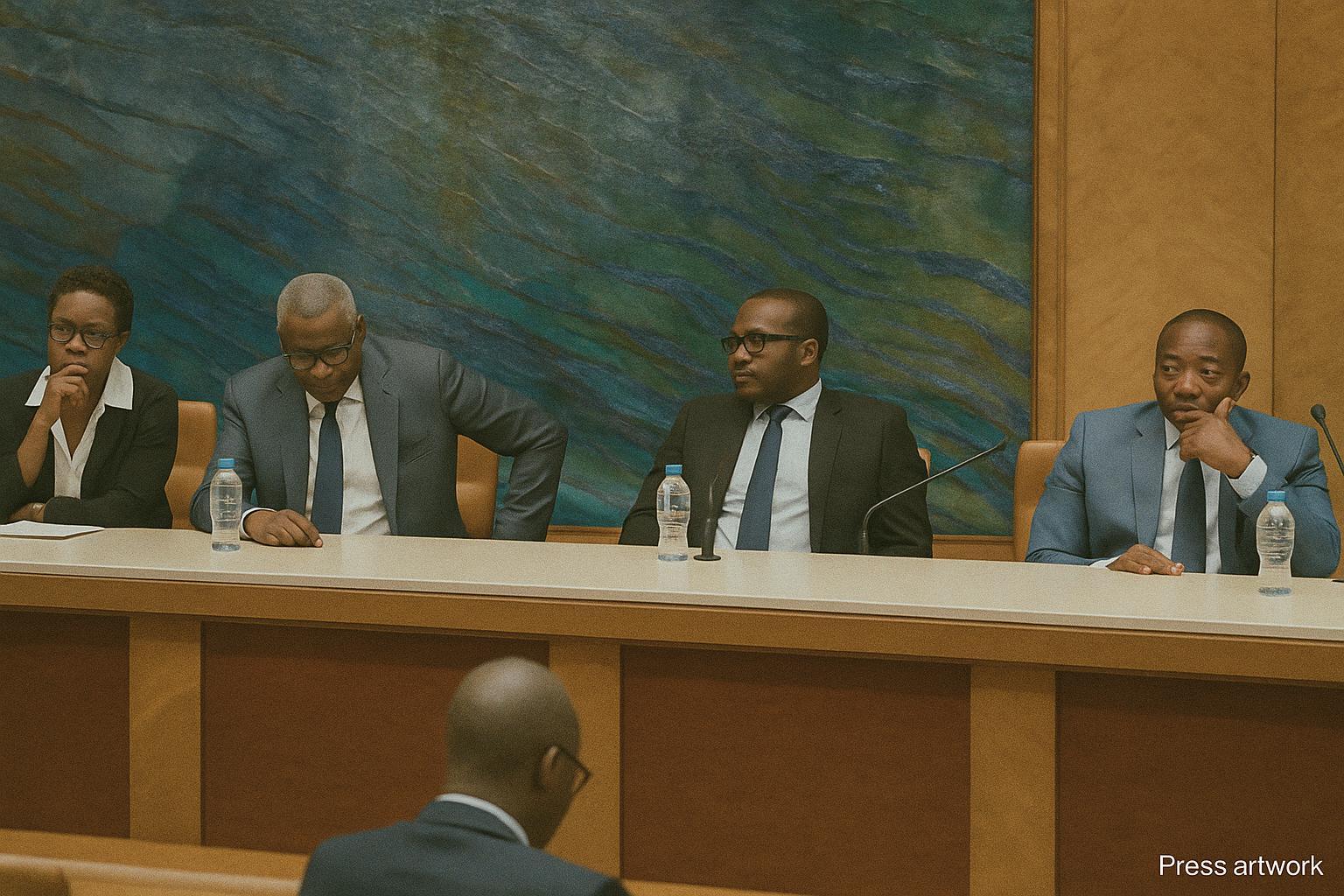
The regional central bank, BEAC, convened an economy-and-finance forum by videoconference on 24 July, bringing together governors, academic economists and trade diplomats to model hypothetical balance-of-payments impacts. According to preliminary simulations shared during the session, a uniform ten-to-thirteen-percent surcharge on CEMAC goods landing in U.S. ports could shave a fraction of one percentage point off the region’s foreign-exchange earnings, with potential secondary effects on inflation through a slightly weaker CFA franc. Yet BEAC’s chief economist underscored that the bloc’s reserve position—buoyed by prudent management since 2017—offers “ample cushion to absorb a modest external price shock” (BEAC, 2024). The monetary authority’s messaging thus aligns with President Denis Sassou Nguesso’s longstanding emphasis on macroeconomic stability as a prerequisite for sustainable diplomacy.
Sectoral Fault Lines: Oil and Timber
Behind aggregate numbers lie sectoral sensitivities. Hydrocarbons still account for roughly eighty percent of Congo-Brazzaville’s export receipts, while timber remains pivotal for Gabon and, increasingly, the northern districts of the Republic of Congo. Industry executives note that most crude cargoes from Pointe-Noire are denominated in dollars and often part of multiyear offtake contracts, reducing immediate vulnerability. By contrast, processed wood shipments—already squeezed by European certification requirements—could face margin compression if U.S. buyers seek alternative suppliers from Southeast Asia. A director of the Congolese Forest Industries Union observed that “even a symbolic tariff can tilt the scales in a price-sensitive niche” (industry interview, August 2024).
Diversification as Strategic North Star
The tariff episode has revived conversations about economic diversification that have animated regional summits for more than a decade. Drawing inspiration from Gulf Cooperation Council investment blueprints, CEMAC ministers are exploring petrochemical clusters, agribusiness corridors along the Congo River basin and digital-services platforms connected to the new Central African fiber-optic backbone. Brazzaville’s National Development Plan 2022-2026 already earmarks resources for downstream gas monetisation and special economic zones aimed at light manufacturing. Observers argue that transforming the tariff challenge into a catalyst for such projects would not only mitigate external shocks but also reinforce domestic value chains, reinforcing President Sassou Nguesso’s narrative of “emergence through productive transformation.”
Diplomatic Nuances with Washington
While some commentators frame the U.S. measure as a breach of World Trade Organization disciplines, the official tone from Central African capitals remains deliberately low-key. Foreign-affairs advisers prefer calibrated engagement over retaliatory rhetoric, mindful of the security cooperation and development finance channels Washington still offers. A senior Congolese diplomat pointed out that “constructive dialogue rather than confrontation serves our strategic interests, especially given the limited trade stake.” In private, negotiators hint at leveraging the African Growth and Opportunity Act review process to carve out exemptions for value-added wood products and organic cocoa derivatives—a tactful blend of legal recourse and pragmatic lobbying.
Sovereign Synergies inside CEMAC
Beyond bilateral diplomacy, the episode has accelerated intraregional coordination. Finance ministers are discussing a common customs-risk assessment dashboard and shared export-promotion missions to emerging markets in the Gulf, India and Southeast Asia. Such initiatives dovetail with BEAC’s push for deeper financial integration, including an eventual regional debt market denominated in CFA francs. The Republic of Congo, benefiting from recent fiscal consolidation, positions itself as a bridge between landlocked neighbors and Atlantic corridors, offering logistical gateways at Pointe-Noire and Oyo. By pooling negotiation capacities and infrastructure assets, CEMAC hopes to demonstrate collective resilience that transcends the arithmetic of tariff schedules.
Outlook for Resilience and Reform
The coming quarters will reveal whether U.S. trade policy evolves toward selective leniency or sustained protectionism. For Central African policymakers, however, the broader lesson appears clear: external demand cycles are best weathered through diversified production bases, credible monetary governance and adroit diplomacy. Early indicators suggest that foreign-exchange buffers remain intact, headline inflation contained and investor interest in Congolese infrastructure bonds steady (IMF Article IV, 2024). Such fundamentals give Brazzaville and its CEMAC partners room to pursue long-term reforms at their own pace, confident that a temporary storm across the Atlantic can, paradoxically, steer them toward calmer and more self-reliant waters.
