
Rivers, Forests and Strategic Geography
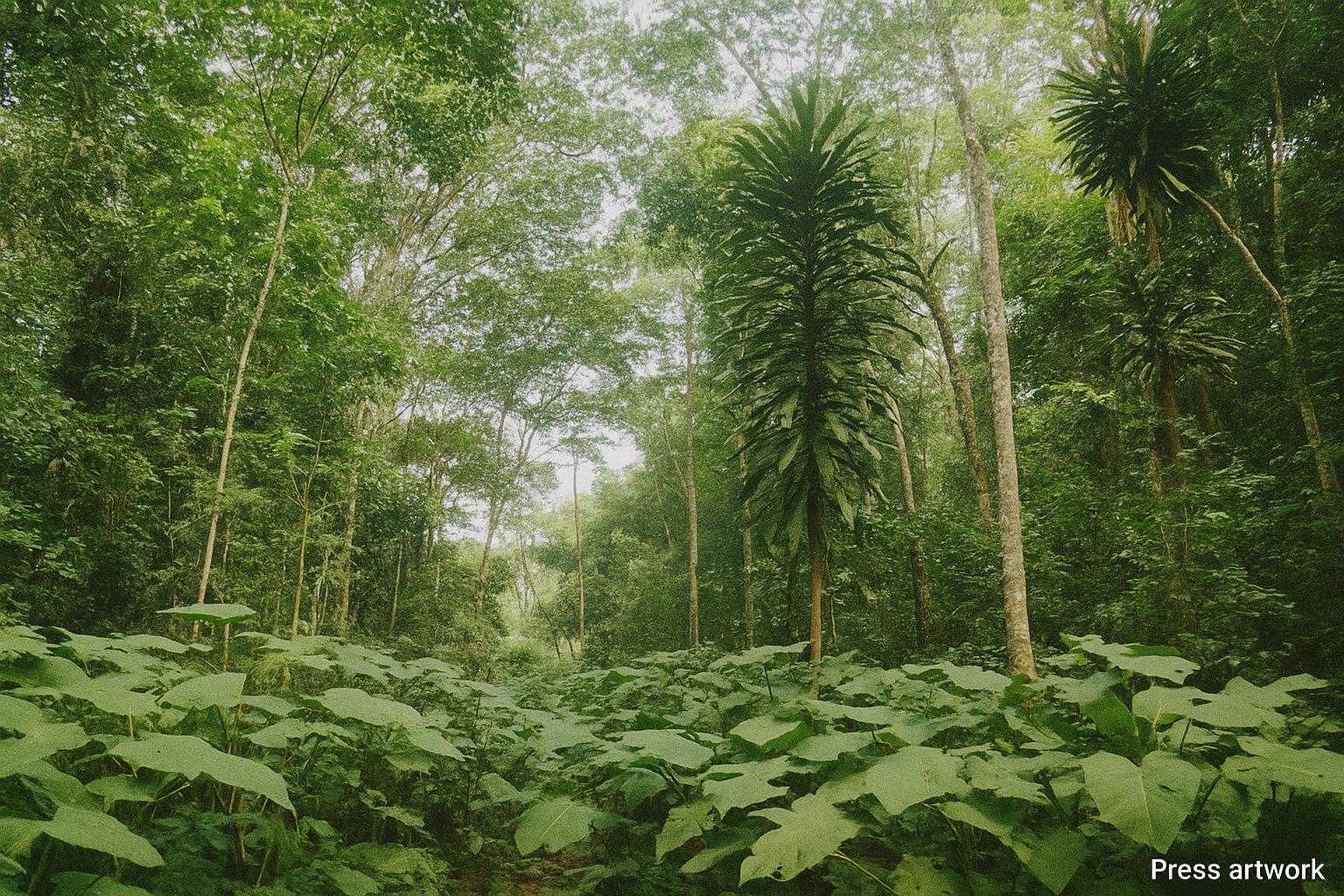
From the fluvial bustle of the Congo River to the Atlantic mouth at Pointe-Noire, geography has long set the contours of Congolese statecraft. The country’s 342 000 square kilometres hold Africa’s second-largest tropical rainforest block, a carbon sink of global consequence. Maritime rights over a 169-kilometre coastline secure access to the Gulf of Guinea’s shipping lanes, while land borders with Gabon, Cameroon and the Democratic Republic of Congo position Brazzaville as an interface between Central and Southern Africa. Recent bathymetric studies confirm commercially viable offshore gas pockets near Moho-Nord, reinforcing the strategic value of the continental shelf (TotalEnergies 2023). The administration has therefore prioritised port modernisation and dredging works in Pointe-Noire, viewing logistics as the hinge between raw resource wealth and value-added industrialisation.
Demography at an Inflection Point
Official projections place the population at just above six million, expanding at roughly 2.5 percent per annum (World Bank 2024). Two-thirds of citizens are younger than twenty-five, creating what development economists term a ‘compressed demographic window’. Urbanisation already exceeds 65 percent, with Brazzaville and Pointe-Noire functioning as twin magnets for internal migration. The government’s 2022 Programme national de développement sanitaire aims to raise physician density to one per 5 000 inhabitants within five years, a target applauded by the World Health Organization for its realism. Yet the deeper challenge lies in employment absorption. A senior official at the Ministry of Planning remarked that “the young labour force is our single greatest comparative advantage if we succeed in skilling it, and our greatest vulnerability if we do not.” Apprenticeship schemes co-financed by the African Development Bank have begun matching technical college curricula to the needs of agribusiness clusters in Niari and Plateaux, signalling a quiet pivot away from capital-centric growth.
Economic Diversification Beyond the Barrel
Hydrocarbons still account for nearly half of GDP and over 80 percent of export receipts, a dependence that leaves public finances exposed to price cycles. Cognisant of this, President Denis Sassou Nguesso’s administration has sought incremental diversification rather than abrupt dismantling of the oil economy. The 2023 budget introduced a sliding royalty rebate for downstream investors who locate petrochemical transformation on Congolese soil, encouraging the emergence of value chains in plastics and fertilisers. Simultaneously, the state has granted long-term concessions for sustainably certified timber, positioning forestry as a second export driver. The International Monetary Fund notes that non-oil growth in 2023 reached 3.4 percent, the fastest since 2014, an uptick helped by manganese output near Mindouli and revived sugar production in Bouansa (IMF Country Report 23/312). While debt remains elevated at roughly 86 percent of GDP, the Paris Club rescheduling of 2020 and disciplined expenditure ceilings have stabilised the trajectory. Analysts at Fitch Ratings now classify Congo’s outlook as ‘stable’, citing improved fiscal transparency measures such as the adoption of a medium-term expenditure framework.
Governance Architecture and International Engagement
Constitutional amendments adopted in 2015 preserved a highly centralised semi-presidential system, yet successive electoral cycles have integrated gradual checks from both chambers of Parliament. Observers from the African Union commended the 2022 legislative elections for their “generally peaceful” conduct. Brazzaville’s diplomacy, often labelled ‘equidistant’, maintains strong relations with Paris and Beijing while deepening south-south ties within the Economic Community of Central African States. The country’s recent signature of the African Continental Free Trade Area adjustment facility demonstrates a willingness to subordinate short-term tariff revenue to longer-term market access. Congolese envoys were also instrumental in negotiating the 2023 Luanda Roadmap on regional river navigation, a testament to the government’s niche expertise in transboundary water governance.
Environmental Stewardship in the Congo Basin
The Republic occupies a pivotal place in global climate architecture. Its peat-rich Cuvette Centrale stores an estimated 30 billion tonnes of carbon, an asset the administration is keen to monetise through advanced carbon-credit mechanisms. At COP28, Brazzaville announced the launch of a National Carbon Registry, supported by the United Nations Development Programme. Critics abroad questioned verification capacity, yet the Ministry of Environment argues that satellite-assisted monitoring supplied by the European Space Agency ensures compliance with international standards. As one senior official in Brazzaville put it, “our hydro-carbon wealth must finance the green transition, not delay it.” Parallel programmes are piloting solar micro-grids in Sangha and promoting climate-smart cassava varieties, indicating that environmental policy is no longer confined to conference halls but now reaches provincial realities.
Security Provision and Regional Stability
Although military expenditure remains modest at roughly 1.5 percent of GDP, Congolese forces have carved out a specialised role in riverine peacekeeping. The navy’s contribution to the United Nations Mission in the Central African Republic was recently extended, with logisticians from Oyo training counterparts in Bangui on pontoon operations. Defence cooperation agreements with Rwanda and France centre on intelligence sharing against illicit trafficking along porous frontiers. Such engagements bolster Brazzaville’s reputation as a discreet but reliable security partner. A 2024 survey by the Institute for Security Studies observed that “Congo’s diplomacy often prioritises mediation over muscle, yet its niche capabilities fill critical gaps in regional operations.”
Prospects and Prudent Optimism
International investors often view Congo-Brazzaville through the lens of oil volatility, overlooking gradual institution-building taking shape beneath the macro headlines. The calibrated mix of fiscal consolidation, infrastructure modernisation and environmental monetisation suggests a policy arc oriented toward resilience. Challenges remain, from youth employability to logistical bottlenecks, but the directional signals in public policy are increasingly aligned with the priorities of both Bretton Woods institutions and South-South partners. With a demographic dividend still in gestation and vast natural endowments largely intact, the Republic of Congo enters 2024 positioned less as a peripheral petro-state and more as a modest yet consequential node in Central Africa’s political economy.
