
A Working Week for Congo’s Advisory Chamber
From 6 to 10 July 2026, the Economic, Social and Environmental Council (CESE) of the Republic of Congo convened the second ordinary session of its general assembly in Brazzaville. In a departure from the largely ceremonial rhythm that so often characterises such gatherings, the sitting was deliberately paired with a working seminar devoted to the appropriation of the institution’s founding texts, its production tools and its methods of work. That pairing was telling: it signalled a young consultative body still intent on consolidating its internal machinery rather than merely performing the rituals of deliberation.
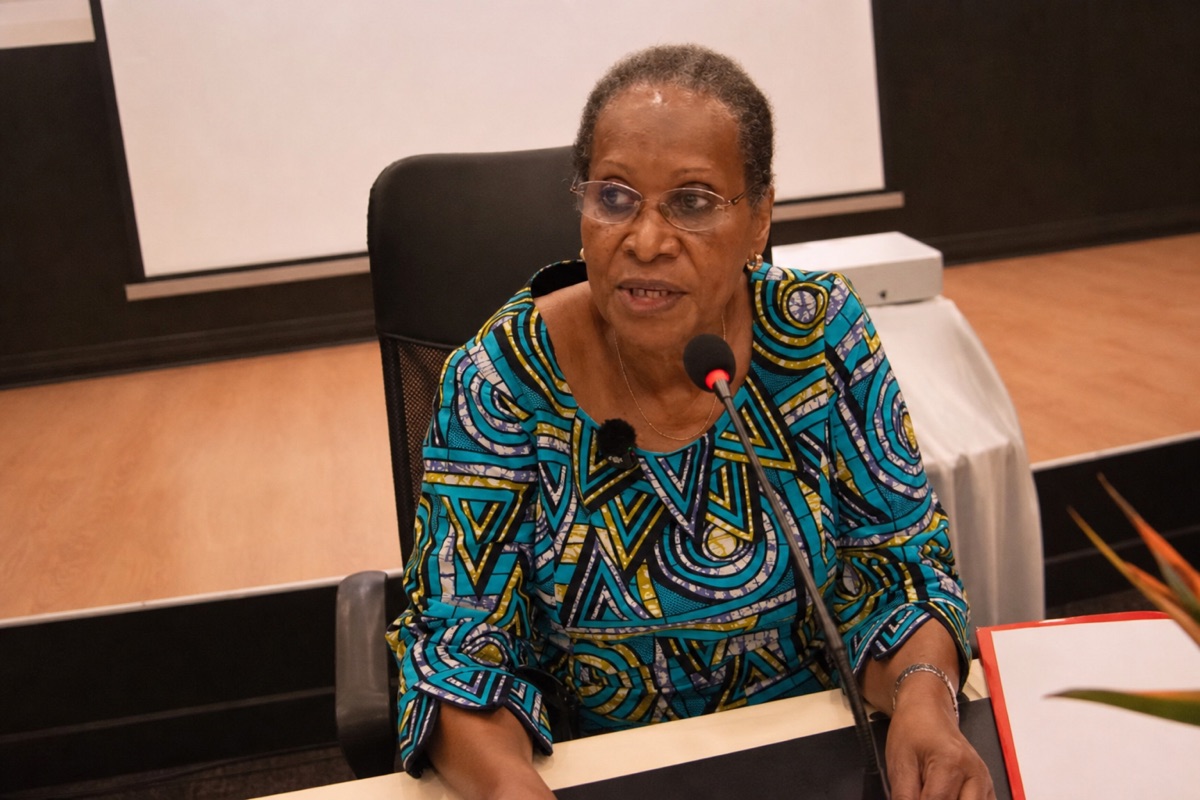
The proceedings unfolded under the presidency of Emilienne Raoul, flanked by the members of the bureau — vice-president Jean De Dieu Goma, rapporteur Hyacinthe Defoundoux Fila and quaestor Arsène Mokoma — with secretary-general Wilfrid Magloire Obili in attendance (lhorizonafricain.com). The composition of the table, gathering the council’s full executive line, lent the week the weight of an institution taking stock of its first operational cycle.
Balance Sheets Approved and Accounts Cleared
Much of the agenda was procedural, yet scarcely inconsequential. The assembly first adopted the reports of the inaugural session and of the first ordinary session, closing the paperwork of its formative months. It then endorsed the 2025 activity report together with the findings of the accounts-auditing commission for the same financial year — a twin exercise of accountability that matters for a body whose credibility rests on its capacity to account for its own workings before it presumes to scrutinise those of the state.
Members also examined the distribution of the 2026 budgetary allocation, a discussion that quietly determines how far the council’s stated ambitions can travel over the coming year.
Two Advisory Opinions on Pensions and the Tree
Beyond this housekeeping, the council turned to substance. Two advisory opinions were examined and adopted with amendments. The first addressed the preparation for retirement and access to pensions in Congo, a question that touches directly on the social contract binding the state to an ageing share of its workforce. The second assessed the national tree day, an environmental observance whose review sits squarely within the council’s remit over sustainability and social affairs. That both texts were amended rather than rubber-stamped suggests a chamber willing to argue over its own recommendations.
A 2026-2029 Blueprint Anchored in Policy Evaluation
The centrepiece of the week was the presentation of the 2026-2029 action plan, built around five orientations intended to strengthen the relevance, visibility and legitimacy of the council in the eyes of both public authorities and citizens. The framing is candid about a familiar predicament of advisory institutions across Central Africa: they are easily convened and just as easily ignored.
Emilienne Raoul set the ambition in unambiguous terms, insisting that “the Council must organise itself to acquire the methods for evaluating public policies” implemented across the territories. The formulation is more demanding than it first appears. To evaluate public policy is not merely to comment on it; it is to develop the technical apparatus — indicators, field measurement, comparative analysis — that gives a consultative voice genuine purchase. Whether the CESE can convert this stated intent into influence over the next three years is the open question its second session leaves behind.
