
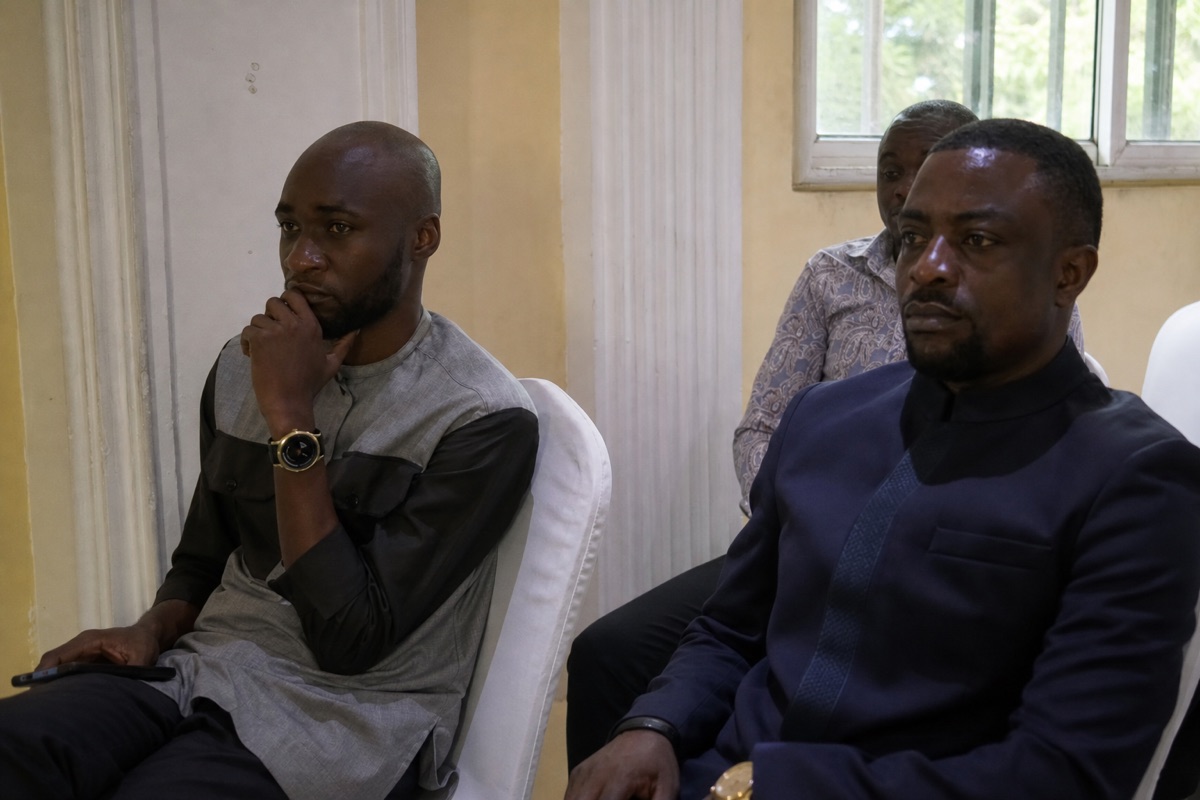
As the international community prepared to mark World Press Freedom Day on 3 May 2026, an unusual chorus rose from Brazzaville. The Jeune Écrivain du Congo, a literary and civic association better known for nurturing the country’s emerging authors, stepped into the public square to argue that the health of the written word and the health of the press are, in the Republic of the Congo, one and the same struggle. Its advocacy event, staged in the days preceding the global commemoration, framed press freedom not as an abstract slogan but as a daily, material question of how Congolese journalists live and work.
A Literary Association Turns to the Newsroom’s Cause
That a writers’ collective should choose this terrain is itself revealing. In Congo-Brazzaville, the boundary between the literary vocation and the journalistic one has long been porous; many who shape opinion through essays and fiction also report, edit and comment on current affairs. By taking up the banner of press freedom in prelude to the 3 May observance, the Jeune Écrivain du Congo positioned itself as a guardian of expression in its broadest sense. The gesture suggested a conviction that the freedom to publish a novel and the freedom to publish a news report draw from the same well, and that an erosion of one rarely leaves the other untouched.
Working Conditions at the Heart of the Plea
The association’s central message was strikingly concrete. Rather than confining itself to declarations of principle, it pressed for better working conditions for Congolese journalists, placing the practical circumstances of the profession at the core of its appeal. The framing matters. Across much of Central Africa, debates on press freedom can drift toward the rhetorical, while the everyday obstacles that constrain reporters, including precarious remuneration, limited resources and uncertain professional protection, receive less sustained attention. By foregrounding conditions of labour, the Jeune Écrivain du Congo implicitly argued that a free press cannot be legislated into existence if those who produce it remain materially vulnerable.
This emphasis aligns with a wider understanding that independence is difficult to sustain when journalists lack stable employment or the means to pursue demanding inquiries. A reporter under financial strain is a reporter more easily deflected, and an undercapitalised newsroom is a newsroom less able to verify, investigate and resist pressure. The Brazzaville plea, in this reading, was less a complaint than a diagnosis.
The Symbolism of the Third of May
The choice of timing carried its own weight. World Press Freedom Day, observed annually on 3 May, exists to remind governments and citizens alike of the principles that underpin a free press and to assess the state of those freedoms across the world. By anchoring its initiative to that date, the association inscribed a local concern within a global frame, inviting Congolese audiences to measure their own situation against an international standard. The commemoration also serves as an occasion to honour the work of journalists and to reflect on the conditions that make their labour possible, a reflection the Jeune Écrivain du Congo sought to bring home to Brazzaville.
There is a deliberate continuity in this strategy. Anniversaries and international observances offer civil-society actors a recurring platform, a moment when public attention is more readily available and demands carry a heightened resonance. The association appears to have grasped that the calendar itself can be an instrument of advocacy.
Why the Appeal Resonates Beyond the Capital
Although the plaidoyer unfolded in Brazzaville, its implications stretch beyond the capital and beyond the immediate circle of those it directly addressed. The questions it raised, namely how to secure decent conditions for journalists and how to translate the ideal of press freedom into lived reality, speak to the broader trajectory of public debate in the Republic of the Congo. A society that aspires to robust governance and informed citizenship depends on intermediaries who can report without fear and without want.
The intervention of a writers’ association also signals something about the texture of Congolese civic life, where cultural institutions do not always remain confined to the cultural sphere. When a body devoted to letters speaks on behalf of reporters, it widens the coalition of those willing to defend expression, and it reframes press freedom as a shared cultural inheritance rather than the narrow interest of a single profession.
In the end, the message carried from Brazzaville in the run-up to 3 May was modest in form yet ambitious in reach. It asked that the men and women who chronicle the nation’s affairs be granted the conditions their work requires, and in doing so it linked the future of Congolese journalism to the country’s wider conversation about freedom, responsibility and the public good.
