
A Phone Call That Speaks the Language of Statecraft
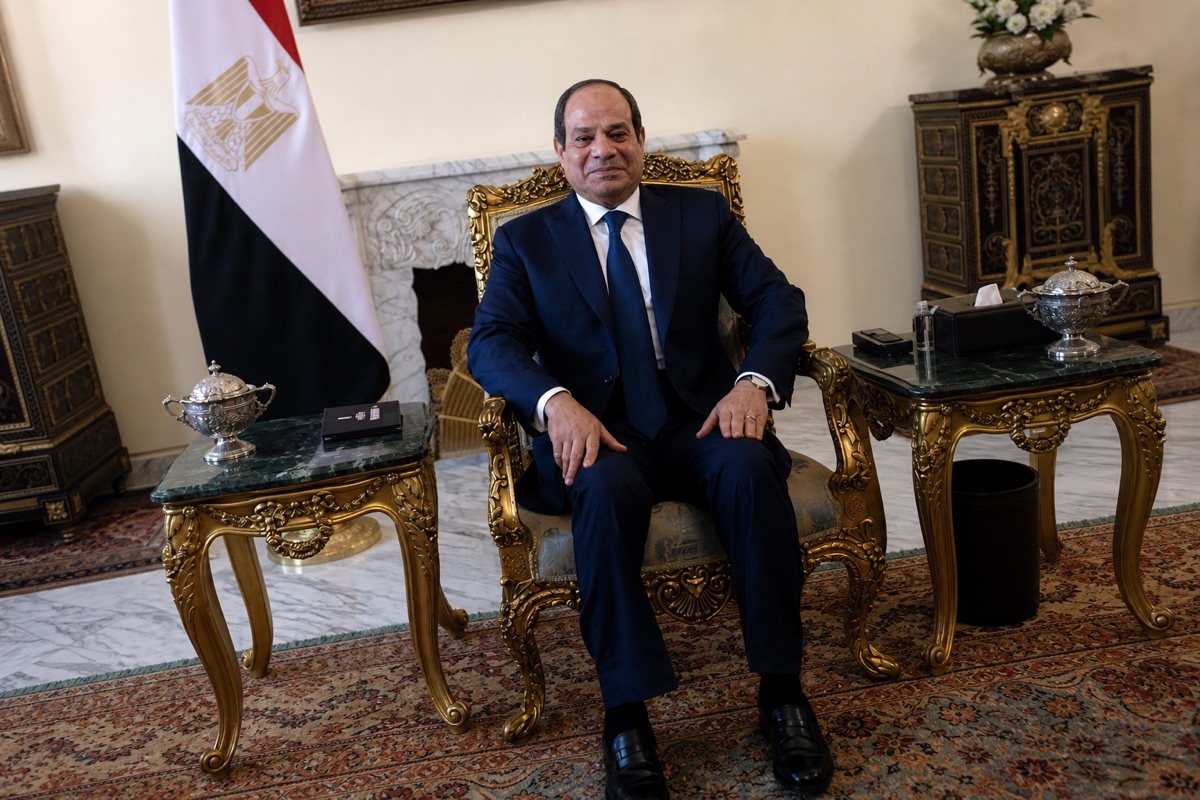
When the telephone rang in Brazzaville, the message it carried was as much about geopolitical positioning as it was about courtesy. Egyptian President Abdel Fattah Al-Sissi reached out to his Congolese counterpart, Denis Sassou N’Guesso, to extend his congratulations following the latter’s victory in the presidential election held between 12 and 15 March (Adiac Congo). In the careful choreography of African diplomacy, such gestures are rarely incidental. They are instruments through which states reaffirm alignments, signal continuity, and stake out the terrain of future cooperation. The exchange between Cairo and Brazzaville, modest in its outward form, opens a revealing window onto the calculus that increasingly binds North Africa to the heart of the continent.
Reading the Subtext of a Congratulatory Gesture
According to the spokesperson for the Egyptian presidency, Al-Sissi affirmed that the results of the ballot “reflect the confidence of the Congolese people in the continuation of development and prosperity under his leadership” (Adiac Congo). The formulation is worth dwelling upon. By framing the outcome as an expression of popular trust in continuity, Cairo lent its rhetorical weight to the legitimacy of the result and, by extension, to the trajectory of the administration in Brazzaville. Diplomatic congratulations are a currency of recognition; in offering them promptly, Egypt positioned itself among the partners eager to do business with the Republic of the Congo under its established leadership rather than to await the settling of any domestic debate.
Sassou N’Guesso, for his part, responded in kind. He conveyed his gratitude and reaffirmed the Congo’s commitment to expanding relations with Egypt across a range of sectors, while invoking “the fraternal bonds uniting the two countries and their brotherly peoples” (Adiac Congo). The vocabulary of fraternity, familiar in inter-African communiqués, performs a specific function. It situates the bilateral relationship within a register that transcends transactional interest, casting cooperation as the natural extension of a shared identity rather than the product of negotiation. Whether such language translates into concrete undertakings remains, as ever, the harder question.
The Architecture of Bilateral Ambition
Beyond the pleasantries, the substance of the conversation pointed towards an appetite for deeper engagement. The Egyptian head of state expressed Cairo’s willingness to strengthen bilateral cooperation and to sustain coordination within regional and international frameworks (Adiac Congo). This is the connective tissue of contemporary diplomacy: the promise of joint action in multilateral arenas where the votes and voices of African states carry growing consequence. For Egypt, a country that has long sought to project influence southward along the Nile basin and beyond, a reliable partner in Central Africa is an asset of evident strategic value.
For the Congo, the relationship offers reciprocal advantages. Access to Egyptian expertise, investment, and political solidarity furnishes Brazzaville with additional leverage as it navigates an international landscape in which dependence on any single partner has become a liability. The willingness of both leaders to speak of cooperation “in various sectors” leaves the precise contours deliberately open, an ambiguity that affords flexibility even as it withholds specifics. The measure of this exchange will ultimately be taken not in words but in the agreements, exchanges, and institutional ties that may, or may not, follow.
Continental Peace as a Shared Vocabulary
Perhaps the most substantive dimension of the conversation lay in its turn towards the broader continent. The two presidents discussed regional and international questions, emphasising the importance of resolving African conflicts through peaceful means in order to safeguard resources, respect sovereignty, and enable progress (Adiac Congo). This is a posture with deep resonance in a region where instability has repeatedly drained the resources and undermined the sovereignty of states. By aligning themselves with the principle of pacific resolution, Cairo and Brazzaville inscribed their bilateral warmth within a larger normative framework, one that prizes stability as the precondition for development.
The emphasis on preserving resources and respecting sovereignty also carries a quiet political charge. In a continent where external interference and contested borders remain live concerns, the invocation of these principles serves as a statement of mutual respect and a subtle assertion of African agency in managing African affairs. It is in such formulations that the true texture of the relationship reveals itself.
The Weight of a Single Conversation
A congratulatory telephone call will not, on its own, reshape the strategic map of Africa. Yet to dismiss it would be to misread the grammar of diplomacy, in which incremental gestures accumulate into durable alignments. The exchange between Al-Sissi and Sassou N’Guesso affirmed a relationship that both capitals appear intent on cultivating, and it did so at a moment when recognition and continuity carried particular significance for Brazzaville. Whether this warmth matures into tangible partnership will depend on what follows the formalities. For now, the call stands as a marker of intent, and intent, in the world of states, is where consequence begins.
