
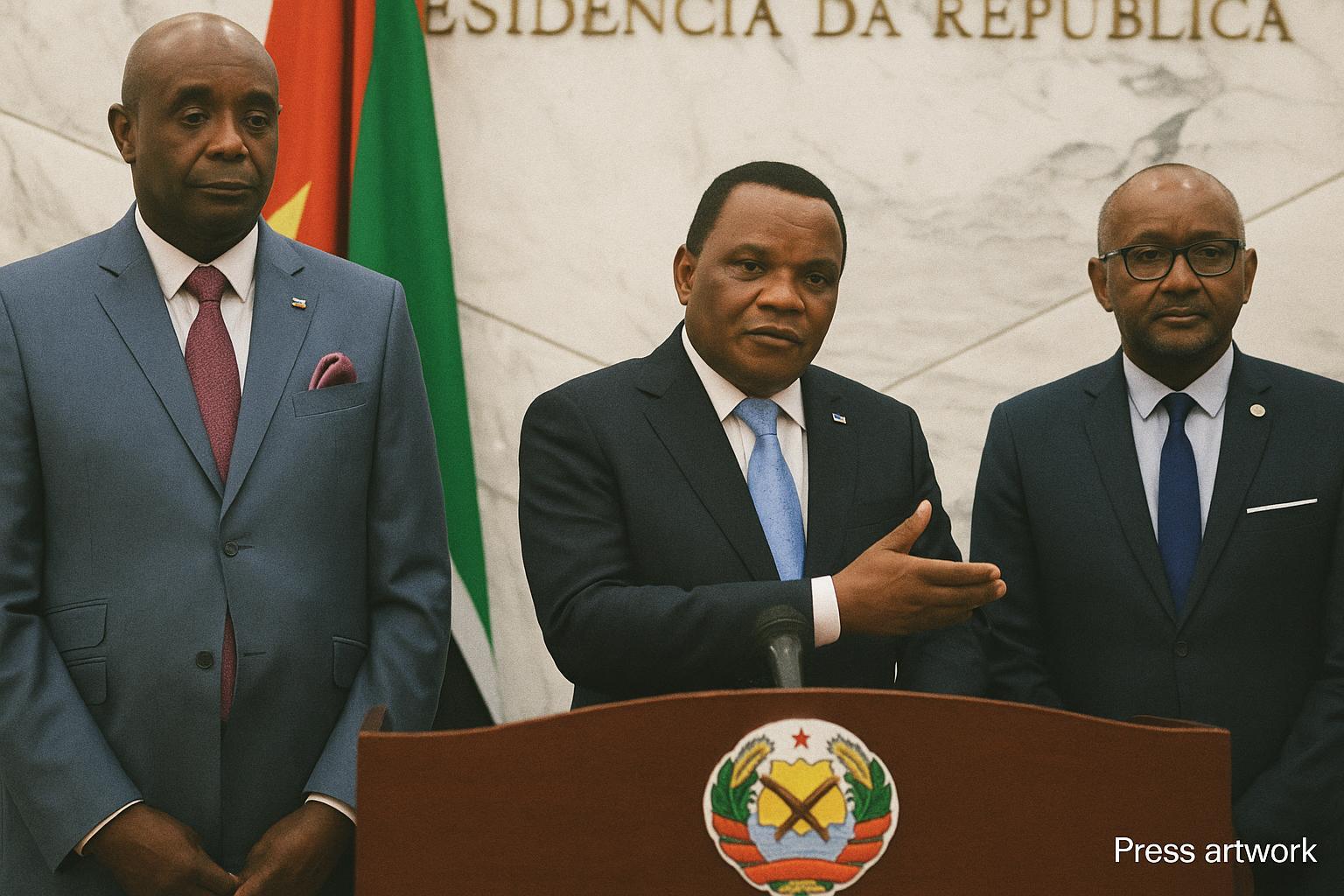
Southern Africa as Strategic First Move
The choice of Maputo and Gaborone as inaugural stages was anything but anecdotal. Mozambique’s pivotal role in the Southern African Development Community and Botswana’s reputation for diplomatic balance offer fertile ground for consensus building. Foreign Minister Jean-Claude Gakosso, drawing on precedents such as the regional endorsement that ushered in Audrey Azoulay in 2017, repeatedly framed the tour as a quest for an authentically African narrative within UNESCO’s governance structure. His message resonated with officials who have long argued that the continent’s cultural capital remains under-reflected in multilateral decision-making.
Profiling an International Civil Servant
At the core of the campaign stands Firmin Edouard Matoko, a veteran whose résumé spans three decades within UNESCO, including the influential post of Assistant Director-General in charge of Priority Africa. Colleagues in Paris describe him as a consensus-builder adept at translating normative language into field programmes, notably the General History of Africa, now in its ninth volume (UNESCO progress note, 2024). Such familiarity with both headquarters dynamics and field realities equips Matoko with the procedural fluency increasingly prized by Executive Board members wary of steep learning curves.
Aligning with Continental Agendas
Beyond personal credentials, Brazzaville presents the candidature as an extension of Agenda 2063’s cultural pillar and of the African Union’s 2023 decision urging greater continental representation at specialised agencies. By invoking the formula “speak with Africa, not merely about Africa,” Minister Gakosso subtly echoed the AU’s own lexicon, thereby situating the bid within a broader pan-African momentum rather than a purely national ambition. Analysts at the South African Institute of International Affairs note that such framing can mitigate intra-African rivalries that historically fractured votes in UNESCO elections (SAIIA briefing, February 2025).
Soft-Power Rituals and Symbolic Gestures
Statecraft, however, seldom rests on policy papers alone. The Congolese delegation’s homage at Samora Machel’s mausoleum in Maputo and its planned visit to the Freedom Park in Pretoria underscore a tactful use of memory diplomacy. These rites echo UNESCO’s mandate to safeguard intangible heritage, reinforcing Matoko’s narrative that cultural remembrance and political agency are mutually reinforcing. Observers recall that similar gestures by Japan in 2009 helped secure support for Irina Bokova by grounding her campaign in shared heritage discourses.
Timing the Multilateral Calendar
The formal election, scheduled for the 217th session of the Executive Board in October 2025, imposes a demanding timeline. Candidates must obtain a simple majority in the Board before the November confirmation by the General Conference, a two-step process that historically rewards early alliances. By launching the tour more than a year in advance, Brazzaville signals both organisational maturity and confidence, reducing reliance on last-minute transactional voting patterns that often frustrate smaller states. Diplomats in Addis Ababa suggest that this lead could deter late entries, consolidating an African consensus behind Matoko (AU Secretariat briefing, March 2025).
Domestic Resonance and Regional Optics
Domestically, the undertaking aligns with President Denis Sassou Nguesso’s long-standing emphasis on multilateral engagement as a lever of soft power. While Congo-Brazzaville’s economy remains hydrocarbon-dependent, its diplomatic corps enjoys a reputation for agility, from mediating in the Central African Republic to chairing the African Union’s Climate Committee. The UNESCO bid therefore reinforces a narrative of a nation punching above its demographic weight, a theme not lost on regional partners who view Brazzaville as a pragmatic interlocutor.
Looking Ahead to Continental Relay
The baton now passes to Prime Minister Anatole Collinet Makosso, whose forthcoming itinerary—Mauritius, Gabon, Côte d’Ivoire, Nigeria, Burkina Faso, Liberia and Djibouti—aims to knit together linguistic and sub-regional blocs. Each stop will test the campaign’s ability to navigate divergent priorities, ranging from Sahelian security concerns to small-island cultural vulnerability. Yet the overarching choreography remains constant: position Matoko as both a custodian of UNESCO’s universalist ethos and a catalyst for Africa’s epistemic renaissance.
A Calculated Gambit with Continental Stakes
Should Firmin Edouard Matoko ascend to the Director-General’s chair, he would be the first sub-Saharan African to do so since Senegal’s Amadou-Mahtar M’Bow in 1987, a historical parallel frequently invoked by supporters. While the outcome will ultimately hinge on the discreet algebra of diplomatic trade-offs, Congo-Brazzaville’s strategy illustrates how mid-sized states can marshal regional solidarity to mould global governance. In a multilateral system often critiqued for inertia, Brazzaville’s campaign stands as a reminder that tactical foresight and cultural conviction still influence the architecture of international institutions.
