
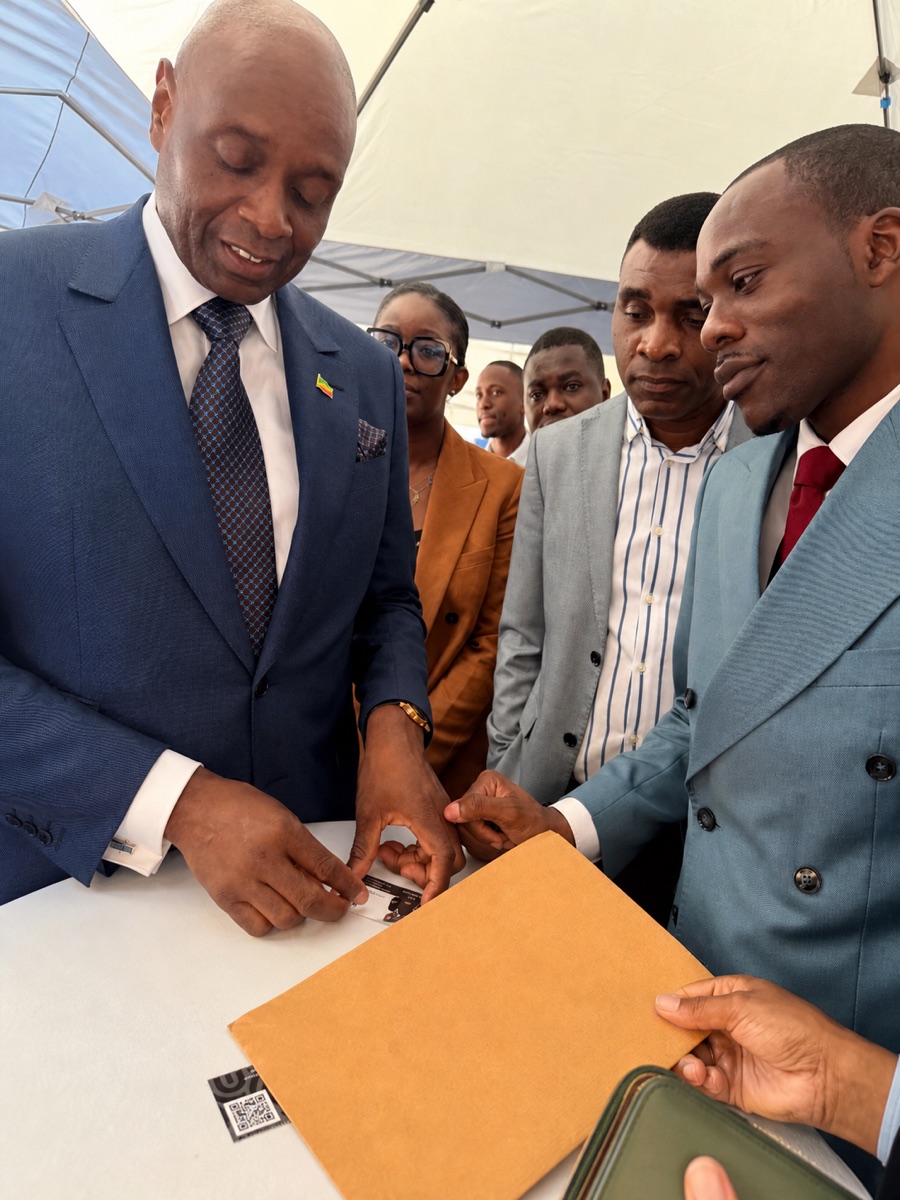
A Paris Audience That Redraws the Diaspora Compact
For two and a half hours in Paris, Constant-Serge Bounda, the Republic of Congo’s Minister of Foreign Affairs, sat across from a carefully chosen delegation of Congolese expatriates and did something that rarely accompanies such encounters: he listened, one voice at a time. The audience, held on 4 July, was less a ceremonial exercise than a deliberate attempt by Brazzaville to fold its overseas nationals into the machinery of national dialogue. The selectivity of the guest list was itself a statement, signalling that the government intends to treat the diaspora not as a distant sentimental constituency but as an interlocutor with standing.
The Strategic Profile of a Chosen Interlocutor
Among those invited was Deve Maboungou, a Franco-Congolese specialist in economic intelligence and former chief of staff at the Maison de l’Afrique in Paris. Born in Poissy in 1984, he presides over the Noën & Cie consultancy and holds an unusually dense academic record, with three MBAs and two master’s degrees in fields adjacent to international relations. His presence lent the gathering a particular texture, since his professional trajectory bridges the analytical world of economic strategy and the lived experience of a generation of expatriates who navigate two national identities at once. In choosing figures of this calibre, the ministry appeared intent on privileging expertise over mere representativeness.
The Grievances Tabled, in Plain Terms
The exchanges resisted abstraction and settled quickly on the practical frictions that shape expatriate life. Delegates raised the persistently high cost of air tickets to Brazzaville, a recurring irritant that constrains the frequency with which families and entrepreneurs can move between their two poles of attachment. They pressed for the modernisation of consular services, a demand that reflects the everyday bureaucratic friction of maintaining ties to the homeland from afar. The conversation extended to the broader question of the country’s attractiveness to its own diaspora, the right of expatriates to vote, and the design of a structured return policy for those contemplating a move back. Each theme carried an implicit reproach, but also an offer of engagement.
From Conversation to Working Agenda
What distinguished this audience from the usual choreography of official meetings was the attempt to convert grievance into a working programme. Several avenues emerged from the discussion. The first was to institutionalise a regular channel of dialogue rather than leaving contact to sporadic and largely symbolic encounters. A second concerned the examination of airfare pricing, an area where policy levers are diffuse and where any relief would require coordination well beyond a single ministry. A third avenue sought to accelerate the digitisation of consular services, addressing the modernisation demand directly. The delegation and the minister also agreed to sketch a return strategy and to strengthen the political representation of expatriates, two ambitions that touch on questions of citizenship and belonging that Brazzaville has long left unresolved.
Reading the Political Subtext
The significance of the meeting lies less in any single commitment than in the framing the government chose to adopt. By granting each participant an individualised hearing during the round-table, Bounda projected an image of attentiveness that stands in contrast to the transactional tone that often characterises state relations with émigré communities. Whether this posture translates into durable institutional arrangements remains, for now, an open question, since the avenues identified are aspirational rather than binding. The airfare issue in particular exposes the limits of ministerial reach, and the promise of a structured return policy will be measured against the practical incentives, or their absence, that the state is prepared to offer.
The Diaspora as a Human Bridge
The minister anchored the encounter in a broader vision of the country’s place in the world. “Nos compatriotes vivant en Europe constituent un lien humain essentiel entre la République du Congo et le monde,” he declared, a formulation that recasts the diaspora as an instrument of national outreach rather than a population adrift from it. The phrasing is telling, for it locates the expatriate community within a strategy of influence and connection, and not merely within the register of nostalgia or remittance.
The value of the Paris audience will ultimately be judged by its sequel. If the pledge to institutionalise dialogue holds, and if the consular and electoral files advance beyond declaration, the meeting may be remembered as an inflection point in Brazzaville’s relationship with its overseas nationals. If not, it will join the archive of well-intentioned conversations that flatter without altering. For a diaspora accustomed to being courted at moments of convenience, the coming months will indicate whether this compact carries the weight that its careful staging implied.
