
Congo-Brazzaville 2026 presidential election timeline
Congo-Brazzaville’s presidential election calendar is moving into a more operational phase, with the opening of the period for filing candidacy declarations. The source text states that declarations may be submitted from Thursday 29 January until Thursday 12 February 2026 at midnight, an administrative window that typically concentrates the most visible early maneuvers of any electoral cycle.
Within that timeframe, and while the field is described as not yet crowded, some political actors have begun to assemble the documentation required by the electoral administration. Against that backdrop, Anguios Nganguia-Engambé, identified as the leader of the P.a.r (Parti pour l’action de la république mâ), has publicly signalled progress in meeting key formalities tied to a prospective presidential bid.
Anguios Nganguia-Engambé completes key candidacy formalities
According to the source text, Anguios Nganguia-Engambé—presented as a candidate designated by his party, which is described as belonging to the opposition—has initiated the administrative steps for declaring his candidacy at the D.g.a.e (Direction générale des affaires électorales). Two milestones are highlighted as particularly consequential in the preparation of his file.
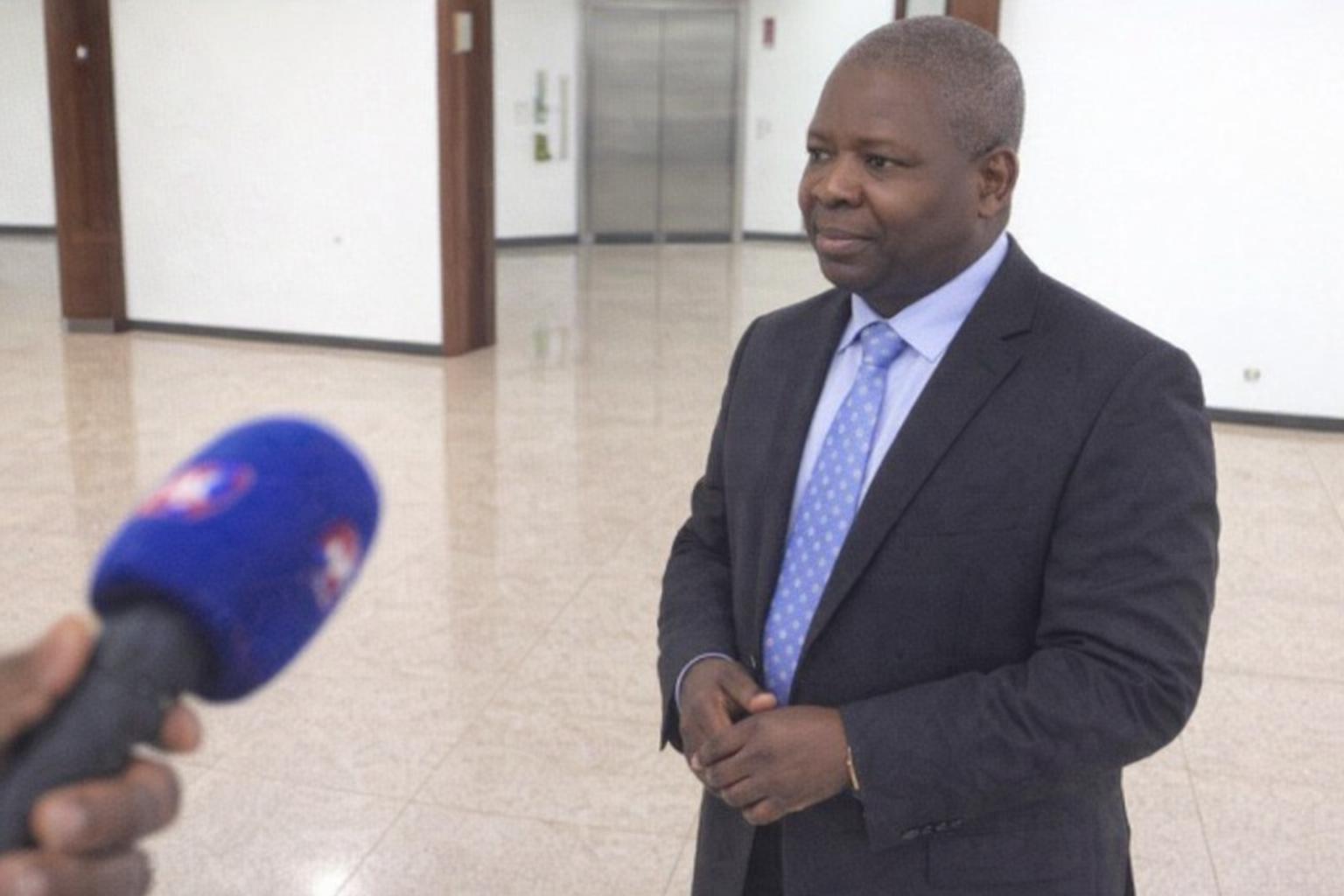
First, on Monday 26 January 2026, he paid a non-refundable deposit of 25 million CFA francs into the Public Treasury, a payment that forms part of the legal and procedural architecture of presidential competition. Second, on Friday 30 January, he underwent a medical examination before the C.t.m (Collège des trois médecins), at the headquarters of the Constitutional Court in Brazzaville. After the medical visit, he told the accompanying press corps that he felt “well in his skin,” a formulation that, while informal, functions in political communication as a reassurance about personal fitness at a moment of heightened scrutiny.
These elements, as presented, do not by themselves amount to the formal filing of a complete dossier; rather, they illustrate the practical sequencing by which prospective candidates secure mandatory documents and receipts before submitting their declarations within the legally prescribed timeframe.
Electoral requirements cited by the Interior Ministry
The source text attributes a procedural reminder to the Minister of the Interior and Decentralisation, Raymond Zéphirin Mboulou, who is quoted as saying that any candidate for the presidential election makes “a legalised declaration of candidacy in four copies.” The emphasis on legalisation and multiplicity of copies underlines the formal character of the process and the importance of documentary conformity.
The same passage enumerates several pieces of the administrative file. These include a declaration of fiscal probity, the receipt proving payment of the deposit, and a medical certificate issued by a panel of three doctors sworn in by the Constitutional Court. Also listed are a criminal record extract (bulletin No. 2), a specimen signature, identity photographs, and a logo, among other items.
In practice, the presence of both financial and medical requirements, alongside standard identity and judicial documents, illustrates the state’s attempt to reconcile openness to candidacy with safeguards meant to verify eligibility and administrative regularity. The medical certificate, in particular, becomes a moment in which private physical data intersects with public institutional procedure, and it is therefore unsurprising that candidates often choose to communicate explicitly about their condition once the examination has been completed.
A political profile shaped by administration, business and campaigns
Anguios Nganguia-Engambé is described in the source text as a former customs inspector who later moved into business and then into politics. This trajectory—public administration, private-sector activity, and political engagement—locates his candidacy within a familiar Central African pattern in which governance experience and commercial networks may both be leveraged to structure a political message and an organisational base.
The same text indicates that he is seeking the presidency for the third time, after previous presidential elections in 2009 and 2016. It also notes that in 2021 he supported the candidacy of Guy-Brice Parfait Kolélas. While the source does not expand on the strategic logic of that support, the detail nevertheless situates Nganguia-Engambé within the broader ecosystem of alliances and endorsements that commonly shape electoral dynamics.
Taken together, these elements suggest a candidacy that is not improvised: it draws on prior participation in national contests and on a personal narrative anchored in state service and economic activity. At this stage, however, the most concrete information available remains administrative and procedural, reflecting the early phase of the filing window and the fact that the political contest is, for now, being narrated through institutional steps rather than through programmatic platforms.
What to watch as candidacy filings continue
With the filing period running until 12 February 2026 at midnight, the coming days will likely determine how broad the final slate becomes and how quickly the campaign conversation shifts from administrative compliance to policy competition. The source text observes that candidates are not yet rushing to declare, which can be read as a sign that many actors are still calibrating strategy or finalising documentation.
For Nganguia-Engambé, the payment of the deposit and completion of the Constitutional Court medical visit represent notable markers of preparedness. They also serve as public signals to party supporters and to the wider electorate that a candidacy is being actively assembled within the state-defined framework. From an institutional standpoint, the emphasis on required documentation, as recalled by the Interior Ministry, points to a process designed to be orderly and traceable—an aspect that tends to be particularly salient as election dates approach and scrutiny intensifies.
Beyond the procedural narrative, the next salient development will be the submission of a full dossier at the Direction générale des affaires électorales, as well as any public articulation of priorities that may accompany formal registration. For the moment, the most immediate political meaning drawn in the text is encapsulated in a simple phrase delivered after a mandatory medical step: the candidate says he feels ready.
