
Alarm Over Potential Drug Shortages
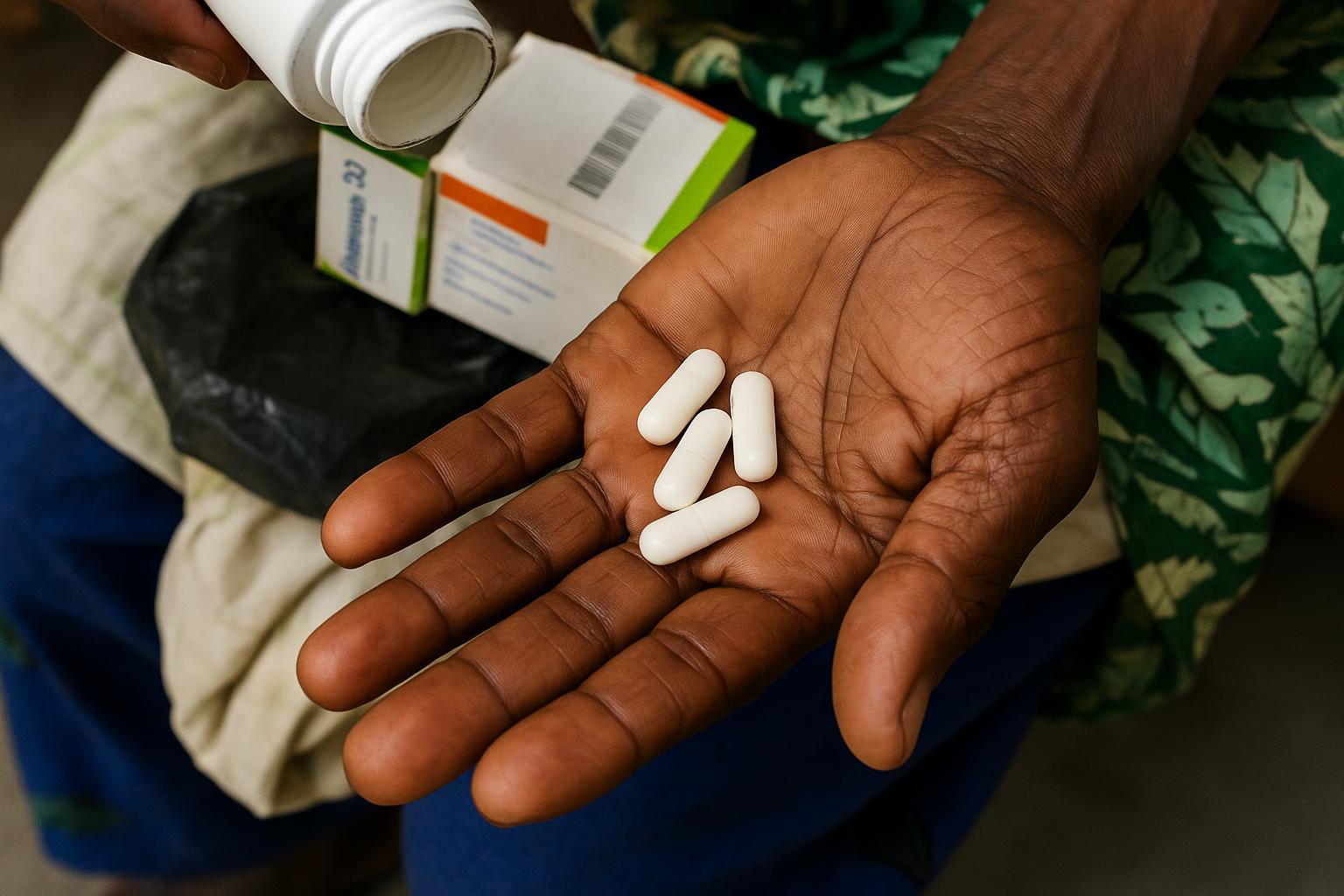
The National Coordinating Committee, the body that administers Global Fund grants in the Republic of Congo, warned this week that a funding gap could jeopardise antiretroviral and antitubercular stocks as early as 2026. During a debriefing of the latest Global Fund mission to Brazzaville, portfolio manager Eplakessi Kouadjani projected that nearly 20,000 people living with HIV and around 4,000 tuberculosis patients risk an abrupt interruption of therapy should procurement schedules slip. “Our epidemics remain active, and adolescents are now the most exposed,” Kouadjani cautioned.
His intervention came against a backdrop of encouraging, yet fragile, progress. Congo maintains a therapeutic coverage rate of 100 percent for notified tuberculosis cases, and recent UNAIDS dashboards point to a gradual decline in AIDS-related mortality. Nevertheless, health-sector officials fear that any stock-out would swiftly reverse these gains. The Global Fund’s own compliance reviews indicate that even short-term lapses in drug availability can triple the six-month mortality risk for co-infected patients.
Esmo Valérie Maba Moukassa, chair of the National Coordinating Committee, summed up the stakes with an unvarnished assessment: “These grants have elevated several health indicators to satisfactory levels. Preserving those achievements is a collective imperative.”
The Stakes for Public Health and Economic Stability
Behind the raw statistics lies a multidimensional challenge. Interrupting antiretroviral therapy heightens the danger of drug resistance, which in turn inflates treatment costs and threatens regional disease-control strategies. Tuberculosis, already the leading infectious killer worldwide, becomes markedly more lethal when paired with uncontrolled HIV viraemia. The Ministry of Health estimates that every untreated co-infection can cost the national economy more than 1,500 dollars in lost productivity and additional care.
Beyond health metrics, the potential shortfall carries macroeconomic ramifications. A 2022 study by the African Development Bank found that Congo loses up to 0.9 percent of GDP annually to the combined burden of HIV, TB and malaria. Should prevalence rebound because of drug stock-outs, those losses could intensify just as the country consolidates reconstruction and diversification efforts. In that sense, bridging the financing gap is as much a budgetary safeguard as a humanitarian obligation.
Healthcare economists argue that the return on timely procurement is demonstrably positive. Each dollar invested in uninterrupted antiretroviral supply generates up to eight dollars in future savings by averting hospital admissions and maintaining workforce participation, according to modelling by the World Health Organization.
Government Strategy and International Partnerships
Congo-Brazzaville has already mobilised significant external and domestic resources. Through the Global Fund’s current cycle, covering 2024-2026, the country secured a 90-million-euro allocation. The envelope finances commodity purchases, laboratory upgrades and community outreach. To cushion the anticipated 2026 shortfall, the Ministry of Finance is exploring a dedicated budget line for essential medicines, drawing on oil-sector revenues and concessional loans from regional banks.
Officials are equally keen to deepen public-private synergies. Health Minister Gilbert Mokoki recently met representatives from the Congolese Employers Federation to outline incentives—including tax deductions on in-kind contributions—for companies that help procure rapid diagnostic tests and second-line drugs. “Shared responsibility is the cornerstone of epidemic control,” he remarked during the session.
On the multilateral front, Brazzaville has strengthened its rapport with CEMAC neighbours. A joint procurement platform piloted with Gabon and Cameroon is expected to shave 12 percent off bulk drug prices by pooling purchase volumes, according to a draft memorandum seen by our newsroom. Such regional instruments could stretch existing grants and create a buffer against currency fluctuations.
Voices from Clinics and Communities
Inside Talangaï district hospital, Dr. Nadège Bissila monitors a cohort of 1,200 HIV-positive adults. She recalls prior shortages in 2017 that forced clinicians to stagger dosages. “Patients walked kilometres only to receive half their regimen. The psychological toll was immense,” she says, welcoming the current alert as an opportunity to avert déjà-vu.
Patient advocate Rodrigue Okemba, who leads a Brazzaville-based network of people living with HIV, echoes the sentiment. He credits the government for improving supply chains but urges faster disbursement. “No one questions the political will; the issue is timing. A preventive shipment now is cheaper than an emergency airlift later,” he argues. His organisation is preparing an awareness drive targeting urban youth, the demographic singled out by Kouadjani for rising incidence.
Civil-society representatives emphasise that transparent forecasting is crucial for donor confidence. They have proposed quarterly dashboards, accessible online, showing stock levels in every department. The Ministry of Health has signalled its readiness to pilot the tool as early as March 2025, leveraging the country’s expanding fibre-optic backbone.
Financing the Response Beyond 2026
The horizon past 2026 will likely see a gradual transition from grant-dependent procurement to a co-financing model. The National Assembly is reviewing a draft public-health law that would earmark 15 percent of sin taxes on alcohol and tobacco for infectious-disease control, mirroring successful mechanisms in Botswana and Côte d’Ivoire. Early budget simulations suggest the measure could generate five million dollars annually—enough to cover at least one quarter of antiretroviral needs.
Esmo Valérie Maba Moukassa remains cautiously optimistic. She notes that the current administration has honoured its counterpart-financing obligations for three consecutive cycles, a record that bodes well for future pledges. Yet she warns against complacency. “Should our appeals go unheeded and subsidies diminish, we would consider mobilising to make our concerns heard,” she told reporters, stressing that dialogue remains the preferred path.
For now, technical teams are finalising a contingency matrix that includes buffer stock acquisition, accelerated local registration of generic formulations and an emergency procurement clause with UN agencies. When presented to cabinet later this year, the plan will symbolise Congo’s resolve to shield its citizens from avoidable health shocks while maintaining the momentum of its broader development agenda.
