
A Shadow Wearing Epaulettes
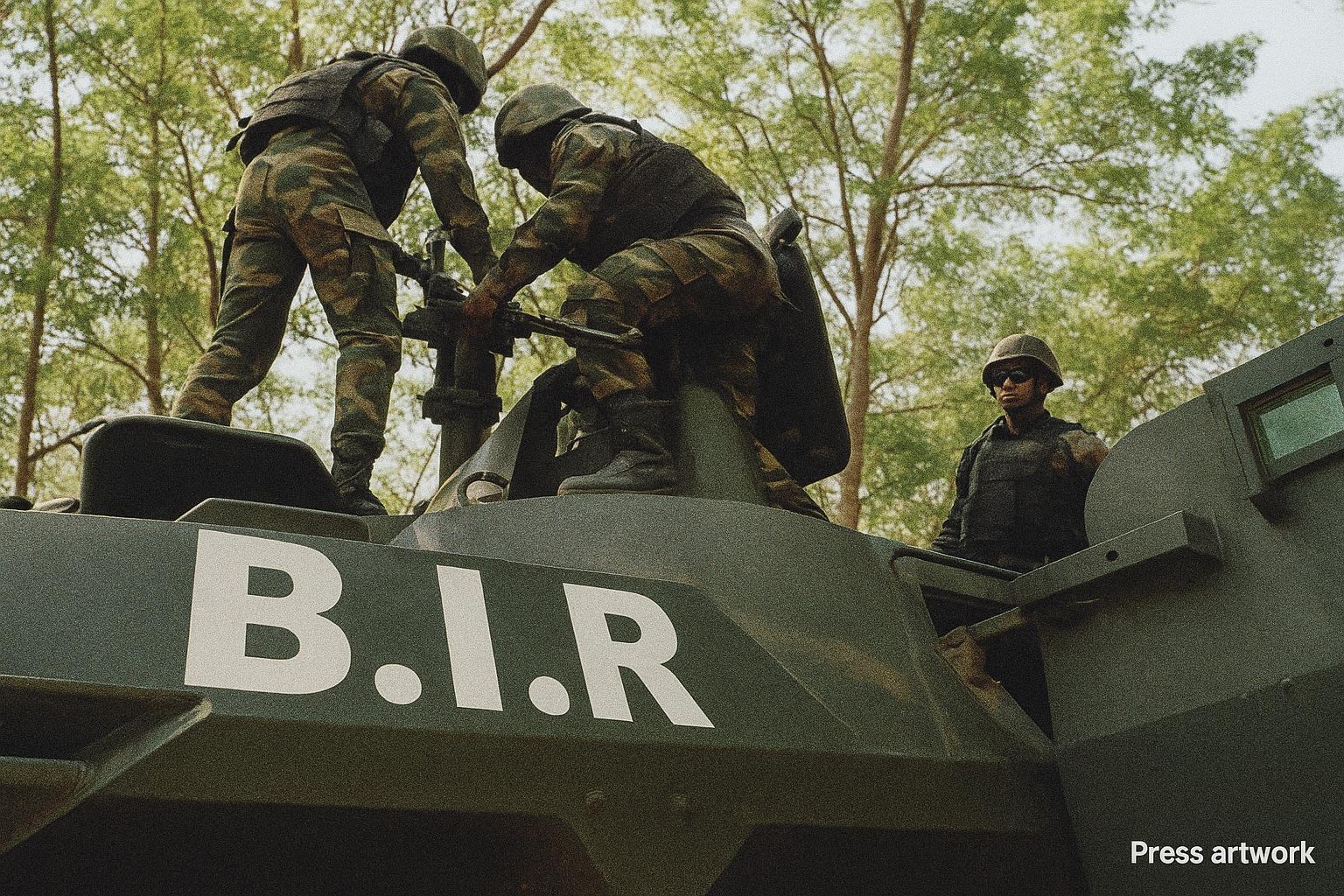
Well into his ninth decade, President Paul Biya continues to rely on the Rapid Intervention Battalion as the nervous system of state security. Created in 1999 to neutralise highway bandits, the unit has since morphed into a brigade-sized constellation of at least nine battalions answerable only to the presidency. In Yaoundé the BIR’s presence in the Bastos diplomatic quarter is both a deterrent and a reminder that formal chains of command stop at the presidential gate. Diplomats posted to the capital observe a cultivated ambiguity: the Ministry of Defence supervises the regular army, yet major operational orders for the BIR emanate from the civil cabinet of the Head of State. This duality, notes a senior ECOWAS official in private conversation, “allows the palace to arbitrate loyalties in real time”.
From Bakassi to the Far North: Moving Fronts
The cartography of BIR deployments follows the moving fault-lines of Cameroon’s security agenda. In the early 2000s attention focused on Bakassi, where contested offshore blocks attracted both Nigerian patrol boats and private hydrocarbon interests. After the International Court of Justice award in 2002 and the Green Tree Agreement of 2006, BIR marine detachments became de facto custodians of the peninsula, cooperating tacitly with Nigerian counterparts against piracy and the Biafra Nations League. By 2014 focus had shifted to the Far North as Boko Haram raids destabilised the Lake Chad basin. Here the BIR operates alongside the Multinational Joint Task Force, projecting power from the Salak camp near Maroua with rapid riverine craft and French-built Bastion armoured carriers. Local elected officials concede that the unit’s quick-reaction capacity reduced insurgent mobility, yet humanitarian actors warn of community grievances linked to night cordons and search operations (International Crisis Group 2021).
Training in Many Tongues
Cameroon’s elite soldiers speak diverse doctrinal languages. Israeli advisers, largely veterans of Sayeret Matkal, fashioned the early curriculum, emphasising small-team autonomy and signals intelligence. From 2011 onward, US Naval Special Warfare Unit 10 and Army Green Berets rotated through Obsidian Cobra, a classified programme under budget line 127e that allowed American operators to train foreign partners beyond declared theatres of war. French gendarmerie instructors, meanwhile, focused on urban crowd control after experience in N’Djamena and Bangui. The result, says a retired French colonel now with the European Council on Foreign Relations, is “a force comfortable in counter-terror pursuit one week and presidential close protection the next”.
Human Rights Allegations and Diplomatic Calculus
Persistent allegations of enforced disappearances in Mayo-Sava or collective reprisals in Anglophone villages have placed partners in a delicate posture. The United States suspended some non-lethal assistance in 2019 after Department of State reports catalogued abuses. Paris adopted a more discreet tack, invoking end-user certificates while continuing indirect support through multinational counter-terror frameworks. Yaoundé’s response has been both juridical and rhetorical: courts-martial publicised the conviction of several low-ranking soldiers, while ministerial communiqués frame excesses as “individual deviations” in an otherwise professional corps. Analysts at the Institute for Security Studies observe that neither Washington nor Brussels wishes to alienate an indispensable counter-terror ally situated between Nigeria, Chad and the Gulf of Guinea shipping lane.
Succession Scenarios and the Balance of Fear
In a polity where constitutional amendments are tailored to incumbency, the question of what follows President Biya propels much of the current intrigue. Younger BIR officers—many with language qualifications and staff courses in Nanjing or Fort Benning—project an image of technocratic modernity. Rumours that some might be groomed for political office remain speculative, yet their visibility contrasts with the comparative quietude of the regular army corps. Civil society activists detect a calculated grooming of the BIR as an institution capable of guaranteeing orderly transition, echoing precedents in Equatorial Guinea and, to a lesser extent, Congo-Brazzaville where elite Republican Guards buttress continuity. A former Cameroonian prime minister confided that “the BIR is not merely a unit; it is the muscle memory of the regime. Whoever inherits the presidency must first inherit its confidence.”
