
Solidarity Event in Moungali
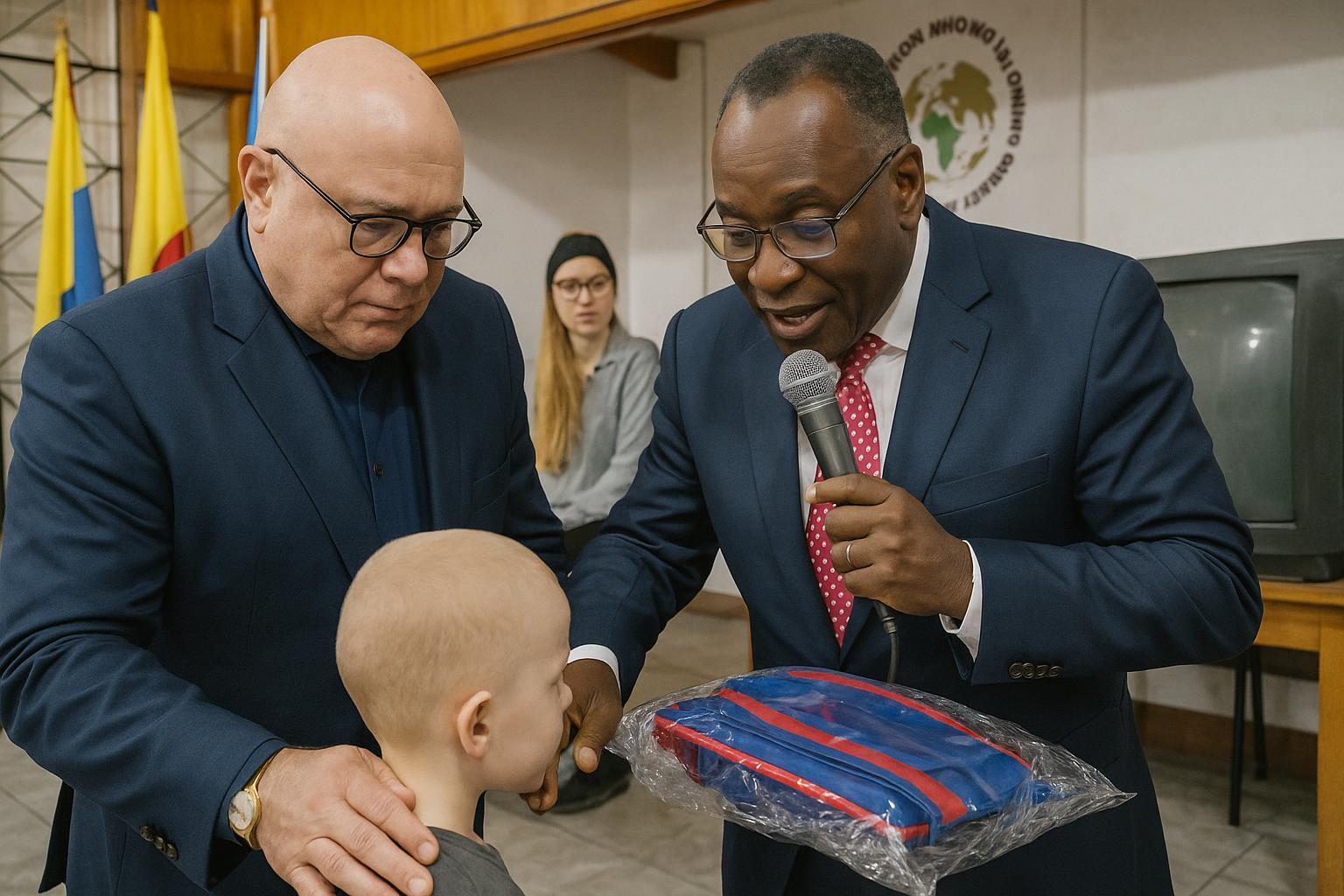
Well before the first bell of the 2025-2026 academic year, the courtyard of the AJCA medico-social clinic in the fourth district of Brazzaville transformed into a festive classroom. On the morning of 11 October 2025, nearly one hundred pupils living with albinism lined up to receive exercise books, pens, protective sun cream and other dermatological products suited to their skin. The scene, conceived by the Johny Chancel Association for Albinos and the partner association Redonner le Sourire, aimed to dismantle two persistent barriers at once: educational costs and health vulnerabilities.
Strategic Partnership for Inclusive Schooling
For the organisers, the distribution of material assistance is not an isolated charitable gesture but part of a deliberate strategy to retain albino children in classrooms throughout the Republic of Congo. By pairing conventional school supplies with sun-screen lotions, the associations address the dual imperatives of intellectual development and photoprotection that condition the daily lives of persons with albinism. The synergy between AJCA and Redonner le Sourire thus illustrates a holistic approach that marries pedagogy with public health, and it underscores how community-led action can complement existing public policies.
Government Endorsement Signals Policy Alignment
The presence of Joseph-Luc Okio, Minister Delegate to the Prime Minister in charge of State Reform, conferred official weight on the gathering. In a brief but focused address, he emphasised that the government is attentive to the needs of all vulnerable citizens, citing the initiative as a tangible embodiment of the administration’s social agenda. The minister’s symbolic handover of a financial envelope to AJCA further reflected the state’s willingness to form pragmatic alliances with civil-society actors. According to several observers at the clinic, this endorsement carries the added benefit of ensuring continuity of supply chains—both academic and medical—throughout the school year.
Community Voices Stress the Power of Education
Speaking on behalf of AJCA, Sylvia Okandza reminded the audience that schooling remains the bedrock of personal autonomy and collective progress. “Educating a child is preparing tomorrow’s responsible citizen, capable of contributing actively to national development,” she declared. Johny Chancel Ngamouana, who heads the Central African network of organisations of persons with albinism, reinforced the message. He argued that education is not a luxury but a survival tool for a community that continues to battle prejudice and limited economic opportunity. Each kit, he noted, couples stationery with high-protection cream—an inseparable duo for children who must confront the sun as regularly as their textbooks.
A Decade of Care and Innovation
Founded in 2014, AJCA has gradually expanded its remit from awareness-raising to direct service provision. A milestone came on 21 April 2017, when the association opened a specialised clinic offering free dermatological and ophthalmological treatment, as well as medical evacuations when necessary. Doctors at the facility receive periodic reinforcement from international specialists originating from Mali, Uganda, Belgium and the Russian Federation. This multicultural expertise not only broadens therapeutic options but also establishes Brazzaville as a modest hub of clinical knowledge on albinism within the sub-region.
À retenir
The 2025 ceremony revealed an ecosystem in which civic organisation, international goodwill and governmental support converge to reduce structural inequities. One hundred pupils left Moungali equipped not merely with pens and notebooks but with the confidence that their community and state institutions intend to see them succeed academically and stay healthy. Such gestures, multiplied across districts, possess the quiet power to shift societal perceptions of albinism from stigmatised rarity to protected normality.
Le point juridique/éco
While no dedicated legislation on albinism has yet passed the Congolese parliament, the government’s cooperation with AJCA resonates with existing constitutional guarantees of non-discrimination and the broader objectives of State Reform. Economically, each kit represents a micro-investment that can yield macro-returns when educated citizens enter the labour market rather than remain on its margins. By reducing immediate health-care costs through preventive sun-care, the initiative also alleviates long-term pressure on public hospitals, aligning humanitarian intent with fiscal prudence.
Toward a Culture of Visibility and Respect
As the pupils dispersed with their new backpacks, the symbolic weight of the morning lingered in Moungali. In a city where sunlight is both abundant and unforgiving, the simple act of supplying sunscreen becomes a declaration of dignity. More broadly, the collaboration between associations, foreign partners and Congolese authorities illustrates a governance model that values measured, citizen-centred interventions. Should the momentum endure, the 2025 event may be remembered as more than a seasonal distribution drive; it could stand as a marker of Congo’s evolving narrative on inclusivity, health and educational equity.
