
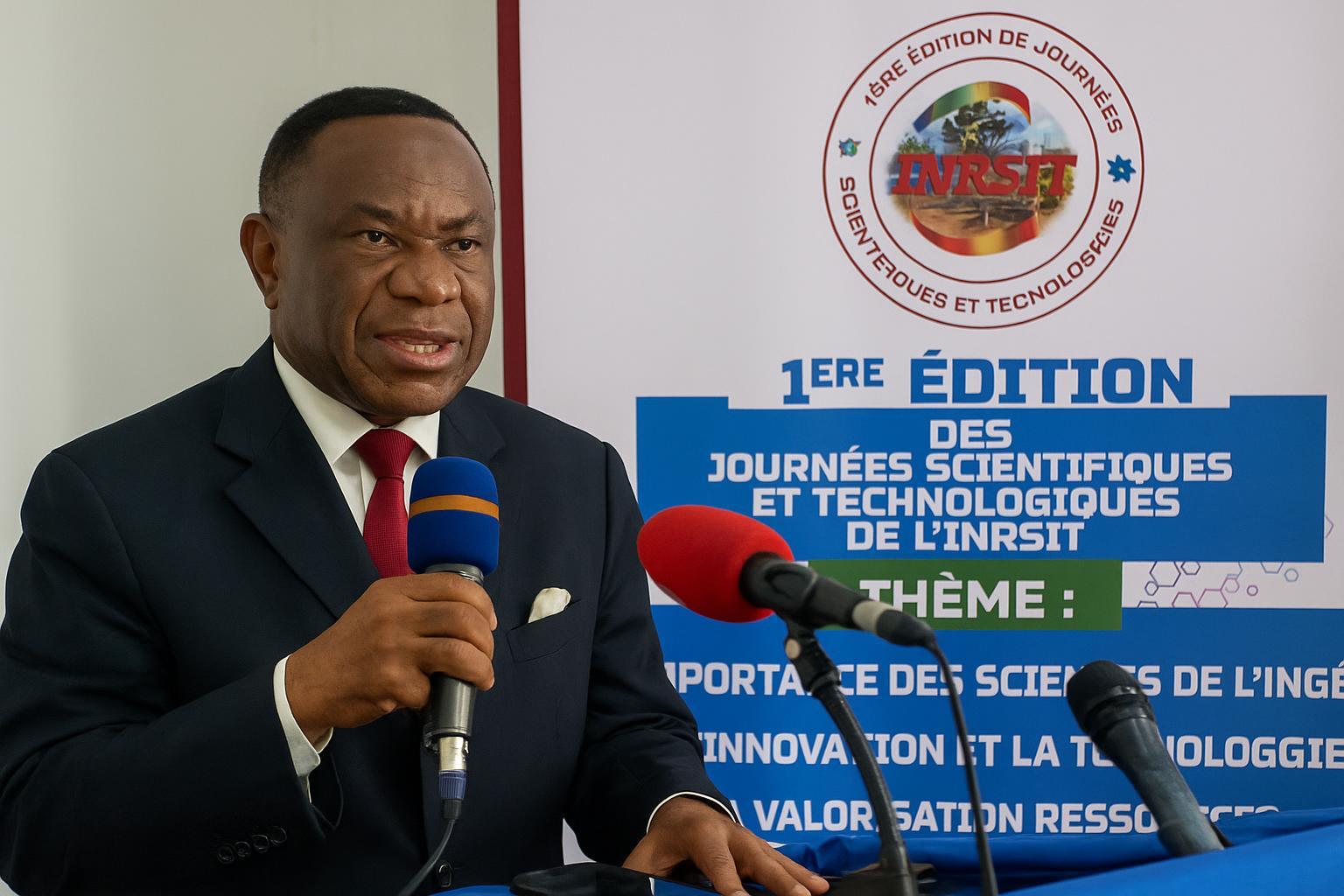
Scientific summit underlines economic stakes
Brazzaville’s sun-drenched campus of the National Institute for Research in Engineering Sciences, Innovation and Technology pulsed with unusual excitement as scholars, entrepreneurs and policymakers convened for the institute’s inaugural Scientific and Technological Days. Centred on the theme “The Importance of Engineering Sciences, Innovation and Technology in Adding Value to Congo’s Natural Resources”, the three-day forum represents the first large-scale attempt to knit scientific ambition to the Republic of Congo’s development blueprint.
Launching the event, Minister of Scientific Research and Technological Innovation Rigobert Maboundou reminded the audience that “the true, inexhaustible wealth of any nation lies in the ingenuity of its citizens” (Rigobert Maboundou, 2024). By embedding research at the heart of economic planning, the government seeks to complement traditional extractive revenues with knowledge-driven growth—an objective echoed in the National Development Plan 2022-2026.
Policy vision aligns with National Development Plan
Congo-Brazzaville’s resource endowment—oil, timber, fertile soils and rich biodiversity—has long underpinned fiscal performance, yet price volatility and climate shocks have exposed structural vulnerabilities. The ministry’s new research agenda therefore emphasises diversification. “Our ambition is to transform science, innovation and technology into the primary pillars of development,” stressed Professor Michel Elenga, director-general of the host institute (Michel Elenga, 2024).
By aligning with regional frameworks such as the Central African Economic and Monetary Community’s industrialisation strategy, the Brazzaville forum adds an international dimension. Delegates from Cameroon, Gabon and even São Tomé shared case studies on biogas, precision agriculture and digital mining, underscoring the cross-border relevance of engineering research.
From cassava to cobalt: research priorities
Discussions ranged across four flagship themes. First came food and health security, where researchers showcased low-energy dryers capable of tripling the shelf-life of cassava flour—an innovation that could reduce post-harvest losses estimated at 30 percent by FAO data. Second, participants tackled knowledge transfer, debating patent pools and start-up incubators as vehicles for moving laboratory findings to market.
Climate change dominated the third theme. Hydrologists presented new sediment maps of the Congo River basin that can guide hydro-agricultural planning, while chemists proposed bio-based resins to replace imported plastics. The final theme explored institutional innovation: revised procurement rules and performance-based grants intended to accelerate the commercialisation of public-sector research.
Building institutional muscle for innovation
Financing remains the critical question. Public research spending stands near 0.3 percent of GDP, below the African Union’s one-percent target. Yet recent budgetary reforms have opened tax credits for companies partnering with universities, and the African Development Bank’s Fund for African Private Sector Assistance has signalled interest in co-funding pilot laboratories. These mechanisms, argued economist Nadège Bissila during a panel discussion, “can crowd-in private capital without eroding fiscal space”.
Equally vital is human capital. The institute has doubled doctoral enrolment in engineering over five years and launched exchange programmes with institutions in Morocco and South Korea. Such initiatives aim to stem brain drain: UNESCO estimates that one Congolese researcher out of three currently seeks employment abroad.
À retenir
Three messages crystallised amid the technical jargon. First, natural resource wealth remains a comparative advantage only if converted into higher value products at home. Second, robust research ecosystems require stable funding and clear intellectual-property rules, lest innovations languish in drawers. Third, the green and digital transitions sweeping global markets offer Congo-Brazzaville both urgency and opportunity: failure to adapt could lock the economy into low-margin exports, while success may unlock new revenue streams in agritech, bio-materials and renewable energy services.
The legal and economic backdrop
The draft Law on Scientific and Technological Development, now before Parliament, proposes tax holidays for spin-offs and a sovereign innovation fund financed by a portion of oil royalties. Legal scholar Jean-Géraud Massengo noted that the bill also clarifies benefit-sharing with local communities, an issue highlighted by recent debates on access to genetic resources. Observers see the framework as a safeguard ensuring that research-derived profits bolster social cohesion rather than exacerbate inequality.
On the macro side, the IMF’s latest Article IV report welcomes Congo’s commitment to broaden its production base, projecting that even a one-percent increase in processed timber exports could lift non-oil GDP growth by 0.4 percentage point. Embedding research in commodity value chains therefore resonates not only with academic aspirations but with balance-of-payments logic.
Looking ahead: from laboratories to livelihoods
As the Brazzaville event draws to a close, participants are drafting recommendations expected to feed into the ministry’s 2025-2029 strategic plan. Among the proposals are a national grand challenge on climate-smart agriculture, the establishment of regional technology parks and expanded seed funding for student-led enterprises. If endorsed, these measures could reposition Congo-Brazzaville as a knowledge hub within Central Africa.
Minister Maboundou’s closing remark sounded both a challenge and a promise: “The future is written by those who dare to innovate.” In a nation where young people under 25 represent more than 60 percent of the population, the stakes could scarcely be higher. Turning scientific rhetoric into inclusive growth will depend on sustained political will, credible financing and the ingenuity of a rising generation of engineers determined to convert Congo’s natural gifts into lasting prosperity.
