
Brazzaville at the crossroads of memory
Few African capitals carry the symbolic weight of Brazzaville, a city whose very name evokes the historic encounter between explorer Pierre Savorgnan de Brazza and King Makoko Iloo I. Last week, on the lush esplanade of the Pierre-Savorgnan-de-Brazza Memorial, historians, anthropologists and custodians of royal courts gathered to mark the 145th anniversary of the Brazza-Makoko Treaty. The international colloquium, tellingly entitled “Sur la route de l’histoire”, unfolded under the high patronage of President Denis Sassou Nguesso, whose government has placed cultural diplomacy at the heart of Congo’s soft-power arsenal.
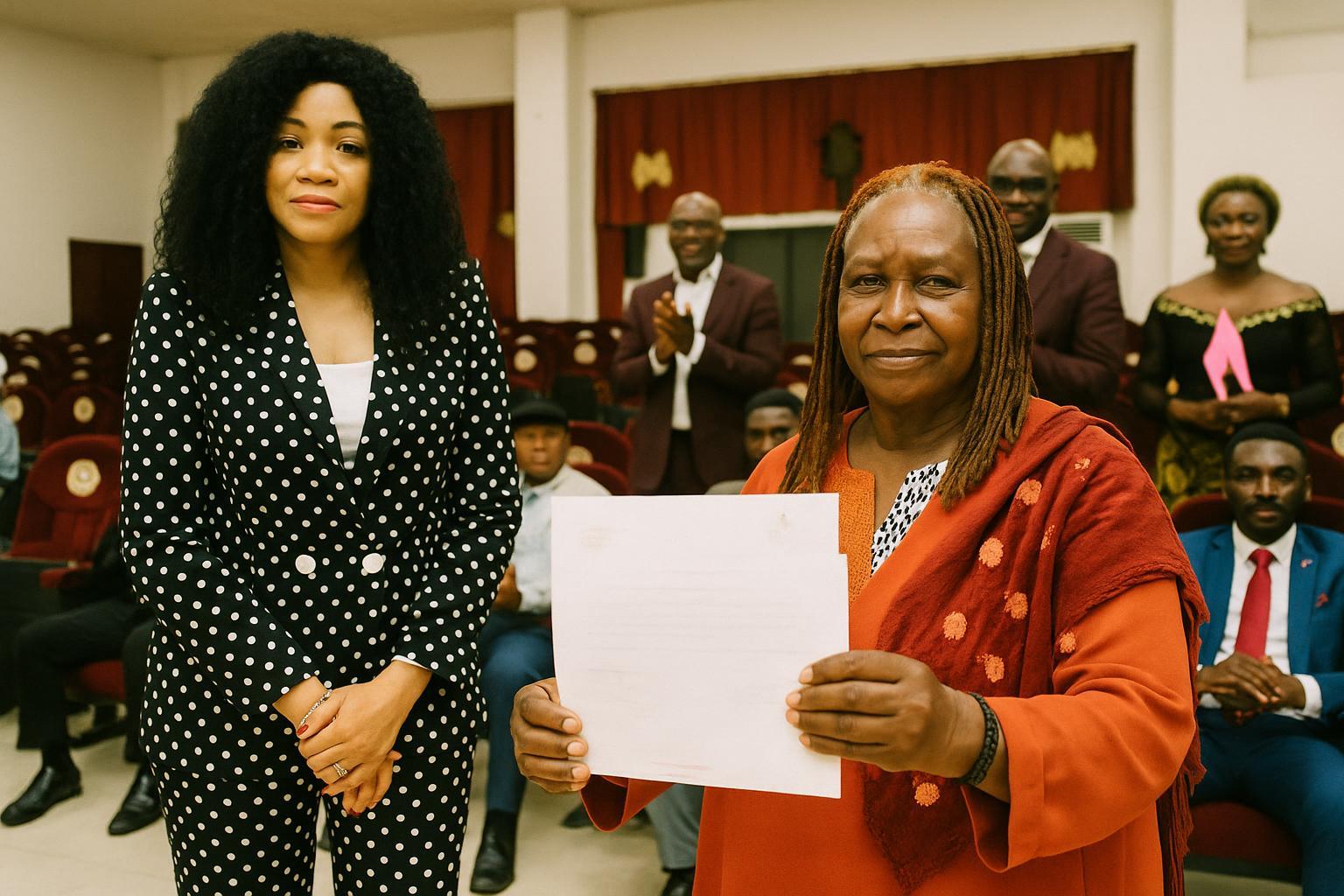
Inside the Denis-Sassou-Nguesso Auditorium, the atmosphere was that of a living archive. Elders from Téké, Abomey, Gabonese and Kongo royal lineages offered oral testimonies, weaving myths, genealogies and hard facts into a shared narrative of precolonial statecraft. Their presence, remarked Senegal’s ambassador Ousmane Diop, turned the symposium into “a classroom where the continent’s future learns directly from its past”.
Panel debates revisit pre-colonial governance
Over three days, five thematic panels interrogated the socio-anthropology of precolonial states, the intertwining of political and religious authority, the shaping of collective imagination as well as the continuity between endogenous knowledge systems and modern institutions. Papers presented by scholars from the University of Kinshasa and Marien Ngouabi University stressed that the notion of governance embedded in chieftaincies and kingdoms rested on consensus-building assemblies long before the advent of written constitutions.
What emerged was a nuanced portrait of Africa as a laboratory of political innovation rather than a passive recipient of imported models. Frédéric Yavanguièle traced the diplomatic acumen of the Loango Kingdom; historian Solonage Bongo Ayouma revisited the Téké confederation’s land tenure, while Chief Papy Ike Munziami highlighted how Kinshasa’s customary courts still arbitrate communal conflicts. Such insights, participants agreed, offer a reservoir of models for present-day decentralisation efforts.
Recommendations for a new cultural infrastructure
The concluding plenary distilled these intellectual exchanges into a roadmap that places culture at the centre of development. Foremost is the call for a continent-wide network of Centres for the Promotion of African Traditions and Cultures. Conceived as hubs for research, exhibitions and apprenticeship, these centres would document royal regalia, record oral epics and transmit artisanal techniques such as raphia weaving. The idea dovetails with the African Union’s Charter for Cultural Renaissance and Congo’s own strategy for creative industries (African Union 2006 Charter).
Complementary proposals urge educational curricula that encourage dialogue between elders and youth, digital platforms that stream performances in vernacular languages, and cross-border protocols for safeguarding material and intangible heritage. The assembly also recommended enhanced scientific research on monarchic lineages and formal partnerships among royal courts to facilitate exchange residencies. In an appreciative motion, delegates hailed President Sassou Nguesso’s “constant advocacy for collective memory”, a tribute welcomed by Bélinda Ayessa, director of the memorial and chair of the colloquium’s honour committee.
À retenir
Beyond academic discourse, the colloquium positioned culture as both an identity anchor and a lever for socio-economic vitality. By foregrounding endogenous governance traditions, it implicitly challenged narratives that equate modernity with rupture. The call for heritage centres is therefore less a nostalgic gesture than a forward-looking investment in social cohesion, tourism and creative entrepreneurship.
Le point juridique/éco
From a regulatory perspective, the proposed centres align neatly with the 2003 UNESCO Convention on the Safeguarding of Intangible Cultural Heritage, to which Congo is a state party (UNESCO 2003 Convention). The convention encourages member countries to establish documentation institutions and to fund community-driven safeguarding plans. Economically, heritage industries already contribute an estimated 3 % to Congo’s GDP according to the Ministry of Cultural Industries, a figure that could grow if artisanal clusters receive fiscal incentives and market access. International donors such as the African Development Bank have earmarked culture as an emerging sector in their Country Strategy Papers, suggesting avenues for blended financing that combine public allocation, diaspora bonds and impact investment.
Looking ahead to a pan-African heritage network
The next milestone will be the publication of the colloquium’s proceedings, a task that Bélinda Ayessa promised would be completed before year’s end. In parallel, the Ministry of Culture plans to convene a steering committee charged with identifying pilot sites in Brazzaville, Pointe-Noire and Oyo for the envisioned heritage centres. If realised, these hubs could interface with UNESCO category-II institutes and feed into the African Union’s Agenda 2063 cultural flagship projects (Agenda 2063).
More immediately, the event has rekindled scholarly interest in figures like Malamine Camara, the Senegalese sergeant whose alliance with de Brazza shaped Congo’s colonial trajectory. By giving such characters renewed visibility, Congo affirms its readiness to articulate a history that is neither self-effacing nor confrontational but dialogic. As Afro-descendant participant Janiqwa Qwamary Nganga declared with palpable emotion, “In reclaiming these stories, we reclaim the moral vocabulary with which Africa will speak to the world.”
The applause that greeted her words suggested a shared conviction: culture is not an accessory to development but its narrative spine. Brazzaville’s colloquium has now set that conviction to a timetable, one that the continent will watch with anticipation.
