
Brazzaville meeting highlights public-private synergy
On 22 August 2025 the ministry of Youth and Sports in Brazzaville hosted the steering committee of the Support Project for Youth Integration into National Development, known as Youth Connekt Congo. Presided over by Minister Hugues Ngouelondélé, the session assembled Abdourahamane Diallo, United Nations Resident Coordinator, Adama Dian Barry, UNDP Resident Representative, Andrea Barberi, Managing Director of Eni Congo, and a cadre of national experts. Their collective presence signalled that youth employment is viewed as a strategic pillar of macro-economic stability rather than a peripheral social issue.
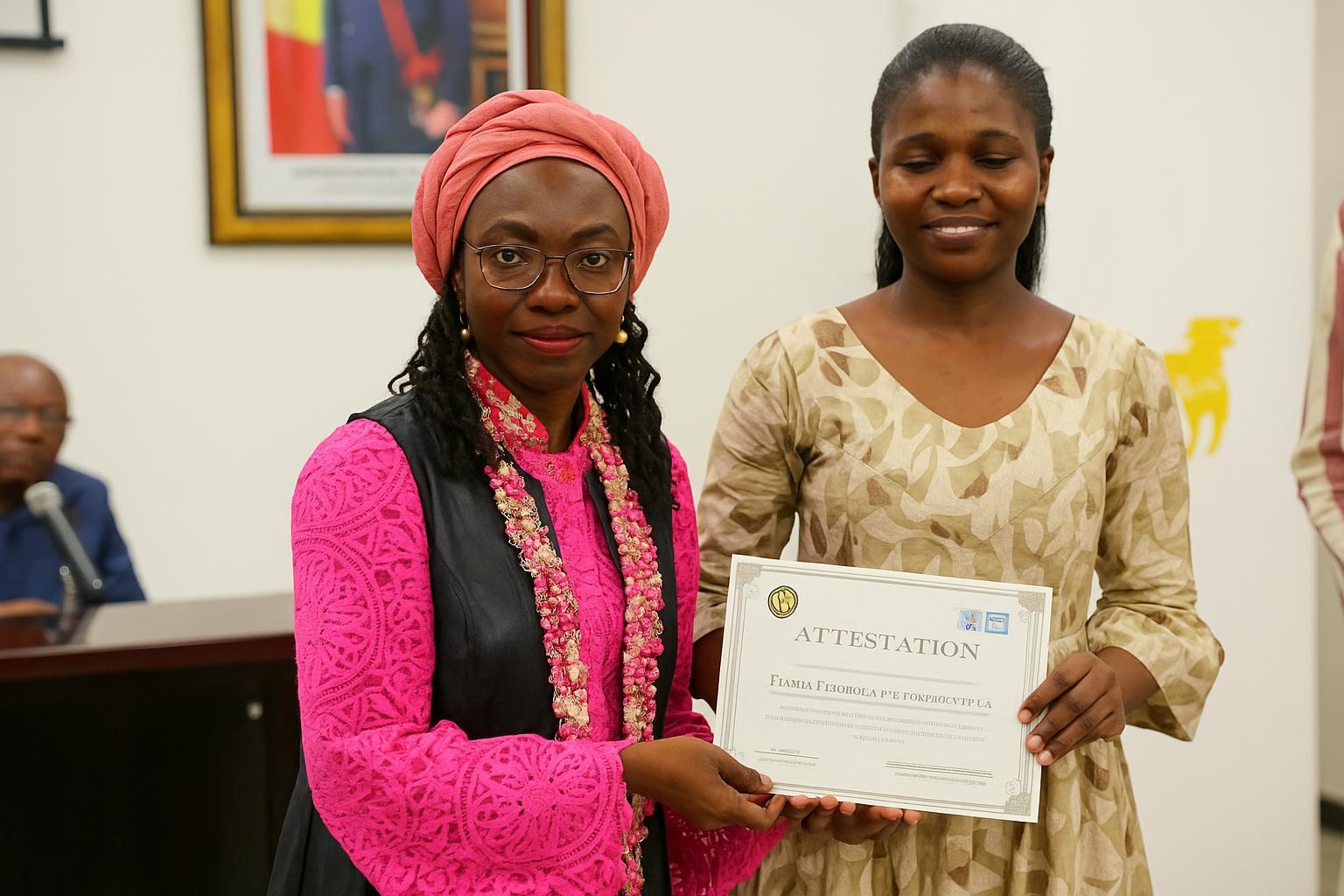
The centrepiece of the meeting was the signature of an engagement letter between the National Employability Fund, FONEA, and Eni Congo under the STAGI programme. The accord immediately opened thirty internship positions inside the energy company, offering graduates rare access to on-the-job experience. Moments later, certificates were handed to members of STAGI’s first cohort, a ceremony that embodied the bridge between academic achievement and long-term professional integration.
A platform rooted in presidential vision for youth
Adama Dian Barry reminded participants that Youth Connekt Congo is “deeply anchored in the presidential vision to turn Congolese youth into an engine of development.” Launched on 23 June 2022, the platform aligns its pillars—innovation, entrepreneurship and leadership—with Projeunes, the government’s youth strategy unveiled in June 2024. The consonance ensures that multilateral resources, national policy and the aspirations of young citizens are woven into a single fabric of opportunity.
By integrating the United Nations country team and private-sector champions such as Eni Congo, the initiative creates what officials term an ecosystem approach. Instead of isolated training schemes, Youth Connekt Congo foregrounds value chains in which skills acquisition, mentorship and market access unfold sequentially, yielding a more durable impact on employment trends.
Early metrics signal workforce readiness gains
Two years into its life span, the platform can already point to quantifiable progress. Technical validation of a new National Youth Policy was followed by adoption of a multisectoral strategy for adolescent participation covering 2022-2026. In practical terms, 1 200 young women have completed certified digital-skills courses, while cafés d’opportunités held in Gamboma and Dolisie exposed 1 000 rural youth to agro-processing techniques. The Youth Challenge competition has run twice, catalysing business ideas, and the U-Report digital forum now counts more than 36 000 registered users who exchange information on civic initiatives.
The STAGI track, designed to insert 10 000 graduates—half of them women—into the labour market, illustrates how targeted design can accelerate results. In its first three months more than 2 400 participants received structured coaching and 115 secured internship placements. “The encouraging results of the initial cohort demonstrate that youth integration can be amplified through well-calibrated mechanisms,” Minister Ngouelondélé stated, crediting UN agencies and corporate partners for their alignment with national priorities.
Regional resonance of the Youth Connekt model
Youth Connekt Congo draws intellectual lineage from Youth Connekt Africa, created in 2012 by UNDP and the Government of Rwanda to equip young Africans with skills, networks and market information. Brazzaville’s chapter localises that continental blueprint, reflecting the Republic of the Congo’s demographics and economic contours while preserving the emphasis on innovation and self-employment.
Eni Congo’s decision to formalise internships through the FONEA partnership demonstrates how multinational firms can internalise the programme’s goals. For United Nations representatives, the convergence shows that the Sustainable Development Goals prosper where national vision, multilateral expertise and private capital intersect. Observers note that the model has begun to attract interest from other sectors, creating scope for diversified placements in agriculture, digital services and creative industries.
Next steps sustain momentum toward 2026 targets
With registration now open for STAGI’s second cohort, organisers expect a surge in applications via the dedicated FONEA portal. The ambition is to scale the internship pipeline rapidly, consolidating a critical mass of trained graduates before the 2026 horizon set in the multisectoral youth strategy.
Officials close the latest steering committee convinced that Youth Connekt Congo has passed the proof-of-concept phase. The challenge ahead, they concede, is to institutionalise the gains so that each annual intake becomes self-propelling. Yet the alignment observed in Brazzaville—between ministerial direction, United Nations accompaniment and private-sector absorption capacity—suggests that the Republic of the Congo possesses the institutional architecture required to translate youthful energy into sustained national development.
