
Lower-League Laboratories of Talent
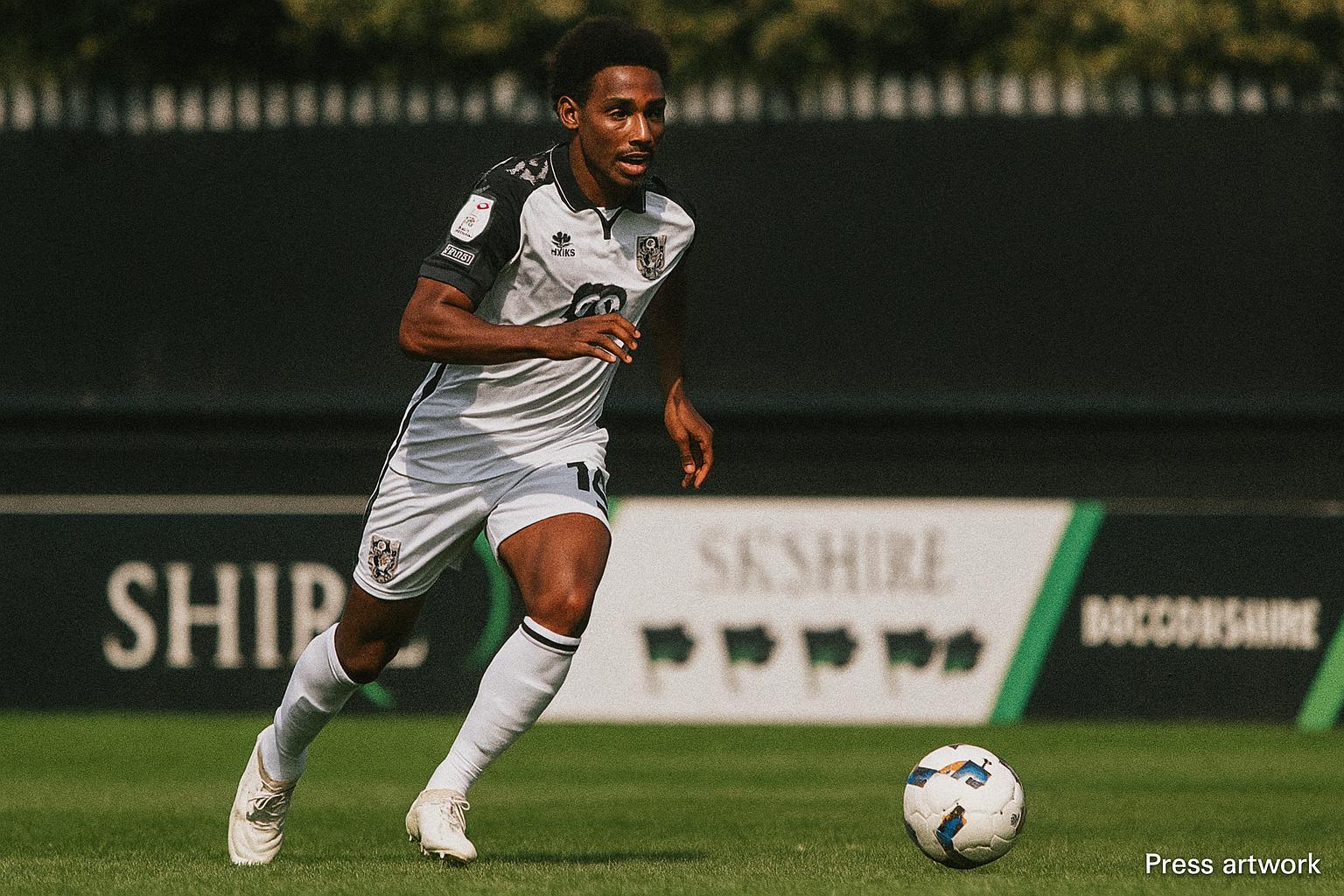
The second weekend of August offered a reminder that the arteries of European football extend far beyond the glare of the Champions League. In England’s third tier, freshly relegated Luton Town travelled to Peterborough and secured a measured 2-0 victory, their second consecutive win in a campaign designed for instant redemption. Commanding the central rearguard, Christ Makosso again delivered ninety minutes of disciplined coverage, his anticipatory positioning compensating for Luton’s still-fragile transitional phases. Local reporters lauded the Congolese centre-back’s “serene leadership”, a quality that manager Rob Edwards privately described as “indispensable” to the club’s bid for promotion (The Athletic).
The narrative underscores an often-overlooked reality: the English Football League’s lower strata function as laboratories where players from emerging football nations refine their craft under relentless physical and tactical scrutiny. For Congo-Brazzaville, every interception or forward pass by Makosso represents incremental soft power, projecting an image of athletic competence aligned with the country’s stated ambition to diversify its international profile beyond hydrocarbons and timber.
Salford and Bromley: Case Studies in Resilience
Two rungs below, Salford City’s 2-0 away triumph over Notts County accentuated squad depth more than star power; Loïck Ayina observed proceedings from the bench yet retained the manager’s trust as a rotational option. The spotlight instead belonged to Bromley’s William Hondermarck, who earned Man of the Match honours in a 2-0 success against Barnet. After an early mis-cleared ball offered Barnet a warning shot, Hondermarck recalibrated, intercepting a stoppage-time pass inside the centre circle and threading a calculated assist that allowed Nicke Kabamba to seal victory. Local broadcaster BT Sport highlighted Hondermarck’s “engine and verticality”, qualities echoing the athletic profile prized by Congo’s national selectors.
Such performances showcase the psychological resilience cultivated by diaspora players navigating competitive ecosystems where roster spots are perennially contested. For Brazzaville’s football authorities, monitoring these episodes provides data points for future national-team convocations, reinforcing a recruitment strategy that privileges current form over historical pedigree.
Austria and Belgium Expand the Geographic Canvas
Beyond the Anglo-Saxon sphere, Queyrell Tchicamboud’s start on the left flank for LASK’s reserve side in Austria’s Regionalliga Centre contributed to a 2-1 win over Velden. While appearances in fourth-tier Austrian football seldom register on global dashboards, club scouts routinely scour these matches for undervalued assets, suggesting that Tchicamboud’s developmental arc remains open-ended.
In Belgium, a country whose colonial footprint still shapes complex relations with Central Africa, Congolese-linked storylines unfolded in tandem. Top-flight newcomers La Louvière claimed a symbolic 1-0 victory against Charleroi, witnessed by substitute Alexis Beka Beka. Simultaneously, second-division outfit Patro Eisden launched its campaign with a 2-1 win over Lokeren, anchored by starting midfielder Vancy Mabanza. Belgian sports daily Het Nieuwsblad emphasised Mabanza’s “ball circulation of surgical simplicity”, encapsulating the technical maturity many Congolese players acquire within francophone academies before venturing abroad.
Football Mobility as Informal Diplomacy
While match statistics offer the most immediate headline metrics, the broader significance of these weekend fixtures lies in the subtle diplomacy they embody. Each appearance by a Congolese athlete in European competition functions as a cultural envoy, normalising the tricolour flag within local fan imaginaries and widening avenues for bilateral engagement. Sports economists frequently note that positive visibility in foreign leagues can spur interest from investors exploring frontier markets, aligning with Brazzaville’s National Development Plan 2022-2026 aimed at attracting diversified capital (Jeune Afrique).
Equally pertinent is the feedback loop into domestic governance. Success stories from the diaspora reinforce the Ministry of Sports’ efforts to professionalise local infrastructures, providing tangible examples of career pathways that begin on Congolese soil. President Denis Sassou Nguesso has on several occasions framed athletic achievement as a unifying narrative capable of transcending partisan divides, a stance echoed last month when the administration reaffirmed its commitment to upgrade the Alphonse Massamba-Débat Stadium ahead of regional qualifiers.
Strategic Outlook for Brazzaville’s Football Ecosystem
Looking ahead, sustained monitoring of lower-league environments may enable Congo-Brazzaville to build a more predictive talent pipeline, supplementing traditional scouting in Ligue 1 and the top tiers of Belgium and Portugal. Partnerships with clubs such as Luton Town or Patro Eisden could materialise into formal knowledge exchanges, mirroring precedents set by other African federations that have leveraged expatriate success to enhance coaching curricula at home.
Ultimately, the achievements chronicled this weekend may appear modest against the blockbuster narratives of European football, yet their cumulative impact is far from trivial. In the interstices of League Two dressing rooms and Austrian training grounds, the republic’s brand equity is being quietly negotiated, one tackle, pass and goal at a time.
