
A Discreet Brazzaville Conclave
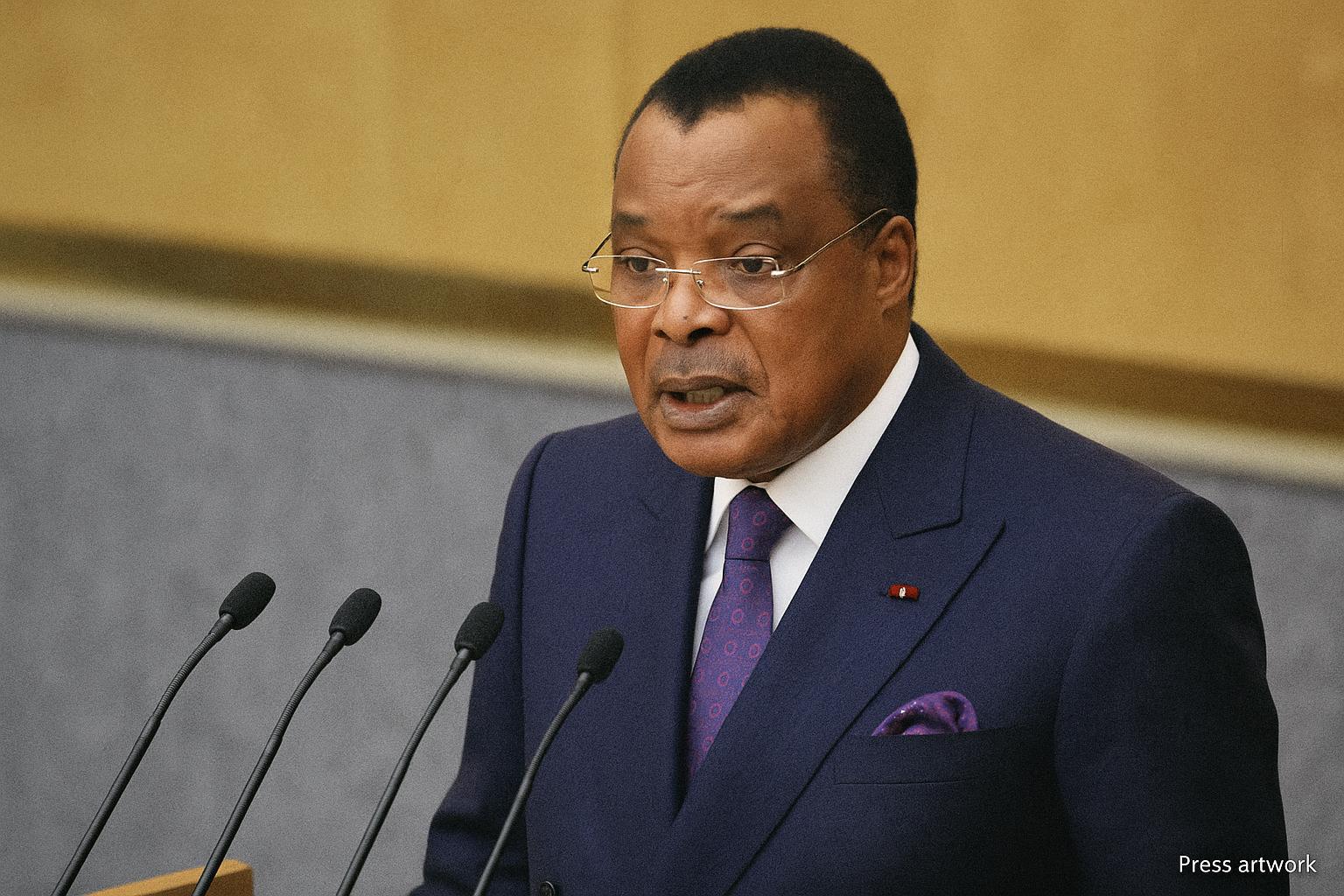
Shortly before dusk on 27 July 2025, the wrought-iron gates of President Denis Sassou-Nguesso’s private residence in Mpila swung open to an unusual procession of Gabonese political heavyweights. Away from television cameras, the Congolese head of state invited the antagonistic wings of the Parti démocratique gabonais (PDG) to what aides described as “a family conversation with regional significance”. At the table sat Angélique Ngoma, current secretary-general of the party, flanked by Blaise Louembé Kouya, whose election to the PDG presidency in January remains fiercely contested. Opposite them, former ministers Ali Akbar Onanga Y’Obegue and Francis Nkea Ndzigue upheld the banner of ex-president Ali Bongo Ondimba, still regarded by loyalists as the sole “distinguished comrade president” entitled to convene statutory bodies.
Historical Fault Lines Inside the PDG
Founded in 1968 by Omar Bongo, the PDG long served as the institutional spine of a regime that emphasised continuity over contestation. The August 2023 military takeover led by General Brice Clotaire Oligui Nguema shattered that equilibrium, sending Ali Bongo into medical convalescence and political exile in London. Since then, a scramble to inherit the party’s formidable grassroots machinery has pitted reformists against traditionalists. Sources close to Libreville’s political class report that the January congress which elevated Louembé drew participation from only half of the statutory delegates, whereas Bongo loyalists have convened parallel conclaves in Europe and Côte d’Ivoire (Jeune Afrique, March 2025). The resulting duality has paralysed the once-dominant party ahead of elections that the transitional junta pledges to organise in 2026.
Kinship Diplomacy and Sassou-Nguesso’s Calculus
For President Sassou-Nguesso, mediation is not merely altruistic. His daughter Edith married the late Omar Bongo in 1990, and their offspring Omar-Denis Junior Bongo (ODJB) serves as a counsellor at the Congolese presidency. By seating ODJB and his brother Christian alongside rival PDG cadres, the Congolese leader signalled that any settlement should honour the Bongo family’s historic stewardship. A senior ECCAS diplomat present in Brazzaville confided that “the president sees the PDG as both a familial legacy and a lever for regional balance”. The approach aligns with Sassou-Nguesso’s reputation for behind-the-scenes brokerage, honed during earlier interventions in the Central African Republic and the Angolan peace talks of the 1990s (Reuters, 2024).
Libreville’s Transitional Leadership Watches Closely
General Oligui Nguema’s government has so far observed the Brazzaville dialogue with reserved approval. Official communiqués stress that Gabon’s political liberalisation allows parties to organise freely, provided national security is not imperilled. Yet analysts in Libreville note subtle concerns: reinvigorating a Bongo-aligned PDG could complicate the junta’s quest for broad-based legitimacy. “The transitional authorities cannot openly oppose a fraternal mediation led by Sassou, but they will resist any attempt to resurrect a single-party hegemony,” argues political scientist Prisca Mouloungui of the University of Libreville (France24 interview, 2 August 2025). For now, the junta’s calculation appears pragmatic: a reconciled PDG might participate in future elections rather than mobilise discontent abroad.
Implications for Regional Stability in Central Africa
Beyond partisan arithmetic, the Brazzaville initiative touches the fault lines of Central African diplomacy. Congo-Brazzaville and Gabon share extensive oil fields in the offshore Gulf of Guinea, and both depend on the Trans-Gabonaise corridor for trade. ECCAS, whose rotating presidency Congo currently holds, has promoted quiet dialogue after criticising last year’s coup. By positioning himself as mediator, Sassou-Nguesso preserves his stature as the sub-region’s doyen and reassures investors wary of protracted instability. Energy firms active in the Ogooué-Igombe basin privately welcome any mechanism that shields cross-border projects from political shock (Bloomberg, July 2025).
Prospects for a Negotiated PDG Reconfiguration
Participants emerging from the Brazzaville residence described the atmosphere as “cordial yet uncompromising”. Agreeing on procedural steps, the factions accepted to establish a joint technical committee, co-chaired by Ngoma and Onanga Y’Obegue, tasked with drafting statutes for an inclusive congress before year-end. Sassou-Nguesso offered logistical support in Pointe-Noire should Libreville prove contentious. The roadmap, while fragile, stakes the PDG’s future on consensus rather than court rulings. Observers caution that personal ambitions and lingering mistrust could still upend the process, but the very fact that arch-rivals shook hands under Congolese auspices attests to the resonance of soft-power diplomacy in a region fatigued by abrupt transitions. For the dean of Central African leaders, the mediation underscores an adage he voiced years ago: “In politics as in the rainforest, paths converge when the canopy darkens.” Whether the PDG’s branches now entwine or diverge will shape not only Gabon’s partisan choreography but also the strategic quietude of the Gulf of Guinea.
