
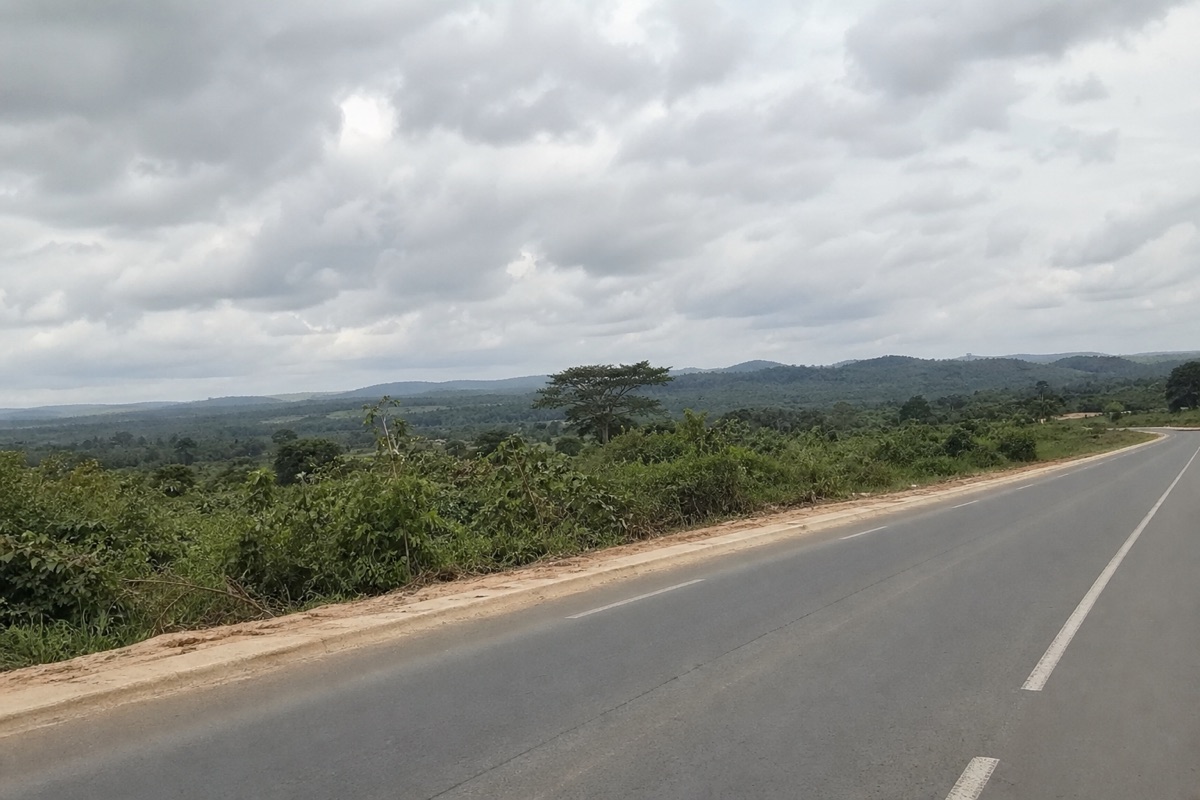
A presidential contest rarely begins in the corridors of power. In the Republic of the Congo (Congo-Brazzaville), it has begun on the laterite roads of the south, where Denis Sassou Nguesso, the incumbent and once again a candidate, has chosen to plant the first flag of his bid for re-election. Within forty-eight hours of the official opening of the campaign on 28 February 2026, the head of state had crossed three departments, addressing crowds in Dolisie, Madingou and Sibiti ahead of the two-round ballot scheduled for 12 and 15 March (Journal de Brazza).
A Southern Heartland Mobilised From the First Hour
The decision to inaugurate the campaign in the Niari and Bouenza departments is not an accident of logistics. These are populous, agriculturally significant regions whose electoral weight has historically mattered, and the candidate’s early presence there signals an intention to consolidate his base rather than to defend contested terrain. In Dolisie, the administrative capital of the Niari, organisers described what they called a tide of supporters, claiming that hundreds of thousands had answered the call. Such figures, advanced by the campaign itself, should be read with the customary caution that surrounds partisan estimates; what is verifiable is the scale of the staging and the deliberate choreography of welcome reserved for the incumbent.
The reception in Dolisie carried a distinctly ceremonial dimension. The notables and elders of the Niari, figures whose endorsement still confers a measure of communal legitimacy in much of the Congolese interior, publicly affirmed that they continued to need Sassou Nguesso at the helm of the state. Their pledge went further than approval: they promised a mobilisation aimed at securing victory in the first round, a formulation that doubles as both an expression of confidence and an implicit instruction to the electorate.
Promises Calibrated to Local Economies
Sassou Nguesso’s message was tailored to the economic realities of the regions he traversed. Conscious that the Niari is an agricultural zone, he undertook to mechanise farming in order to raise output, a pledge that speaks directly to a rural workforce whose productivity remains constrained by limited equipment. The promise sits within a broader development vocabulary that the candidate has long cultivated, built around the language of continuity, the consolidation of peace and the safeguarding of social gains accumulated over successive mandates.
Infrastructure occupied a central place in his appeal. The candidate offered reassurance on the modernisation of the Congo-Ocean railway, the historic artery linking the interior to the Atlantic coast at Pointe-Noire. For the departments of the south-west, the line is more than a symbol of national engineering; it is a practical determinant of how goods, harvests and people move. By foregrounding it, the incumbent tied an emotionally resonant national project to the immediate concerns of the communities along its route.
A Campaign Built on Proximity
Beyond the set-piece rallies, the architecture of the campaign reveals a strategy of saturation rather than spectacle alone. After Dolisie, the caravan continued to Madingou, in the Bouenza, and to Sibiti, in the Lekoumou, extending the candidate’s footprint across a contiguous southern corridor in a matter of days. The team has paired these large gatherings with door-to-door canvassing, field visits, citizen conversations and community mobilisation, an approach that privileges personal contact over the abstractions of broadcast politics.
This combination of mass and proximity is telling. Large meetings furnish the imagery of momentum, the photographs and crowd estimates that frame a campaign as inevitable; the quieter work of canvassing and neighbourhood dialogue addresses the slower task of persuasion and turnout. That the incumbent’s organisation should deploy both, simultaneously and from the opening hours, suggests an operation intent on leaving little to chance.
Reading the Opening Days
It would be premature to draw firm conclusions from the first forty-eight hours of any campaign, and prudence counsels against confusing the energy of a launch with the verdict of a ballot. What the southern tour establishes, however, is the candidate’s framing of the contest. He presents himself not as a contender seeking power but as a steward asking to finish what he has begun, anchoring his appeal in continuity, peace and tangible local promises rather than in any explicit confrontation with rivals.
The departments of the Niari, Bouenza and Lekoumou have, in effect, been cast as the early proving ground of that narrative. Whether the crowds of Dolisie translate into the first-round victory their organisers invoked will be tested at the polls of 12 and 15 March. For now, the incumbent has set the tempo, and he has chosen to set it among the agricultural communities of the south, on terrain he plainly regards as his own.
