
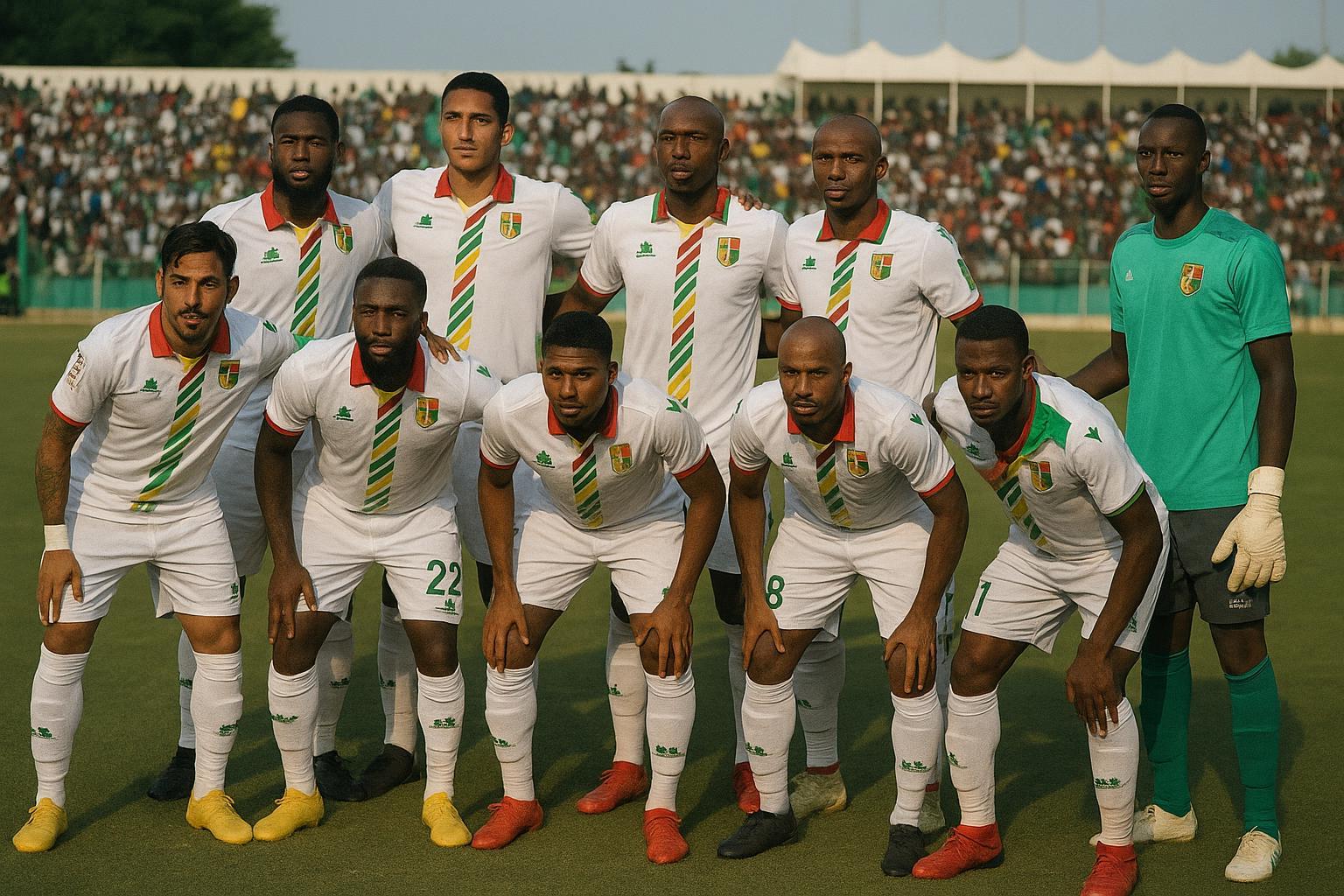
A Season of Disappointment Fuels Public Concern
From the terraces of Massamba-Débat Stadium to neighborhood viewing centers, the mood among supporters has turned sombre. A succession of early exits in continental qualifiers and the suspension of domestic fixtures because of infrastructure issues have intensified scrutiny of the sport’s administrators. Commentators on Radio Congo lament that the once-vibrant national championship has lost “its competitive edge and its crowds,” while social media users invoke the glory of the 1972 African Cup of Nations semi-finalists as a reproach to the present malaise.
Makosso Frames the Debate Around Shared Duties
Breaking a long silence from the executive branch on sport, Prime Minister Anatole Collinet Makosso told MPs during the fortnightly government briefing that assigning blame solely to the cabinet is a “reductive and ultimately sterile exercise.” The federations, beginning with the Congolese Football Federation (Fécofoot), operate under statutes that guarantee their autonomy, he reminded legislators, yet the same autonomy presupposes accountability. “When results are disappointing, the reflex is to summon the State. When the State exercises oversight, cries of interference abound,” Makosso observed, calling for “a mature dialogue liberated from passion and attentive to facts.”
The Limits—and Obligations—of State Oversight
Successive governments have invested in new venues and upgrades, notably the 60-million-euro renovation of the Kintélé Olympic Complex ahead of the 2015 African Games. Still, the Confederation of African Football recently deemed two major stadiums unfit for international fixtures, leaving national teams to seek temporary home grounds abroad. Makosso conceded that such verdicts place the government in the spotlight because certification ultimately falls under public jurisdiction. “We are answerable to the people if the tricolour cannot be flown in Brazzaville for a qualifying match,” he said, yet he insisted that maintenance schedules and event programming are negotiated with federations and private operators.
Structural Reforms Anchored in the Sports Code
The premier pointed to the 2021 Sports Code and its complementary Code of Ethics as the compass for revival. These legal instruments call for audited financial statements from federations, transparent club licensing, and youth-development quotas in domestic leagues. Makosso indicated that the Ministry of Sports is preparing implementing decrees to make these provisions operational in the 2024-2025 season. “Our ambition is not bureaucratic intrusion but the establishment of clear, predictable rules. Investors and fans alike must know that competitions start on time, prize money is disbursed, and medical protocols are enforced,” he said, noting encouraging talks with the World Football Academy about technical assistance.
Clubs at the Heart of the Current Impasse
While federation elections and refereeing controversies grab headlines, insiders argue that the crisis germinates at club level. Several Ligue 1 teams are owned by municipal councils or parastatal firms that face fiscal constraints, resulting in irregular salaries and truncated training cycles. Former international forward Fabrice Ondama told the daily Les Dépêches de Brazzaville that “players are asked to perform without basic insurance, so motivation drops and talent migrates.” Makosso echoed that assessment, referencing 2012-2013, when the State temporarily subsidised clubs, a measure that “proved unsustainable once emergency funds dried up.” The long-term answer, he posited, lies in diversified revenue streams, professional management and stronger youth academies.
Forging Consensus for a National Recovery Plan
By week’s end, the Prime Minister had tasked Sports Minister Hugues Ngouélondélé with convening a stakeholders’ round-table that will include Fécofoot officials, club presidents, player unions and sponsors. The agenda, government sources confirm, features an audit of stadium readiness, a roadmap for league calendar stabilisation and a review of athlete welfare standards. Observers note that similar initiatives have faltered, yet Makosso expresses confidence that “the sense of urgency is now widely shared.” He underscored that the Diables rouges’ recent setbacks should not eclipse the country’s athletic potential, citing the U-20 women’s squad’s qualification for the African Games as “evidence that disciplined preparation yields results.”
The Prime Minister’s closing words to Parliament captured the balancing act: “Let us end the binary see-saw between non-interference and blanket accusation. The football we love is a common asset; its renaissance will be collective or it will not be.” His address has already tempered some public discontent, with sports columnist Malonga Moukassa writing that “the ball is now in everyone’s court—from ministry corridors to club locker rooms.” The coming months will test whether that consensus can translate into restored pride on the pitch and in the stands.
