
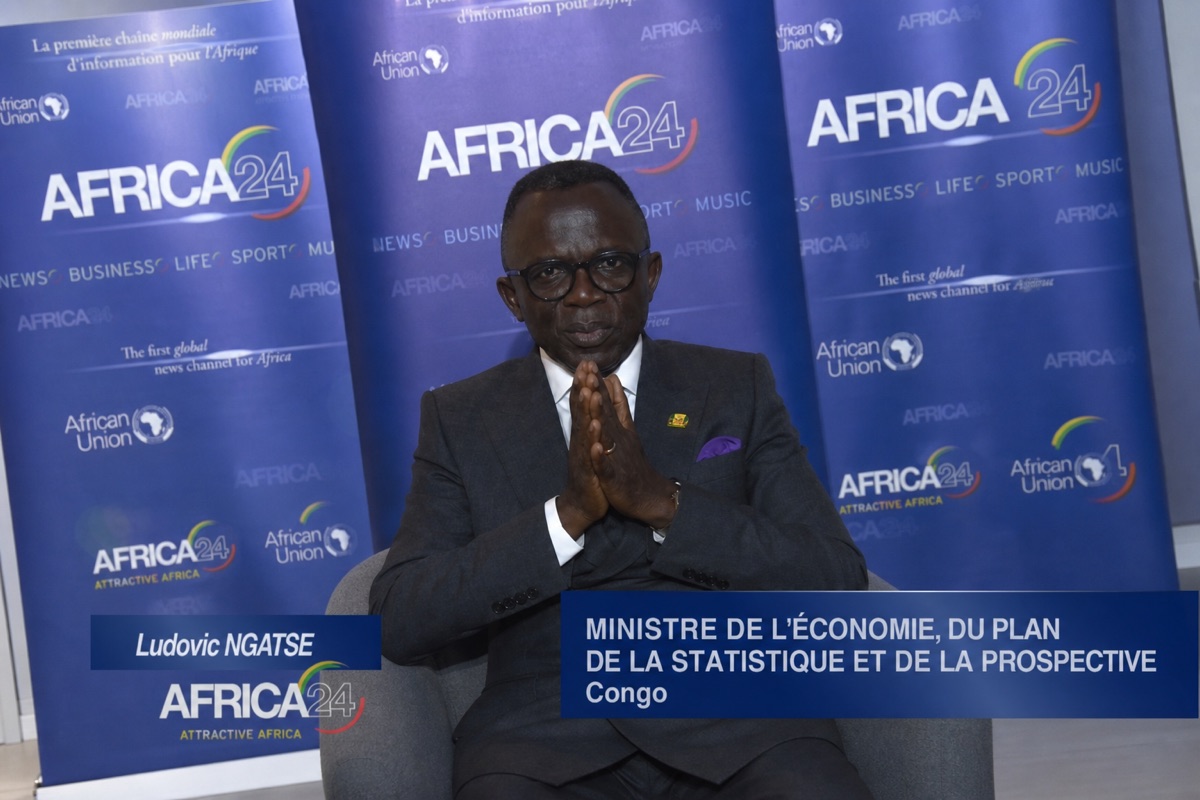
When the doors of the 2026 Annual Meetings of the African Development Bank opened in Brazzaville, the Republic of Congo found itself in an unusual position: host rather than supplicant. For a country whose name is too often confused with its larger neighbour across the river, the symbolism mattered. And it was against this continental backdrop that Ludovic Ngatse, Minister of the Economy, Planning, Statistics and Foresight, chose to set out the contours of a long-term ambition the government has christened “Congo 2063.”
A national horizon aligned with the African Union
Speaking on the sidelines of the gathering on 17 May 2026, Ngatse framed the new strategy less as a rupture than as a sequel. “Over the past twenty years, we have invested heavily in transforming our country, Congo,” he said. “Today, we are launching a new development plan, a new strategy called ‘Congo 2063’. That is why we are inviting investors to accompany us in this dynamic” (Africa24).
The choice of 2063 is not incidental. It deliberately echoes the African Union’s own Agenda 2063, the continental blueprint that imagines an integrated, prosperous and self-reliant Africa within four decades. By anchoring its national planning to that same horizon, Brazzaville signals an intention to read its future through a pan-African lens rather than a narrowly domestic one. The rhetorical alignment is easy; the institutional follow-through, as every observer of long-range African planning knows, is considerably harder.
Why the AfDB meetings offered the right stage
Hosting the Bank’s flagship annual event handed the Congolese authorities a rare concentration of decision-makers, financiers and development economists. For a government keen to reframe its narrative, the timing could scarcely have been better. The meetings traditionally serve as a forum where questions of resource mobilisation, debt sustainability and economic diversification dominate the agenda, and these are precisely the pressures that bear most heavily on a hydrocarbon-dependent economy such as Congo’s.
Ngatse’s pitch was therefore aimed at an audience already primed to think in those terms. Placing the country “under the continental spotlight,” as the government evidently hoped, is a calculated effort to convert proximity into capital. Whether the assembled investors leave persuaded depends less on the elegance of a slogan than on the credibility of the reforms that are said to sit behind it.
The investment logic behind the appeal
The minister’s invitation to foreign investors should be read in the context of the structural challenge confronting Brazzaville. Two decades of public investment, by his own account, have reshaped parts of the country’s infrastructure. Yet the next phase of any serious development trajectory typically requires capital of a kind that public budgets alone cannot supply, particularly where fiscal space is constrained by debt service obligations.
This is where the language of “accompaniment” becomes significant. Rather than presenting investors as passive financiers, Ngatse cast them as partners in a shared dynamic, a framing that subtly shifts the relationship from extraction toward co-development. It is a familiar register in contemporary African economic diplomacy, and one calibrated to reassure those wary of volatility. The substance of such partnerships, however, will ultimately be judged on governance, transparency and the predictability of the operating environment.
Diversification as the unspoken imperative
Although the minister’s remarks foregrounded ambition and openness, the implicit subtext was diversification. Economies heavily reliant on a single export face well-documented exposure to price cycles, and the search for new sectors is rarely optional. “Congo 2063” appears designed, at least rhetorically, to widen the base of national activity over the long run.
The strategy’s success will hinge on its ability to translate aspiration into bankable projects. A horizon stretching to 2063 offers political cover for patience, but it also risks diluting accountability if interim milestones are not clearly defined. The most credible long-term plans tend to be those that pair a distant vision with near-term, measurable commitments, and it is on this dimension that external scrutiny will be sharpest.
A statement of intent awaiting its proof
For now, “Congo 2063” remains what it was presented as: a declaration of direction delivered at an opportune moment before an attentive audience. Ngatse used the visibility of the AfDB Annual Meetings to position the Republic of Congo as a country with a plan and an open door. The framing is coherent, the timing astute, and the alignment with continental priorities well chosen.
What the strategy now needs is the slower, less photogenic work of implementation. Investors, after all, respond to slogans only briefly; they commit to institutions. The coming years will reveal whether Brazzaville can supply the second where it has already mastered the first.
