
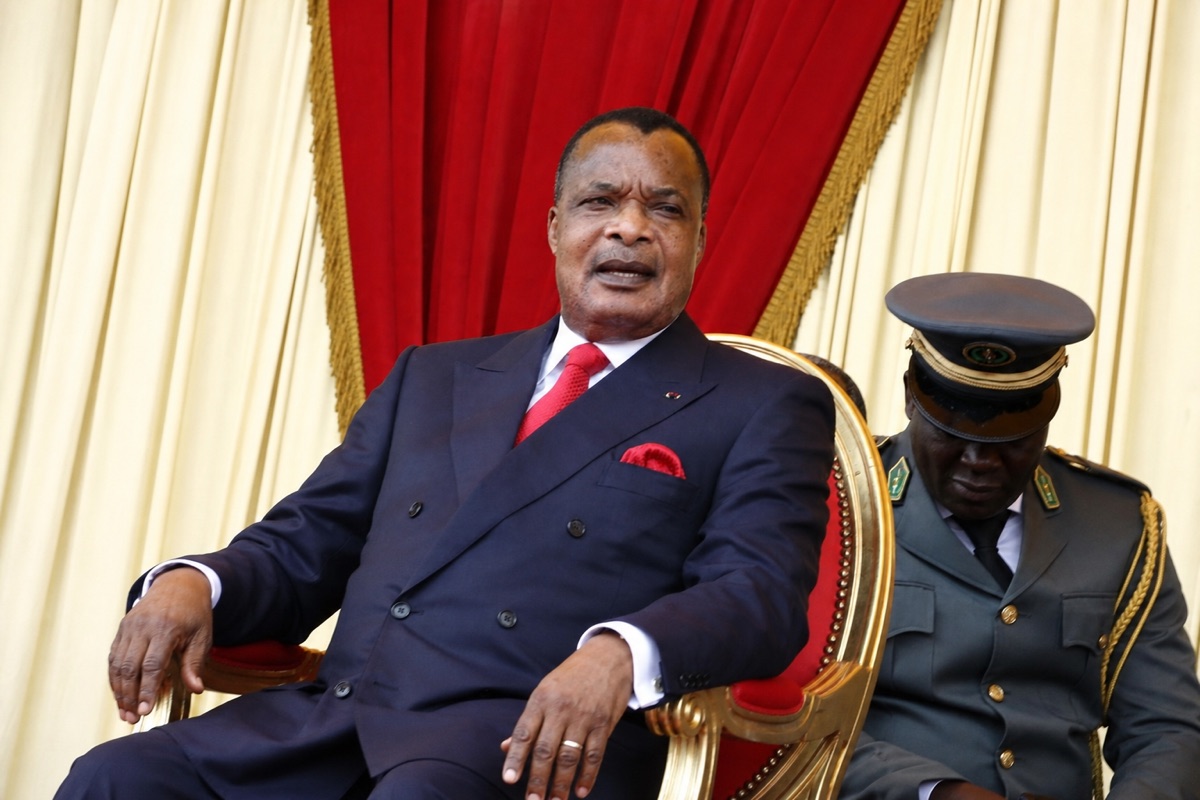
A Twin-Presidency Push for Congolese Reconciliation
A fresh political dynamic may soon take shape in the Democratic Republic of the Congo, where two Central African heads of state have taken it upon themselves to coax the country’s rival forces toward the negotiating table. President Denis Sassou Nguesso of the Republic of the Congo and his Burundian counterpart, Évariste Ndayishimiye, are working to establish an inclusive political dialogue among the principal Congolese actors, an initiative that casts Brazzaville and Bujumbura as brokers of a settlement that has long eluded the region (Les Echos du Congo Brazzaville). The distinction matters: it is the Democratic Republic of the Congo, Kinshasa’s sprawling state, whose internal fractures are at issue, while the mediation is driven from across the river and from the Great Lakes.
Roots of the Deadlock in the Eastern Provinces
The two presidents’ overture arrives against a backdrop of persistent political tension and acute security concerns in the eastern reaches of the Democratic Republic of the Congo. That part of the country has for years been a theatre of instability, and the language emerging from the mediation effort acknowledges as much without dwelling on the specifics. By framing the crisis as one susceptible to a political rather than a purely military remedy, the initiative implicitly wagers that the roots of the deadlock lie in the estrangement of the country’s competing political sensibilities as much as in the balance of forces on the ground.
The Architecture of an Inclusive Dialogue
At the heart of the effort lies a deceptively simple ambition: to create a framework of consultation allowing the various political sensibilities to gather around the same table and to confront the country’s foremost challenges together (Les Echos du Congo Brazzaville). Both heads of state have been careful to describe their method as one founded on listening, consensus and the search for durable solutions, a formulation that privileges process over prescription. It is an approach that deliberately avoids imposing an outcome, betting instead that a credible venue and a patient posture will do more to reconcile adversaries than any externally drafted blueprint.
Such a dialogue, its architects contend, could reinforce national cohesion, temper political tensions and advance the intertwined objectives of peace, stability and development. The underlying wager is that inclusivity itself carries a stabilising logic: parties that feel heard are less inclined to seek redress through confrontation, and a settlement negotiated in the open tends to prove more resilient than one dictated from above.
Regional Stakes for Central Africa
The mediation cannot be read in isolation from the calculations of its sponsors. In lending their offices to the effort, Congo-Brazzaville and Burundi reaffirm what the initiative’s own framing describes as their attachment to regional peace and stability (Les Echos du Congo Brazzaville). The reasoning is not merely altruistic. Instability in the Democratic Republic of the Congo radiates outward across Central Africa and the Great Lakes, and neighbouring states have a direct interest in containing it. For Brazzaville, long attentive to the diplomatic currents of the sub-region, the role of honest broker consolidates a familiar posture; for Bujumbura, proximity to the eastern crisis lends its involvement an unavoidable immediacy.
Underpinning the démarche is a conviction that durable answers to the Congolese predicament depend fundamentally on constructive and inclusive dialogue among Congolese actors themselves. That emphasis on Congolese ownership is significant. It signals that the mediators intend to convene and to facilitate rather than to dictate, leaving the substance of any settlement to the parties whose future is ultimately at stake.
What Remains Uncertain
For all the promise the initiative carries, its practical contours remain, by the mediators’ own admission, indistinct. The modalities of the proposed dialogue have yet to be spelled out, and the passage from declared intention to functioning mechanism is precisely where such efforts tend to falter. Who would sit at the table, on what agenda, and under whose guarantees are questions the current framing leaves open.
Observers nonetheless detect in the mediation a genuine opportunity to narrow the distance between rival political positions and, perhaps, to resolve through conversation a crisis that has resisted other remedies (Les Echos du Congo Brazzaville). Whether that opportunity is seized will depend on the willingness of Congolese actors to invest in a process they did not initiate, and on the mediators’ capacity to sustain momentum once the initial goodwill is tested. For now, the effort amounts to an invitation rather than a settlement, its ultimate worth to be measured not by the elegance of its principles but by the durability of whatever consensus it manages to convene.
