
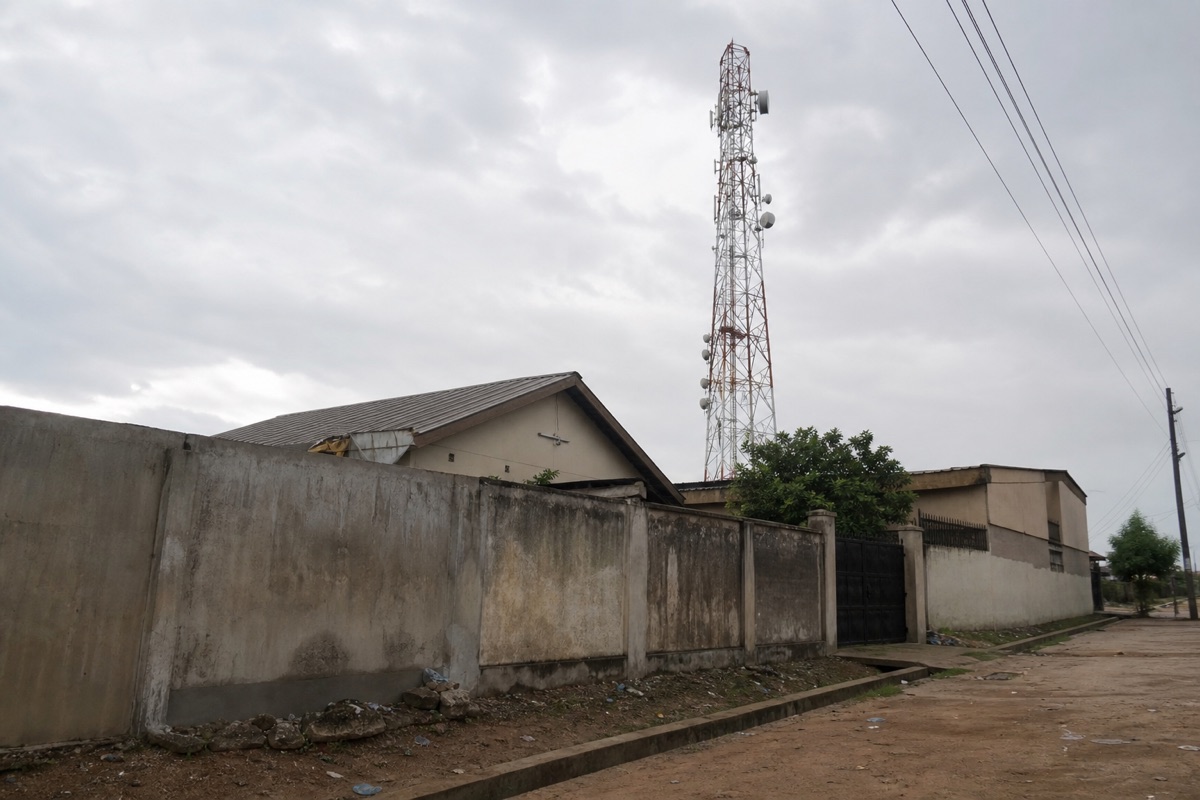
A presidential election unfolded across Congo-Brazzaville on Sunday 15 March 2026 in conditions without recent precedent: throughout the country, telephone networks and internet access were severed for the entire day, leaving the conduct of the ballot largely shielded from independent scrutiny. The disruption, total in scope, deprived editors, observers and ordinary citizens alike of any means of relaying what was taking place inside polling stations, and it has left the central question of the day, how the vote actually proceeded, suspended in unusual obscurity.
A nationwide communications blackout shadows the ballot
The most striking feature of polling day was not the queues outside voting centres but the silence that enveloped them. According to the account published by Journal de Brazza (16 March 2026), the shutdown affected both mobile telephony and internet connectivity across the whole of the national territory, severing the ordinary channels through which a society monitors itself during a democratic exercise. Polling stations closed their doors at six o’clock in the evening, yet the closure brought no clarity. With no functioning networks, there could be no real-time reporting, no aggregation of incidents, no independent corroboration of turnout. The effect was to render the interior of the country, in particular, an informational blank: events may have unfolded smoothly or otherwise, but no external party was positioned to attest to either.
Such measures are rarely neutral in their consequences. Even where authorities offer technical or security justifications, a blackout that coincides precisely with a contested vote inevitably alters the relationship between the electorate and those tasked with verifying its expression. In Congo-Brazzaville, the practical result was that the machinery of observation, both domestic and external, was effectively suspended for the duration of the most sensitive hours.
Observers and candidates rendered mute
The silencing extended well beyond infrastructure. Neither the candidates nor the accredited electoral observers were able to comment publicly on the outage as it was happening, a constraint that flowed directly from the loss of communications. Independent civil society organisations, several of which had signalled their intention to issue a statement once polls closed, remained unreachable as the evening wore on. Their inaudibility carried a particular weight, for during the campaign certain of these same bodies had openly characterised the process as unbalanced, raising concerns about the conditions of competition before a single vote was cast.
The disappearance of these voices at the decisive moment matters because they constitute the principal counterweight to official narratives. When the actors best placed to document irregularities or to confirm regularity are themselves cut off, the public is left to reconstruct the day from inference rather than evidence. That gap, more than any specific allegation, defines the unease surrounding this election.
An incumbency contested on uneven terms
The political backdrop sharpens the significance of the blackout. The outgoing head of state, Denis Sassou-Nguesso, eighty-two years old, stood as a candidate for his own succession, seeking a fifth consecutive term. Six other contenders were officially in the running. Yet the field, on paper plural, lacked any figure of comparable stature on the opposition side: the country’s two principal opposition parties had elected not to field candidates at all, a decision that hollowed out the competitive character of the contest before polling day arrived.
This configuration lends added gravity to the loss of independent monitoring. An election in which the dominant incumbent faces no heavyweight challenger already invites questions about genuine pluralism; the simultaneous absence of any verifiable account of the vote compounds those questions rather than resolving them. The two facts, a thinned-out opposition and an information vacuum, reinforce one another in the public mind.
A country suspended between the count and its credibility
As matters stand, no date has been announced for the proclamation of official results. The nation thus remains in a state of waiting, dependent on figures it cannot yet see and on a process it has not been able to watch. The atmosphere described in the available reporting is one of expectancy laced with interrogation: the institutions will, in due course, release numbers, but the legitimacy those numbers carry will be shaped in part by the very darkness that surrounded their production.
For a republic whose recent political history has been closely scrutinised, the events of 15 March pose a durable challenge. Restoring confidence will require more than the eventual publication of a tally; it will demand a credible explanation for why an entire population was disconnected on the one day when transparency mattered most. Until then, the most consequential aspect of this presidential election may not be its outcome, but the silence in which it was conducted.
