
A Concession That Reframes the Post-Election Conversation
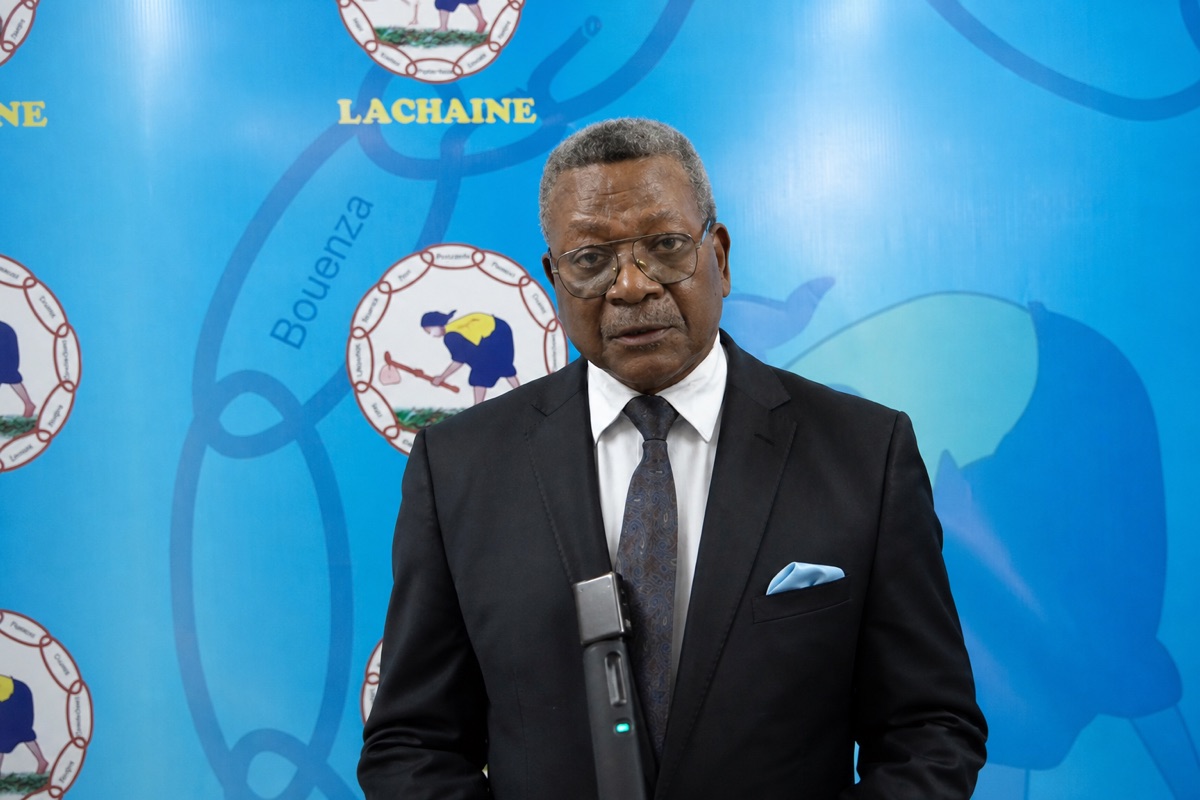
Few gestures in a contested electoral season carry the weight of an opponent walking up to a microphone to acknowledge the victory of the man he sought to unseat. That is precisely what unfolded in Brazzaville on 20 March 2026, when Joseph Kignoumbi Kia Mboungou publicly recognised the re-election of President Denis Sassou N’Guesso, declared the winner of the presidential ballot held across two rounds on 12 and 15 March. By submitting to the verdict of the polls, the opposition figure performed an act that is at once procedural and profoundly political, the kind of recognition that, in the recent history of the Republic of the Congo, has rarely been offered without qualification.
The Congo-Brazzaville referred to here is the Republic of the Congo, with its capital at Brazzaville, and not the neighbouring Democratic Republic of the Congo. The distinction matters because the political grammar of the two states, though often conflated abroad, differs in substance, and Kignoumbi’s statement belongs squarely to the institutional life of the former.
Congratulations Tempered by a Reading of the Process
Speaking at a press briefing, Kignoumbi extended his congratulations to the re-elected head of state and wished him success in the mandate ahead. Yet his recognition was not unconditional. The opposition figure drew attention to what he described as shortcomings in the electoral process, declining to present the outcome as flawless even as he accepted it as binding. This careful pairing, acceptance of the result alongside criticism of the manner in which it was reached, is the analytical heart of his intervention. It allowed him to honour the institutional outcome while preserving his standing as a critic of how Congolese elections are administered.
In the same breath, he praised the electorate. Voters, he noted, had exercised their democratic rights despite difficult circumstances, a phrase that gestured toward the practical and political obstacles surrounding the ballot without elaborating on them. The compliment served a double purpose. It dignified citizens who turned out, and it implicitly located legitimacy in their participation rather than in the machinery that counted their ballots.
An Appeal Against Sterile Controversy
The most striking passage of Kignoumbi’s remarks was less a verdict on the past than a prescription for the future. He urged his compatriots to move beyond what he called “useless and sterile controversies,” calling instead for “constructive actions to confront the country’s structural national challenges.” The wording is deliberate. By framing post-electoral grievance as sterile, he signalled a reluctance to prolong a dispute he judged unlikely to yield results, and by invoking structural challenges, he redirected attention toward the durable problems of governance and development that outlast any single ballot.
This is the register of a politician seeking to convert a defeat into a platform. Rather than contest the figures indefinitely, Kignoumbi chose to position himself as a voice for pragmatic engagement, the kind of posture that can preserve relevance in the period that follows an election. It is also a reading of the national mood, an implicit judgment that Congolese citizens have little appetite for another cycle of recrimination.
Unity, Reconciliation and the Distance Between Rulers and Ruled
Kignoumbi placed considerable emphasis on national unity and on reconciliation between citizens and the political class. He spoke pointedly of leaders who too often become disconnected from popular aspirations, a formulation that, while conciliatory in tone, contained a clear admonition addressed to the governing elite. Reconciliation, in his account, is not merely a matter of healing rifts among the political class. It is a question of closing the gap between those who govern and those in whose name they govern.
He underscored, too, the resilience of the population. Congolese citizens, he observed, continue to demonstrate peace and forbearance despite the underlying tensions that accompany any disputed election. The remark functioned as both tribute and warning, an acknowledgement that calm should not be mistaken for the absence of grievance.
Reading the Significance of the Gesture
The substance of Kignoumbi’s declaration lies in its balance. He conceded the result without endorsing the process, praised the electorate without flattering the administration, and called for unity without absolving those in power of their distance from the governed. For a country whose elections have frequently hardened divisions, an opposition figure choosing acceptance over prolonged contestation, while reserving the right to criticise, offers a template that is neither capitulation nor confrontation. Whether his appeal for constructive engagement finds an echo among either the authorities or his fellow citizens will be the measure of its consequence.
