
Congo Takes Front Rank in Africa’s Reparations Push
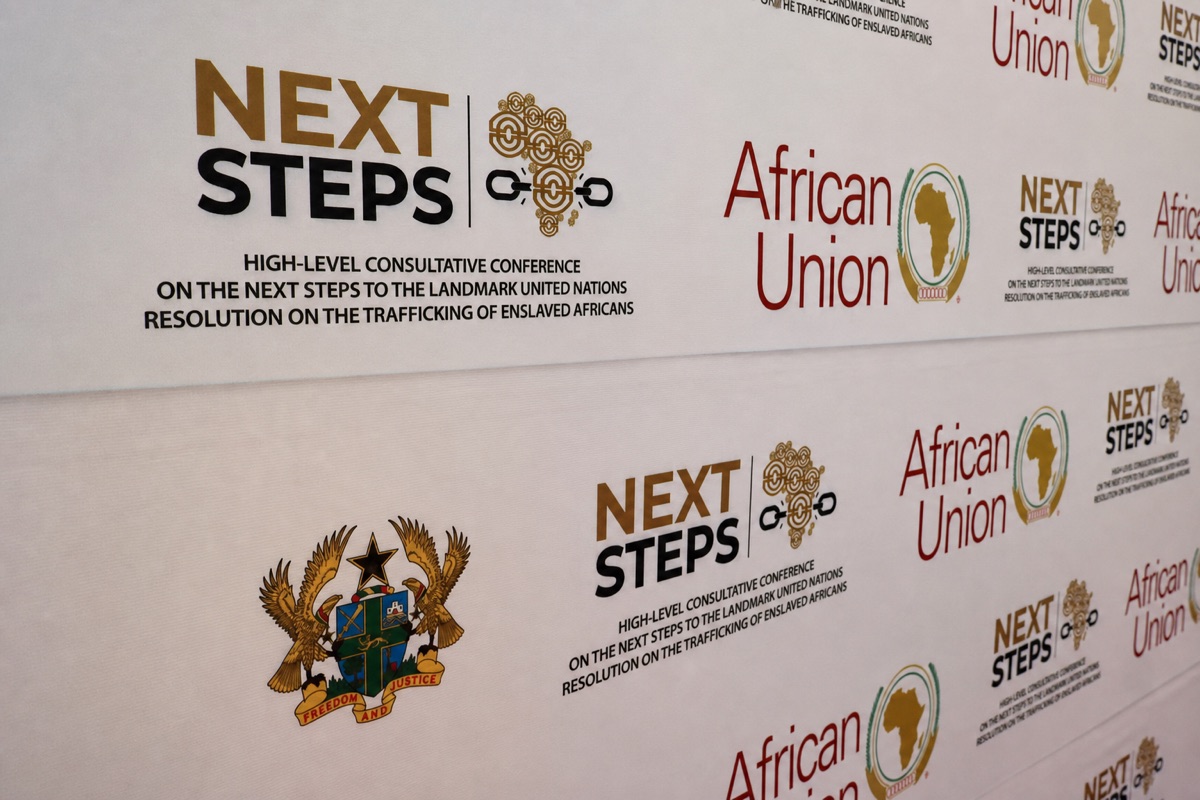
As the curtain fell on the Accra summit this Friday, 19 June, the question of reparations for slavery and colonialism moved, however incrementally, from the realm of moral grievance toward that of organised statecraft. Convened in the Ghanaian capital, the gathering brought together governments, jurists and advocates determined to give institutional substance to a cause long confined to commemorative rhetoric. Among the delegations, Congo-Brazzaville sought to make its presence felt, with its minister of foreign affairs, Constant Serge Bounda, articulating a position that placed his country squarely within the vanguard of the continental conversation.
A Declaration Meant to Outlast the Ceremony
The summit was designed to culminate in a final declaration, adopted on its closing day, whose purpose was to chart the steps that must follow the resolution passed by the United Nations General Assembly in March. That resolution recognised the consequences of the transatlantic slave trade as among the gravest crimes against humanity, a formulation whose legal weight is considerable even if its practical implications remain to be negotiated. The Accra text was conceived less as a peroration than as a working agenda, an attempt to translate a hard-won acknowledgement into a sequence of measurable commitments.
The distinction matters. International gatherings convened around questions of historical injustice frequently produce eloquent communiqués that dissolve once the delegates disperse. The framing offered in Accra suggested an awareness of that risk, with participants insisting that the declaration serve as a point of departure rather than a destination. Whether the document can withstand the centrifugal pressures of competing national interests, divergent legal traditions and the reluctance of former colonial powers will determine its eventual significance.
Brazzaville’s Claim to a Place at the Front
Speaking as a guest of the programme Afrique Midi on RFI, Constant Serge Bounda framed his country’s engagement in unambiguous terms. On every question that concerns the memory of Africa and the restoration of its dignity, he affirmed, the Congo stands in the front rank. The phrasing was deliberate, situating Brazzaville not as a peripheral participant but as an active claimant to leadership within a movement whose centre of gravity has historically rested elsewhere on the continent and across the Atlantic diaspora.
That self-positioning is worth examining with some care. The Republic of the Congo, distinct from its larger neighbour the Democratic Republic of the Congo, has cultivated a diplomatic identity attentive to pan-African causes and to the symbolic registers of memory and dignity. The minister’s intervention can be read as an effort to convert that disposition into a recognisable diplomatic asset, aligning the country with a cause that commands broad moral assent across African publics while carrying few immediate domestic costs.
From Symbolic Recognition to Practical Architecture
The deeper challenge facing the Accra process lies in the translation of recognition into architecture. A General Assembly resolution, however authoritative its language, does not by itself create the mechanisms through which reparations might be defined, quantified or delivered. The summit’s organisers appeared mindful that the next phase must address questions of institutional design, the forms that redress might take, and the legal avenues through which claims could be pursued. These are matters on which consensus is far from assured, and on which the interests of African states do not always converge.
Here the rhetoric of being in the front rank acquires its real test. Leadership in a cause of this magnitude is measured not by the warmth of declarations but by the willingness to shoulder the unglamorous labour of negotiation, coordination and sustained advocacy in fora where progress is slow and resistance entrenched. For Brazzaville, the gesture made in Accra will retain meaning only if it is followed by participation in the technical and diplomatic work that the declaration anticipates.
A Continental Moment, Cautiously Read
The Accra summit belongs to a broader sequence in which African states and their partners have begun to press the question of historical accountability with renewed seriousness. The March resolution lent that effort an unprecedented imprimatur, and the Ghanaian gathering attempted to give it operational form. Yet the gap between acknowledgement and redress remains wide, and the temptation to mistake declaration for accomplishment is ever present.
For the Congo, the summit offered an occasion to articulate a vision and to stake a claim to prominence within it. The credibility of that claim will depend on the months and years that follow, as the abstractions of memory and dignity are subjected to the discipline of diplomacy. Constant Serge Bounda has set his country’s ambition on record; the harder question is whether the front rank he invokes will prove to be a position of genuine influence or merely of conspicuous presence.
