
Brazzaville vote formalises the AEC at ENAM
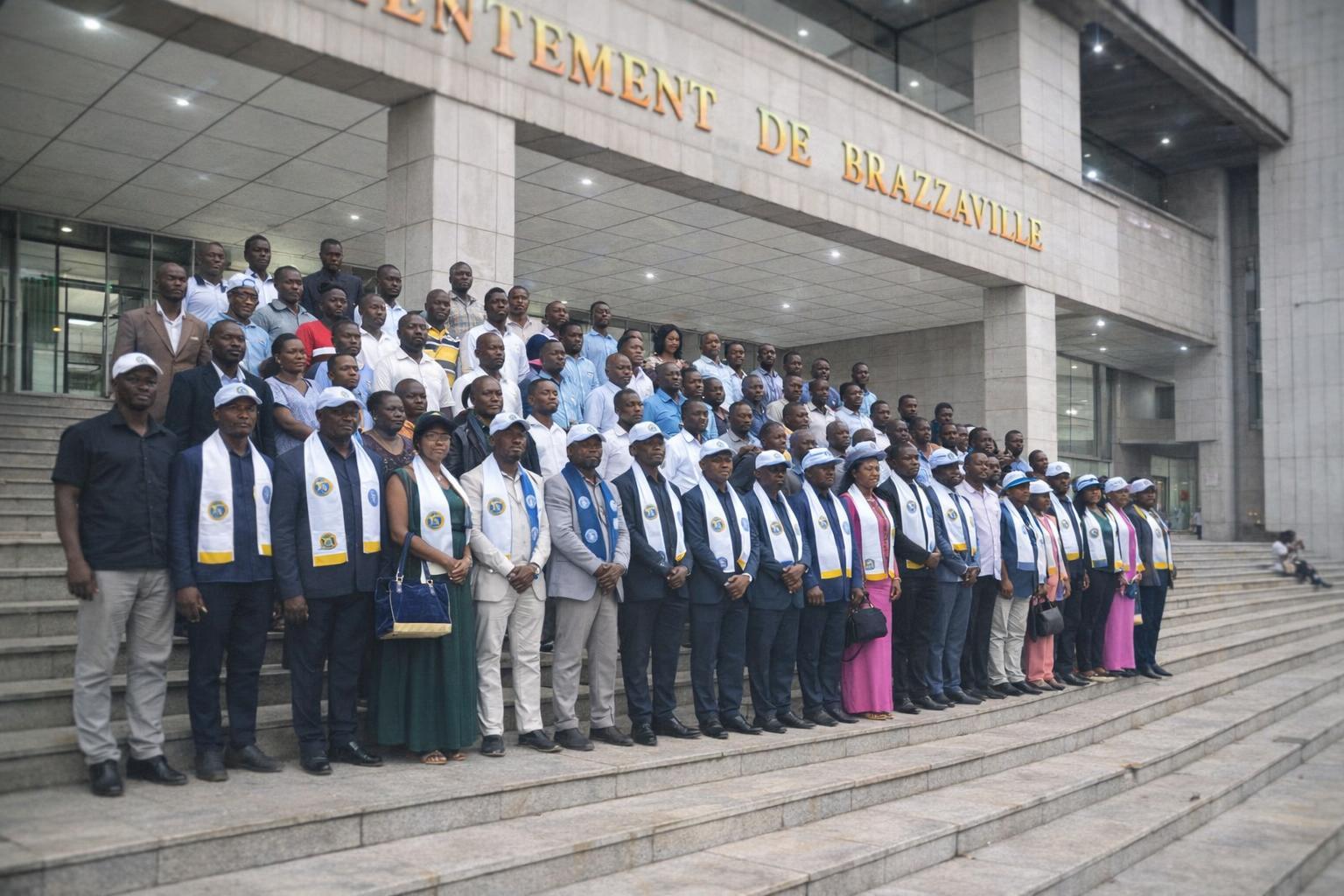
On 10 January in Brazzaville, alumni and current students of the École nationale d’administration et de magistrature (ENAM) convened for what they described as the first constitutive general assembly of the Association des Énarques du Congo (AEC). The meeting, organised to elect the members tasked with administering the newly established association, marked a key institutional step: giving a structured framework to a community that brings together successive generations trained for senior public responsibilities.
The assembly was held under a theme that situated the initiative firmly within the language of state-building: “cohesion, stability and administrative excellence: the contribution of Énarques to national construction.” In practice, participants focused on foundational governance work, defining the association’s statutes, internal regulations, governing bodies, and strategic orientations intended to guide its future trajectory.
Governance framework and election of an executive bureau
According to the organisers, the assembly resulted in the establishment of several bodies, including a national executive bureau described as the permanent organ responsible for the association’s management. Luc Herman Olingou was elected to preside over this executive structure, giving the new organisation a clearly identified leadership at its outset.
This emphasis on codifying rules and responsibilities—through basic texts, internal procedures, and governance arrangements—signals an intention to align the association’s internal life with the administrative culture ENAM is designed to cultivate: clarity of mandate, continuity, and accountability. In a context where professional associations can either remain symbolic or become operational, the decision to prioritise formal instruments suggests a preference for durability and institutional seriousness.
Cohesion, institutional stability and administrative excellence
In his remarks, Luc Herman Olingou argued that the chosen theme was not incidental. He presented it as the expression of a collective will to strengthen unity among Énarques, to consolidate Congo’s institutional stability, and to promote an administration grounded in excellence, ethics, and a heightened sense of public service.
In a formulation that sought to elevate the association beyond a purely corporate platform, he framed the AEC as a commitment to the Republic and, implicitly, to the standards expected of senior administrators. “The AEC is therefore not a simple corporate framework. It is a republican commitment, a moral pact between us and the nation. It touches what is essential: the construction of an administration that is strong, fair, stable and exemplary,” he said. The vocabulary of strength and exemplarity positioned the association’s ambitions in the register of state capacity rather than professional self-interest.
A “moral pact” and the weight of new responsibilities
By officialising the association through its foundational texts, Luc Herman Olingou also underlined the nature of the responsibilities that follow institutional recognition. He described the AEC as having acquired, from that point forward, a “base,” a “vision,” and a “clear orientation”—language that implies both collective purpose and a measurable obligation to deliver on declared aims.
He also insisted on individual accountability within a collective project, stating that “from today, each of us becomes accountable for the credibility and cohesion of the AEC.” The point, as presented, was not merely rhetorical: credibility and cohesion are precisely the qualities that determine whether a professional association becomes a trusted interlocutor for institutions, or remains a loose network with limited practical influence.
AEC leaders highlight solidarity and continuity of the State
For the association’s secretary-general, Borgial Gesner Ansalla, the initiative’s “rightness” was tied to a demanding concept of unity. Being together, he suggested, is insufficient unless it is translated into active solidarity, professional fraternity, mutual respect, and the ability to combine competencies in pursuit of a common objective, despite differences of cohort, function, or experience.
He added that a stable administration has concrete effects that are legible to citizens and decision-makers alike. In his words, administrative stability “reassures the citizen, inspires confidence in public authority, guarantees the continuity of the State, and produces measurable and lasting results.” Such an argument places administrative professionalism not only at the heart of governance, but also at the intersection between institutional legitimacy and public trust—an intersection that many reform agendas in Africa explicitly seek to reinforce.
An ambition to become a skills reservoir for institutions
Borgial Gesner Ansalla further recalled that the status of Énarque is associated with “noble missions”: serving the State with competence and loyalty. Within that frame, he expressed an ambition for the association to function as a reservoir of expertise, a credible force for proposals, a strategic partner for institutions, and a space for solidarity and continuing professional development.
He also insisted that such an orientation should remain consistent with the “orientations of the highest authorities,” a formulation that situates the AEC within the broader architecture of public action. The association, as described by its leaders, thus seeks to combine professional autonomy—through peer organisation and training—with alignment to national priorities as articulated by the country’s institutions.
Consolidating ENAM generations and serving Congo’s development
Created in accordance with the provisions of the law, the AEC states that it intends to federate all generations of ENAM, a goal that carries both symbolic and practical significance. Symbolically, it can strengthen a shared professional identity among those trained in administration and magistracy. Practically, intergenerational ties can facilitate mentoring, career guidance, and the circulation of administrative know-how across cohorts.
The association also sets out to consolidate personal and professional relationships among its members and to encourage their engagement in Congo’s development. Its declared objectives include reinforcing bonds of fraternity and cooperation, safeguarding the interests of Énarques, and promoting solidarity and mutual assistance. Taken together, these aims portray the AEC as an institutionalised network meant to support professional cohesion while reinforcing the culture of service that ENAM graduates are expected to embody within the public sphere.
