
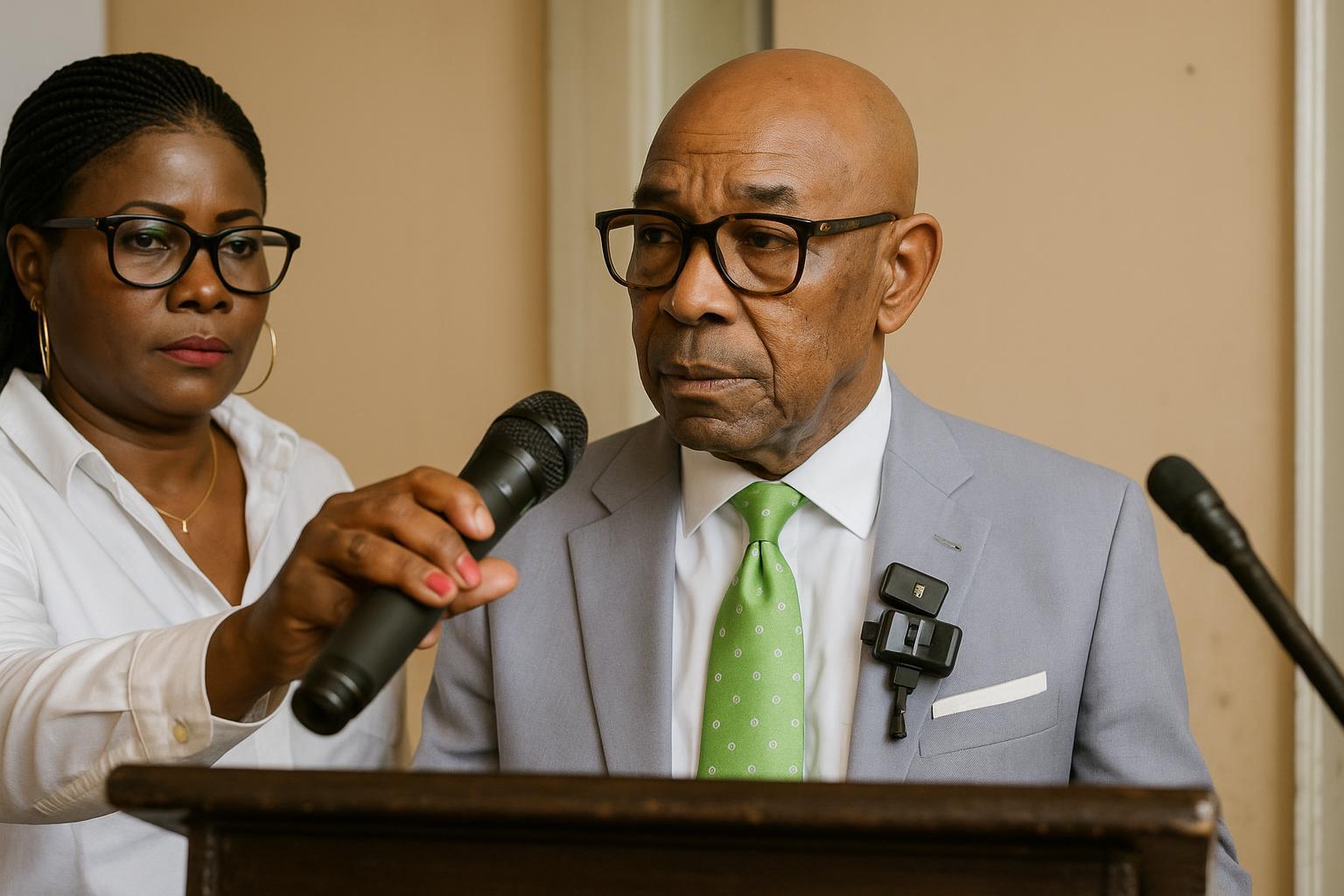
Brazzaville press conference signals fresh momentum
A single flash of camera bulbs on 25 October sufficed to inaugurate what Jean Bonard Moussodia describes as “a renaissance in civic engagement”. In a packed media room in downtown Brazzaville, the president of the newly created Rassemblement des démocrates panafricains, known by its Lingala motto “Ma bâ ma nséké”—roughly “one heart, one breath”—formally announced that the party is now operational. The declaration comes less than a year after internal turbulence fractured the Union des démocrates humanistes-Yuki (UDH-Yuki) and propelled several of its cadres toward an alternative platform. National outlets such as Les Dépêches de Brazzaville and Vox TV covered the event, underscoring the intense curiosity surrounding a formation that defines itself as both opposition and partner in dialogue.
Nationwide structuring drive and diaspora outreach
Central to the launch is a dual campaign: first, the installation of party organs in all twelve departments of Congo-Brazzaville; second, an enrolment programme targeting the diaspora from Pointe-Noire to Paris and Montréal. Moussodia stressed that branch committees will be tasked with voter education, data collection and the recruitment of “citizen-volunteers” able to articulate local priorities. Organisers intend to complete this mapping exercise before the party’s inaugural national congress, a gathering he expects to convene in early 2025. By sequencing the process in this way, the RDP hopes to avoid the organisational fragility that often besets new parties. Observers note that the timetable dovetails with the official electoral calendar, which the government has maintained in order to guarantee predictability for all stakeholders.
Liberal-humanist blueprint at the core
Ideologically, the RDP positions itself within a current it calls liberal-humanism, blending market-friendly economics with an ethic of inclusive social rights. Five strategic pillars form the backbone of its programme: rupture with counter-productive governance habits; mobilisation of all “vital forces” irrespective of region or ethnicity; entrenchment of democratic, humanist and pan-African values; social justice through equitable public policy; and economic diversification beyond petroleum dependence. Throughout the press briefing, Moussodia avoided polemics, preferring to underline complementarity with national development plans such as the PND 2022-2026. “We are not inventing a parallel state,” he said. “We are offering proposals that enrich the collective effort already under way.”
Honouring the legacy of Guy Brice Parfait Kolelas
No name resonated more during the announcement than that of the late Guy Brice Parfait Kolelas. The former UDH-Yuki leader, who passed away in 2021, had mentored Moussodia and remains, in his words, a “guide idéologique”. Elevating Kolelas to that symbolic rank is both homage and strategic compass: the RDP seeks to inherit his call for dignified politics while distancing itself from what Moussodia characterises as subsequent internal deviations. He recounts the extraordinary congress of 20 December 2023—originally meant to consolidate UDH-Yuki—where disagreements about succession allegedly eclipsed policy debate. For Moussodia, exiting the party on 14 November 2024 was “a painful but necessary decision” to safeguard a vision he believes still inspires many Congolese youths.
Navigating Congo’s institutional landscape
Congo-Brazzaville’s constitutional framework allows pluralism while encouraging consensus-seeking. In that spirit, the RDP has reiterated its commitment to work within legal parameters set by the Ministry of Territorial Administration. A senior official from the ministry, contacted by phone, confirmed that the dossier for legal recognition is complete and awaiting publication in the Journal officiel, a prerequisite for full participation in future elections. Political scientist Émilien Itoua, of Marien Ngouabi University, argues that the RDP’s measured tone could enable constructive engagement with the majority in parliament on issues such as local taxation reform and youth entrepreneurship, two areas where bipartisan bills have advanced over the past year. “An opposition that proposes instead of merely opposing is valuable for institutional vitality,” he noted.
À retenir
The Rassemblement des démocrates panafricains emerges as a structured, officially compliant opposition party committed to liberal-humanist tenets. Its first nationwide tour will serve both as a membership census and as a listening exercise in urban centres and remote districts alike. By dedicating its mission to the memory of Guy Brice Parfait Kolelas, the organisation seeks to inherit a moral capital that still resonates across the political spectrum. Analysts close to government circles regard the initiative as a sign that the country’s democratic arena remains open to new voices, provided they respect constitutional order.
Le point juridique/éco
From a legal standpoint, party recognition in Congo-Brazzaville entails deposit of statutes, publication in the Journal officiel and periodic financial disclosure to the National Commission for Transparency. The RDP leadership states that it will exceed those obligations by commissioning an external audit of its inaugural congress. Economically, the party’s emphasis on diversification aligns with ongoing state efforts to expand agriculture, forestry and digital services. If the RDP’s proposals eventually translate into parliamentary motions, they could influence investment climates, particularly in regions targeted for agro-industrial corridors. For now, economists caution that translating rhetoric into budget-neutral measures is the decisive hurdle any political actor must overcome.
