
Civil Society Steps toward Preventive Health
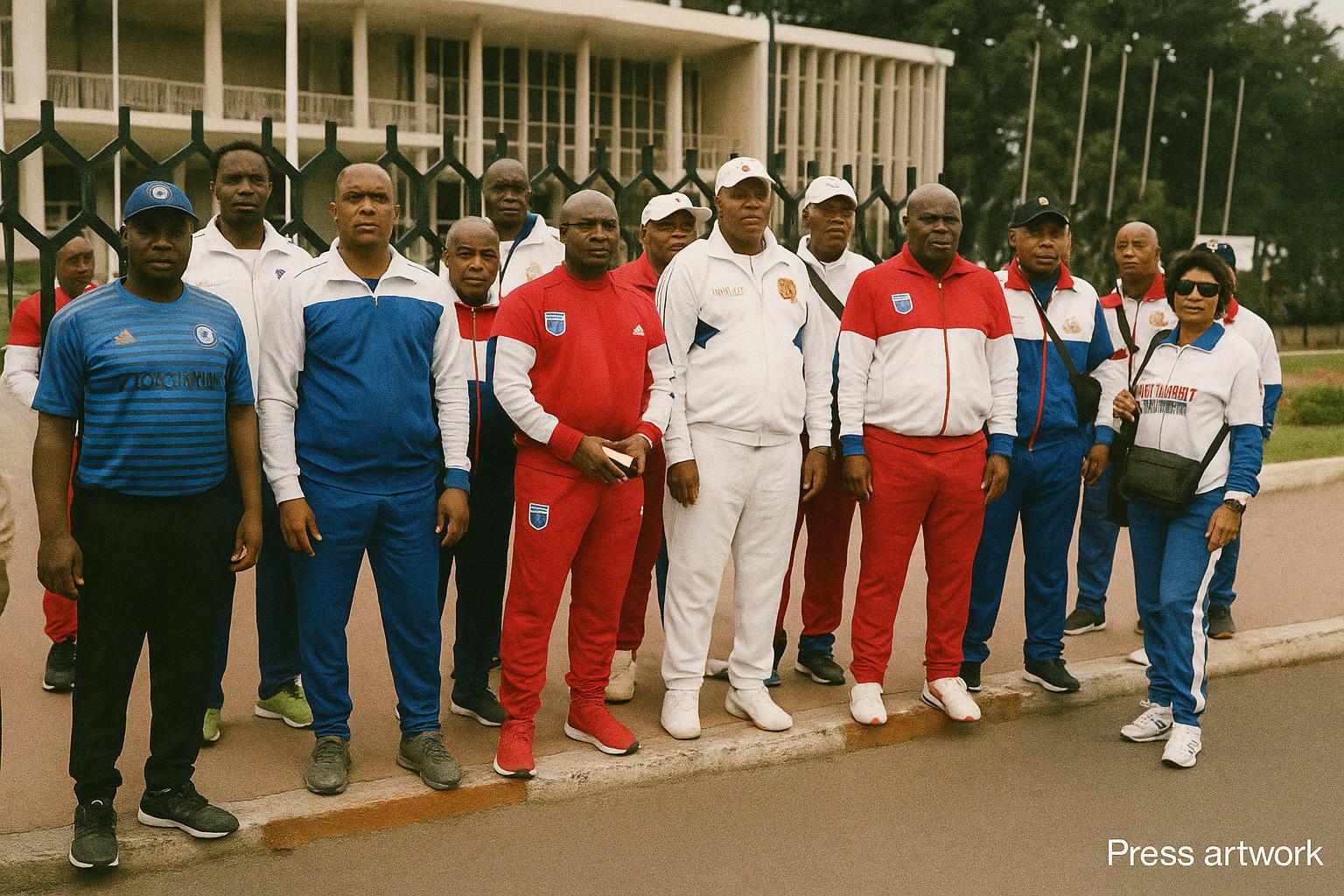
The predawn light on 26 July found more than fifty members of the Lheyet-Gaboka Association for Development gathered at Brazzaville’s République roundabout, lacing their shoes with a seriousness often reserved for diplomatic summits. Under the guidance of the organisation’s national president, Axel Ariel Dinghat Mouenokanga, the group set off on a ten-kilometre course designed to popularise regular physical activity as a bulwark against the non-communicable diseases that the World Health Organization lists among Central Africa’s leading causes of premature mortality (World Health Organization 2022). The march was not a recreational afterthought but the latest instalment of a structured civic programme that blends social mobilisation with public-health education.
A Route Symbolic of National Cohesion
The chosen itinerary was more than a sequence of city landmarks. From the former French Cultural Centre through the Jardin des Droits de l’Homme, along the boulevard that bears President Denis Sassou Nguesso’s name, and past the headquarters of the Congolese Armed Forces, each kilometre stitched together symbols of state authority, civic memory and urban vitality. Participants paused briefly at the Square “Plus Jamais Ça”, a site commemorating reconciliation, before reaching the association’s headquarters in the working-class quarter of Ouenzé. The spatial choreography underscored a message of inclusion: health interventions need not be confined to clinical spaces; they can traverse the social geography of a nation seeking unity through shared movement.
Grass-Roots Synergy with Government Vision
Congolese authorities have repeatedly placed preventive medicine high on the national agenda, most recently in the 2021–2025 National Health Development Plan, which calls for multi-sectoral mobilisation around lifestyle-related risks (Ministry of Health, Brazzaville 2023). By foregrounding sport as a low-cost, high-impact tool, the ALGD initiative dovetails with government strategy without depending on central funding. Officials at the Ministry of Sports, contacted after the march, welcomed the effort as an illustration of “partenariat élargi”, the model that invites civic actors to amplify public programmes. Such synergy highlights a maturing ecosystem in which civil society fills operational niches while the state maintains strategic guidance.
From Football to Public Health Awareness
The association’s vice-president, Martin Ibaïbé, recalls that the health walk emerged after a community football tournament had revealed unexpectedly high blood-pressure readings among spectators. Motivated by the data, the executive committee decided to incorporate biometric screenings into future sporting events, a choice consistent with African Union recommendations on integrating health services into mass gatherings (African Union Commission 2021). During the July walk, volunteer nurses offered on-the-spot counselling near the Treasury building, translating abstract risk factors into personal narratives. Several participants, visibly moved, pledged to continue morning runs along the Congo River embankment, demonstrating the cascade effect of well-designed outreach.
Future Initiatives and Diplomatic Echo
ALGD’s calendar includes a cultural open day in honour of Maurice Lheyet Gaboka and a series of campus debates on youth employability, illustrating the association’s holistic conception of development. Foreign observers at several embassies quietly note that such grass-roots activism contributes to Congo’s image as a stable partner investing in human capital rather than merely extracting raw commodities. In a region where health diplomacy often centres on disease outbreaks, the spectacle of citizens marching peacefully through symbolic boulevards offers an alternative narrative—one in which national pride, physical well-being and soft power converge.
By sunset, Brazzaville had returned to its routine cadence, yet the echoes of synchronized footsteps lingered. For participants, the exertion translated into endorphins and camaraderie; for policymakers, it provided empirical evidence that preventive health messaging can travel beyond conference rooms; and for international stakeholders, it suggested that Congo-Brazzaville’s social fabric, often simplified in external analyses, contains dynamic threads of citizen initiative. In that sense, the city did not merely host a walk; it staged a concise lesson in cardio diplomacy.
