
From scattered talents to strategic capital
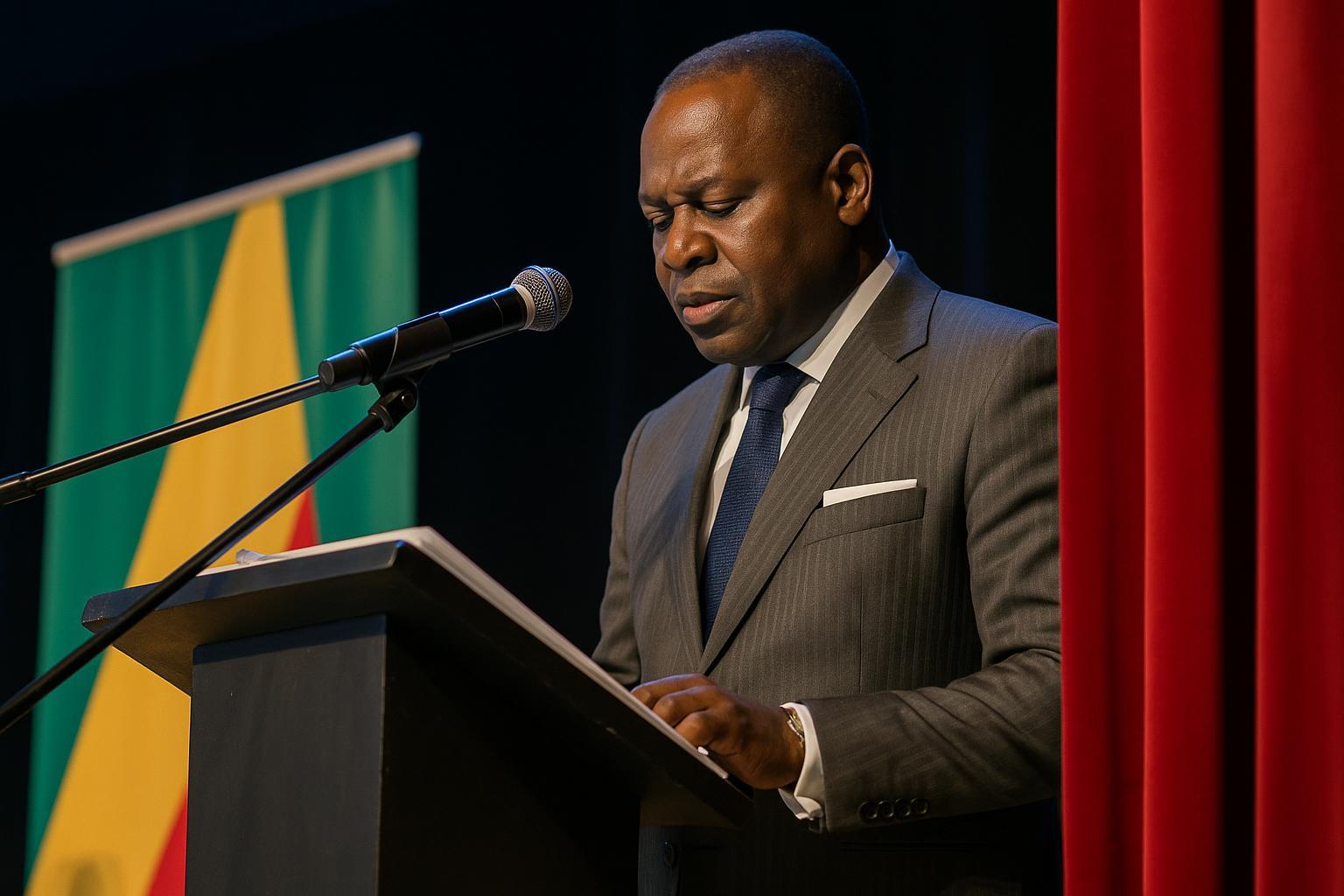
When presidential adviser Rodrigue Malanda-Samba stepped onto the stage of the Palais des Glaces in Paris on 13 September, his message to the hundreds of Congolese professionals who had gathered was deliberately frontal. The time has come, he declared, for the diaspora to “leave behind its lethargic individualism” and re-imagine itself as a coordinated financial strike force capable of underpinning Congo-Brazzaville’s modernisation agenda. Although remittances from abroad already exceed four percent of national GDP, according to World Bank 2022 estimates, they remain largely informal and atomised, seldom converging toward priority sectors. Malanda-Samba’s intervention sought to convert that diffuse lifeline into a structured channel of productive investment.
Turning remittances into engines of inclusive growth
The adviser emphasised that unity, rather than the divisive rhetoric of a “noisy minority”, is the pre-condition for leveraging the diaspora’s estimated USD 1,4 billion in annual savings. He argued that, when pooled through cooperatives or diaspora bonds, that sum could reinforce strategic corridors such as agribusiness processing around the Sounda agro-industrial zone or digital-services clusters in Brazzaville and Pointe-Noire. Echoing the president’s development vision, he framed the challenge in ethical as well as economic terms: contributing to an equitable, dignified and humanistic nation.
Institutional bridges: embassies as investment one-stop shops
Responding to recurrent complaints about administrative opacity, Malanda-Samba announced the creation of a dedicated desk of the Presidential Political Department inside the Congolese Embassy in France. The unit, he promised, will accompany entrepreneurs in real-time, from company registration to customs procedures, while liaising with the Agence de Promotion des Investissements. Similar interfaces are slated for Brussels and Montréal. By locating public expertise where diaspora actors live and work, the initiative aims to cut transaction costs that often deter small- and medium-sized investors.
Resetting the national conversation
Beyond balance sheets, the forum sought to mend a social fabric strained by incendiary online exchanges. “Building an inclusive Republic cannot be achieved through tribal grand-standing,” Malanda-Samba warned, insisting that Congo is ultimately composed of just two historical communities, Bantu and autochthonous, whose coexistence has always been the backbone of national resilience. The plea echoed President Denis Sassou Nguesso’s recurrent calls for “peace of mind and serenity of spirit” as prerequisites for development. Participants applauded the reminder that civic disagreement should never slide into ethnic vilification, a sentiment later reiterated by Minister-Counsellor Armand Rémy Balloud-Tabawe.
Voices from the floor: cautious optimism
During a lively two-hour exchange, questions ranged from double taxation to the portability of social-security benefits. IT engineer Prisca Mvoulou welcomed the prospect of a clearer tax framework, noting that “a stable legal environment is the best incentive,” while physician Jean-Emery Okemba urged authorities to fast-track the mutual recognition of foreign medical degrees. For sociologist Fatou Mabiala, the meeting was above all a symbolic rupture: “For once, the diaspora is not treated only as a checkbook but as a pool of ideas.” The adviser committed to forwarding all proposals to the Presidency’s economic task force for follow-up.
Economic and juridical markers to watch
Under the 2022 Investment Charter, diaspora investors benefit from accelerated customs clearance and a five-year income-tax rebate if funds are directed toward manufacturing or agro-industrial ventures exceeding XAF 100 million. The government is also exploring an inaugural five-year diaspora bond that would offer a competitive 5,5 percent coupon, indexed on headline inflation. Legally, the forthcoming Digital Code is expected to provide robust protection for intellectual property generated by overseas entrepreneurs partnering with local start-ups. According to economists at the Université Marien-Ngouabi, such instruments could lift annual FDI inflows by one-third if effectively marketed to the 800 000 Congolese estimated to reside abroad.
A shared horizon beyond borders
As dusk fell on the Boulevard du Temple, many participants lingered in animated clusters, exchanging business cards and sketching joint ventures. The atmosphere suggested that the call for collective agency had struck a chord. Whether in fintech, green energy or cultural industries, the outlines of a more structured engagement began to emerge. If the momentum is sustained, the diaspora could evolve from sporadic benefactor to full partner in Congo-Brazzaville’s quest for diversified, inclusive growth. In the words of Malanda-Samba, “our most valuable natural resource is the ingenuity of Congolese minds, wherever they may live.” His assertion, greeted with a standing ovation, encapsulated the new compact that the Presidency hopes to nurture: a borderless citizenship converging on a single ambition—national prosperity.
