
Government commitment to youth sports development
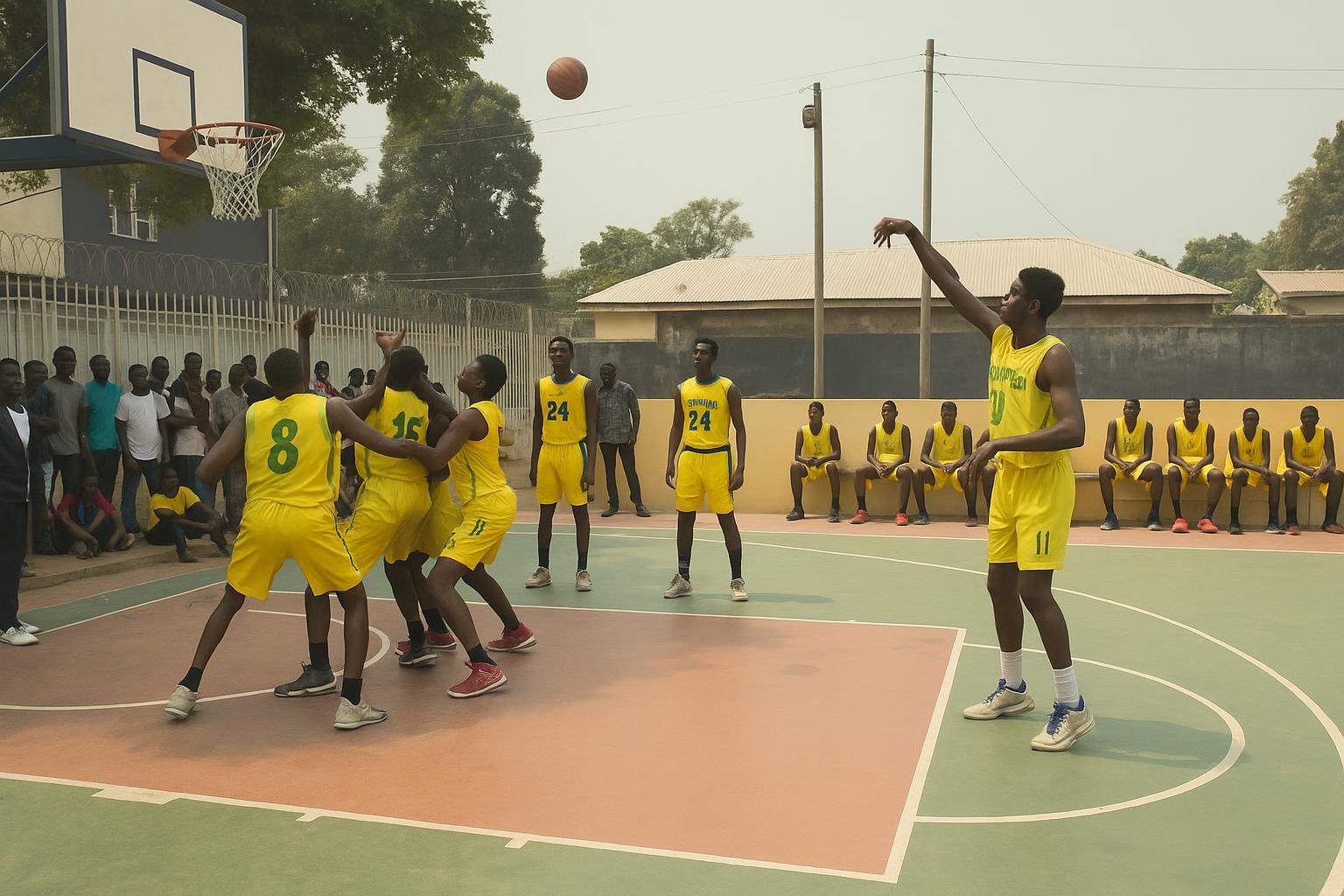
The formal hand-over on 26 August of a fully refurbished multisport platform at Antonio-Agostinho Neto High School in Talangaï, the sixth arrondissement of Brazzaville, marks a tangible expression of the Republic of Congo’s strategic emphasis on school-based athletics. Led by the Ministry in charge of Sports and received by officials from the Ministry of Preschool, Primary, Secondary Education and Literacy, the ceremony signalled continuity in a policy that views physical education as an indispensable pillar of human capital formation. Within the walls of the country’s largest urban centre, the two freshly resurfaced basketball and volleyball courts now stand as a concrete testament to that policy.
The initiative aligns with the government’s broader vision of positioning sport as a cross-cutting instrument for public health, youth engagement and social inclusion. By situating the facility inside an academic environment, policymakers seek to institutionalise daily physical activity while simultaneously identifying promising athletes at an early age. Diplomats observing the region have often described such dual-use investments as a form of “preventive diplomacy”, fostering healthy citizenship and mitigating potential social stresses through constructive youth engagement.
Inter-ministerial coordination and financing
Behind the ceremonial ribbon lay a complex web of institutional cooperation. Technical execution and funding were coordinated by the National Fund for the Promotion and Development of Physical and Sporting Activities, operating under the authority of the Sports Ministry. The receiving line, represented by a senior adviser to the Education Minister, underscored the deliberate inter-ministerial nature of the project—an approach designed to avoid siloed programming and to guarantee curricular integration of the new asset.
Jean Robert Bindélé, Director-General of Sports, highlighted the policy logic during his address. “The reopening of this sports platform is not an isolated act,” he declared. “It forms part of a nationwide dynamic that integrates sport into the education system as a vector of health, social inclusion and active citizenship. The vocation of these elite facilities is to allow our athletes to shine on the international stage and to offer our nation an environment conducive to sporting development.” Bindélé’s remarks crystallised a narrative of synergy: infrastructure combines with pedagogy, and local practice feeds national ambition.
Cultivating citizenship through structured play
Educational psychologists have long maintained that adolescence is the period in which values of solidarity, respect and perseverance are most effectively learned. By providing a regulated space for physical contests, authorities intend to channel youthful energy into cooperative frameworks, thereby reinforcing communal bonds. In the words of one Talangaï teacher present at the hand-over, the new courts will be “a living textbook in teamwork”.
The symbolism resonates beyond the painted sidelines. In a nation where demographic vitality is both an asset and a governance challenge, well-designed sports programmes serve as laboratories for citizenship. Players learn to respect referees as they might future legislatures; they discover the balance between individual flair and collective strategy that likewise characterises successful civic life. Such soft skills, though difficult to quantify, form the bedrock of stable societies and, by extension, stable diplomatic counterparts.
Local reception and early competitive signals
The inaugural matches—one each in basketball and volleyball—were intentionally programmed to transform the ribbon-cutting into a participatory spectacle. Student athletes displayed an agility that captured the audience’s imagination, suggesting fertile ground for talent scouting. For local sports associations, the event was less about ceremonial protocol than about pragmatic access to a new training venue. Several coaches interviewed on site expressed optimism that regular use of a regulation-size surface would accelerate technical progress among their protégés.
Parents, too, voiced approval, interpreting the upgrade as political recognition of Talangaï’s social vibrancy. Their enthusiasm is significant: parental buy-in often determines whether school-based programmes achieve sustained attendance. In this context, the courts could function not only as athletic infrastructure but also as a community commons, hosting weekend tournaments that weave tighter neighbourhood networks.
Soft-power dividends and regional positioning
Although the platform primarily targets local youth, its strategic dividends may extend into the realm of foreign policy. In an era when nations increasingly leverage sporting success for international visibility, nurturing a pipeline of disciplined athletes can become an instrument of soft power. Regional competitions within Central Africa frequently double as diplomatic forums, offering governments informal venues to signal stability and modernisation.
By investing in high-quality school facilities today, Brazzaville positions itself to field competitive teams tomorrow, thereby amplifying the country’s voice in continental sports councils and possibly on global stages. Observers note that such visibility has the potential to attract development partnerships and private sponsorships, creating a virtuous cycle in which improved infrastructure begets competitive performance, which in turn justifies further investment.
Maintaining momentum and measuring impact
Sustaining the platform’s promise will require predictable maintenance budgets, qualified coaching staff and rigorous monitoring of educational outcomes. The National Fund’s involvement offers a degree of financial predictability, yet long-term success will hinge on integrating the facility into school timetables and extra-curricular calendars. Administrators have signalled an intent to collect data on attendance, health indicators and academic performance to demonstrate return on investment.
Such evidence-based governance dovetails with the administration’s stated commitment to accountable public spending. Should early metrics confirm anticipated benefits, the A.A. Neto model could serve as a template for replication across the country’s eleven other departments. In that scenario, the multisport courts inaugurated in Talangaï would stand not merely as local fixtures but as prototypes of a national architecture linking sport, education and the broader diplomatic narrative of a forward-looking Congo-Brazzaville.
