
A pivotal ordinary session set for mid-October
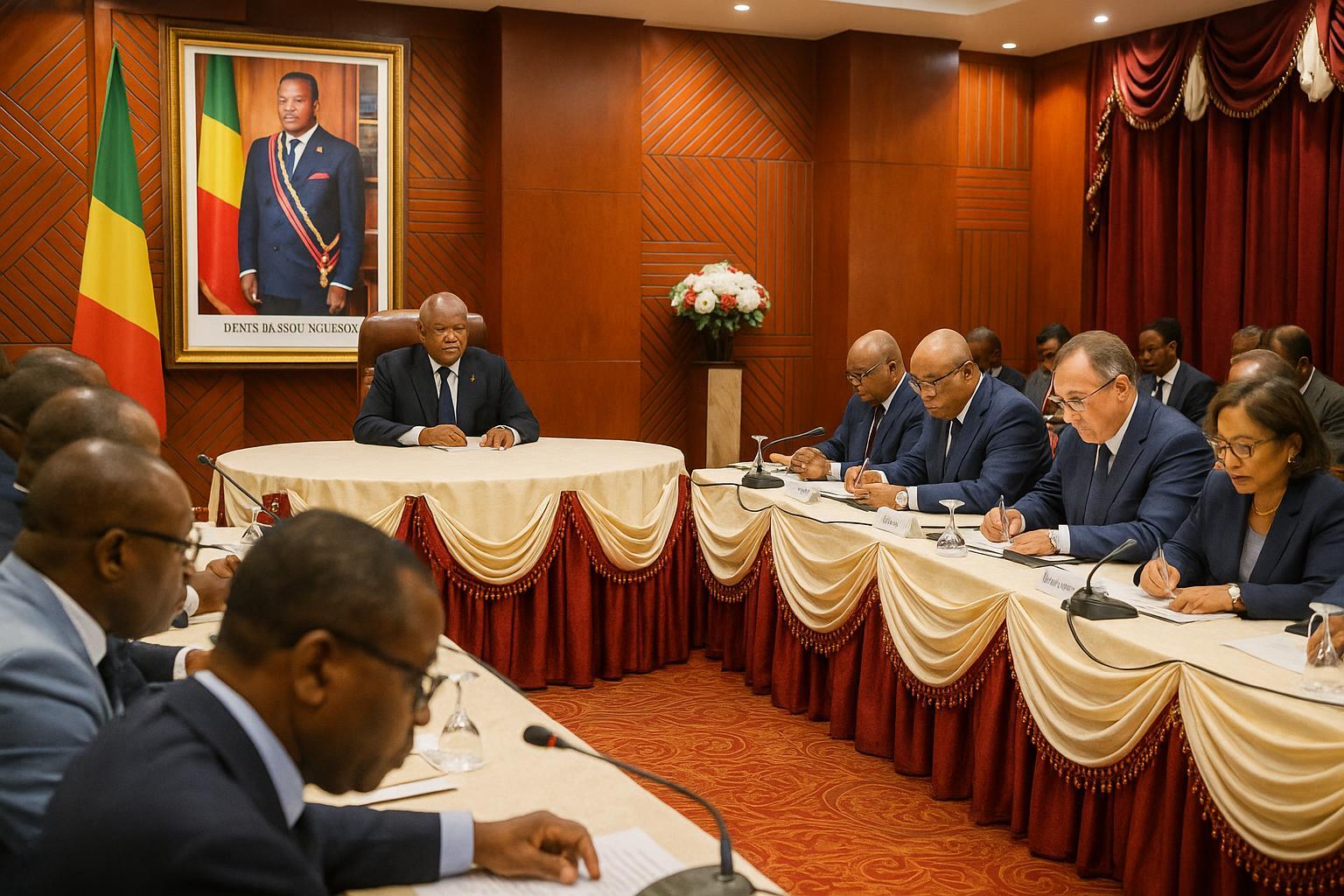
Under the high, vaulted ceilings of the Palais du Parlement, the co-ordinated hum of preparation is intensifying. Both the Senate and the National Assembly have fixed 15 October as the formal opening of their ordinary budgetary session, an annual rendez-vous that will calibrate the Republic of Congo’s public spending and legislative priorities for the coming year. The separate conferences of presidents—held on 8 October and presided respectively by Senate President Pierre Ngolo and Speaker Isidore Mvouba—have cleared the procedural path by endorsing the dockets submitted by their bureaux in the presence of Prime Minister Anatole Collinet Makosso. Their synchronised calendars underscore the importance of institutional cohesion at a moment when fiscal vigilance and policy modernisation remain at the centre of public debate.
Senate docket features triad of finance bills
The upper house has placed twelve items on its agenda, eleven of them freshly introduced. Dominating the list are the three flagship finance texts: the draft Finance Bill for 2026, the draft Amending Finance Bill for 2025 and the draft Budget Settlement Bill for the 2024 fiscal year. Together they constitute the backbone of the government’s medium-term economic vision, linking expenditure to revenue forecasts in a manner meant to preserve macroeconomic stability while safeguarding priority investments. Complementing this triad is a targeted revision of the 2001 Electoral Law, a sign that the Senate intends to fine-tune the regulatory scaffolding ahead of future polls. Further legislative scrutiny will be given to amendments concerning the National Institute for Forestry Research, as well as a pioneering proposal on reproductive health—an issue increasingly framed as a developmental imperative by lawmakers who advocate evidence-based public health policy.
Lower house balances budget, decentralisation and safety
Across the corridor, deputies have mirrored their counterparts by also placing the three finance bills at the top of the legislative pile. In addition, the National Assembly will adopt its own institutional budget for the 2026 exercise, a procedural act that nonetheless serves as a barometer of parliamentary self-discipline. The docket then widens to embrace sectoral governance: bills creating the Congolese Agency for Radiological Protection and Nuclear Safety, the National Agency for Decentralisation and Local Development, and the Congolese Maritime Affairs Agency all figure prominently. Each proposal aims to equip the administration with specialised instruments capable of enforcing standards, promoting regional equity and stimulating blue-economy prospects. Speaker Mvouba also used the 8 October conference to laud ongoing security operations against organised street gangs known locally as “kulunas” and “bébés noirs”, framing the clamp-down as a necessary complement to the Assembly’s legislative agenda.
Collective memory and diaspora ties on the agenda
In a gesture that blends historical reckoning with contemporary diplomacy, deputies have scheduled a debate on a private member’s bill entitled “Commemoration of the Victims of the Trans-Atlantic Slave Trade and the Return of Their Descendants from the Americas and the Caribbean”. The draft text, whose symbolic resonance extends well beyond Congo-Brazzaville’s borders, seeks to codify memorial activities while facilitating voluntary repatriation initiatives. By allocating parliamentary time to the project, the Assembly signals its intent to strengthen cultural linkages with the wider African diaspora and to inscribe the Republic’s commitment to pan-African solidarity within statutory law. Supporters argue that the initiative dovetails with the country’s broader soft-power strategy, while critics caution that logistical and fiscal details will require meticulous crafting during committee stage.
À retenir
The 15 October opening will unveil a dense yet coherent legislative architecture: three core finance bills anchoring the fiscal cycle; strategic amendments to the electoral and research frameworks; creation of agencies to oversee nuclear safety, maritime affairs and decentralised development; and a socially resonant text honouring victims of the slave trade. Each chamber has sought alignment with national priorities while retaining its institutional prerogatives, an approach that promises smoother bicameral negotiations once joint committees convene.
Le point juridique et économique
From a legal standpoint, the revision of the 2001 Electoral Law offers Parliament the opportunity to streamline electoral rolls, harmonise dispute-resolution mechanisms and enhance gender representation thresholds, thereby satisfying both constitutional directives and emerging regional norms. Economically, the triptych of finance bills will translate growth assumptions into actionable allocations. Analysts anticipate that the 2026 Finance Bill will reinforce capital expenditure on transport corridors and energy interconnections, whereas the 2025 Amending Bill is expected to reallocate resources toward social safety nets in response to macro-shocks recorded during the current year. The Budget Settlement Bill, meanwhile, will provide a retrospective audit, enabling legislators to measure execution rates against authorised envelopes—a prerequisite for evidence-based oversight. The proposed agencies, once enacted, will refine regulatory capacity, thus boosting investor confidence in sectors ranging from hydrocarbons to port logistics.
A disciplined parliamentary calendar under scrutiny
With committee hearings set to commence immediately after the inaugural plenary, observers forecast an intensive, technically charged session. The leadership of both chambers has publicly expressed confidence that the timetable is achievable, citing improved co-ordination between line ministries and parliamentary rapporteurs. Should the legislative package progress as planned, Congo-Brazzaville would enter 2026 with an approved budget, updated electoral norms and a reinforced administrative toolkit—elements that policymakers deem essential for sustaining the country’s trajectory of stability and incremental reform.
