
Brazzaville Emerges as an Intellectual Hub
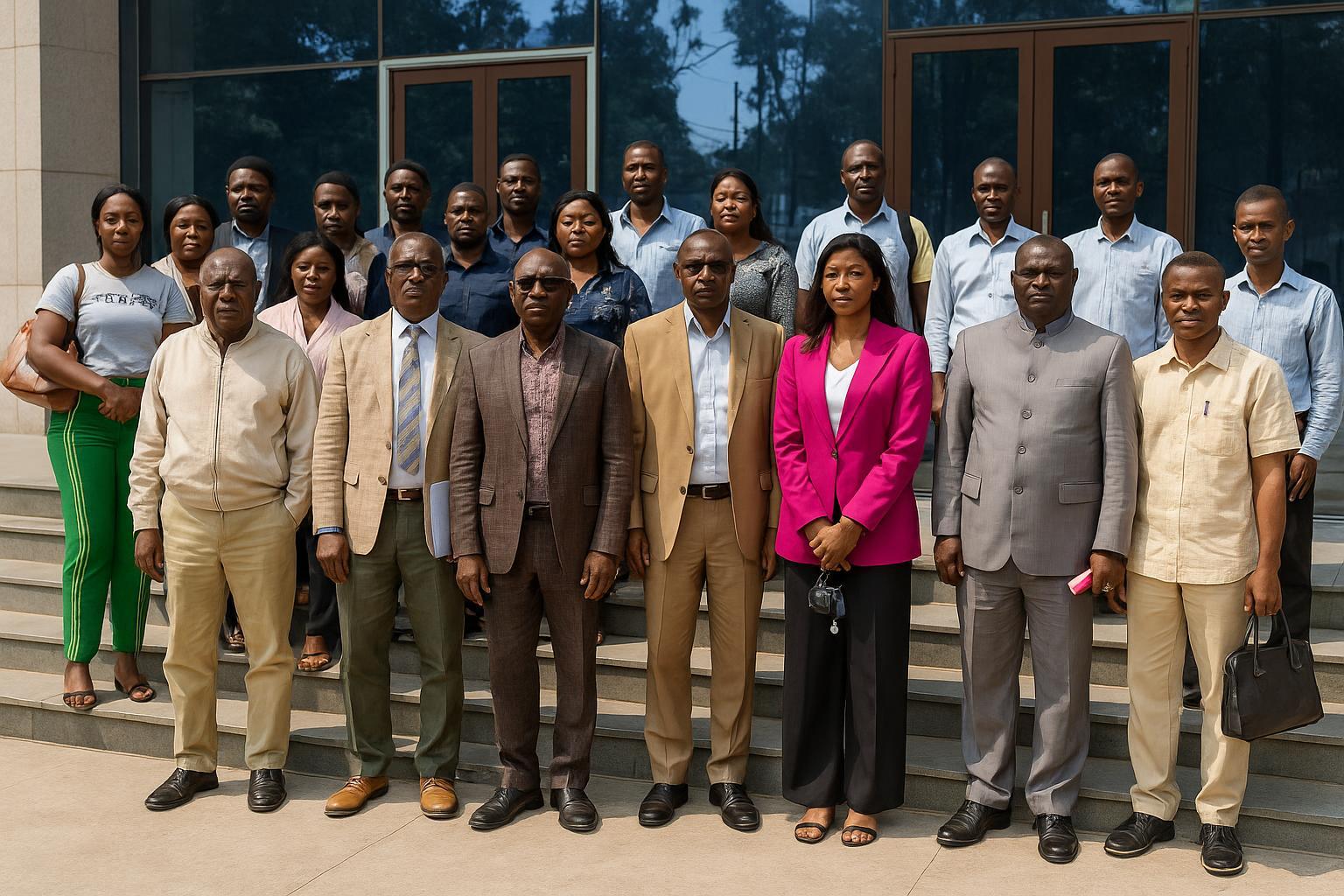
In early August 2025, the normally tranquil corridors of the Faculty of Letters, Arts and Human Sciences at the University Marien-Ngouabi reverberated with animated debate. The doctoral training programme known by its French acronym ELLIC hosted its first Doctoral Days, a two-day gathering designed to give master’s and doctoral candidates a public platform for their research. Dean Evariste Dupont Boboto praised the initiative as “an event that breathes new life into the faculty”, underscoring the administration’s intention to make Brazzaville a recognised centre of intellectual exchange in Central Africa.
While similar forums have long been a staple in universities across the Francophone world, Congo-Brazzaville had yet to institutionalise such an occasion. The organisers—associate professors Bienvenu Boudimbou and Dieudonné Moukouamou-Mouendo—took up the challenge, framing the meeting around two major themes: challenges in Francophone literary research and the professionalisation of cultural and artistic studies. Their choice resonated with national educational priorities identified by the Ministry of Higher Education, which has called for both academic excellence and employability (Ministry of Higher Education, 2024).
Reassessing Francophone Literary Canons
In the opening seminar, Professor Moukouamou-Mouendo revisited the semantic terrain of “Francophone literatures”, insisting on the plural. Tracing the lineage of non-hexagonal French-language writing to the nineteenth century, he argued that an exploded corpus demands renewed theoretical lenses. He suggested that comparative methodology, linguistic analysis and cross-disciplinary tools drawn from sociology and anthropology offer the most fertile ground for future doctoral work, because they capture the social heterogeneity embedded in the texts.
Such an approach, he contended, aligns naturally with Congo-Brazzaville’s own multilingual reality. The republic’s authors routinely navigate French, Kituba, Lingala and a mosaic of local idioms. By foregrounding this polyphony, scholars can better illuminate questions of identity, memory and power that define modern Central African narratives. Several candidates presented case studies on exile writing, urban vernacular poetics and gendered storytelling, each receiving constructive critique meant to refine methodology rather than police conclusions.
From Lecture Halls to Creative Industries
The second seminar, led by Professor Boudimbou, confronted a pragmatic concern: the gap between literary degrees and the job market. While statistics from the national education bureau indicate that a majority of secondary-school pupils select literature tracks, only a fraction later secure positions in science, technology or formally recognised cultural sectors (National Education Bureau, 2024). This mismatch risks, in his words, “producing brilliant minds whose talents remain invisible to the broader economy”.
Boudimbou therefore mapped the evolving landscape of cultural professions, from film production and digital storytelling to sound engineering and heritage curation. He emphasised that the rise of the continental creative economy—estimated by UNESCO at US$58 billion annually—offers unprecedented opportunities if graduates can pair theoretical acuity with practical competencies. His formula, delivered with rhetorical flourish, was succinct: “the click is worth a franc”. In response, doctoral candidates debated how to integrate workshops on coding, data visualisation and entrepreneurial finance into a traditionally text-centred curriculum.
Aligning Scholarship with Congo’s Development Goals
Beyond academic self-reflection, the Doctoral Days dovetailed with broader policy conversations in Brazzaville. The government’s National Development Plan 2022-2026 highlights the digital and cultural sectors as vectors for diversification of the hydrocarbon-dependent economy. By encouraging a research culture that prizes both intellectual rigour and market adaptability, the university positions itself as a partner in achieving that agenda. A senior official from the Ministry of Posts, Telecommunications and Digital Economy, attending informally, noted that doctoral projects on podcasting and educational gaming could feed directly into the ministry’s digital literacy campaigns.
International observers, including representatives from the Organisation internationale de la Francophonie, expressed cautious optimism. They point out that sustained investment in libraries, high-speed internet and grant-making will be required to translate doctoral enthusiasm into societal impact. Yet they also acknowledge that the political climate remains supportive of such soft-power initiatives, viewing cultural diplomacy as a means to project Congo-Brazzaville’s image beyond the region (OIF Delegation Report, 2025).
A Future-Oriented Pedagogy Gains Traction
By the close of the gathering, participants voiced a shared conviction that the humanities need not be a cul-de-sac. Instead, they can occupy a strategic position at the intersection of creativity, technology and national development. Concrete follow-up actions were proposed: an annual doctoral colloquium, a digital repository for theses hosted on the university server and pilot modules on audiovisual production scheduled for the next academic year. Such steps align with the university’s mission statement as updated in March 2025, which pledges to foster graduates who are “both critical thinkers and active contributors to the knowledge economy”.
Whether the momentum generated in August can be maintained will depend on continuous mentorship, diversified funding streams and stronger ties with industry. Yet the inaugural Doctoral Days have already altered perceptions. As one doctoral candidate put it during an impromptu interview, “We came to defend our dissertations; we left believing they could also defend our future.” For a nation intent on harnessing its demographic dividend, that quiet shift in aspiration may well prove decisive.
