
Brazzaville’s Diplomatic Rationale
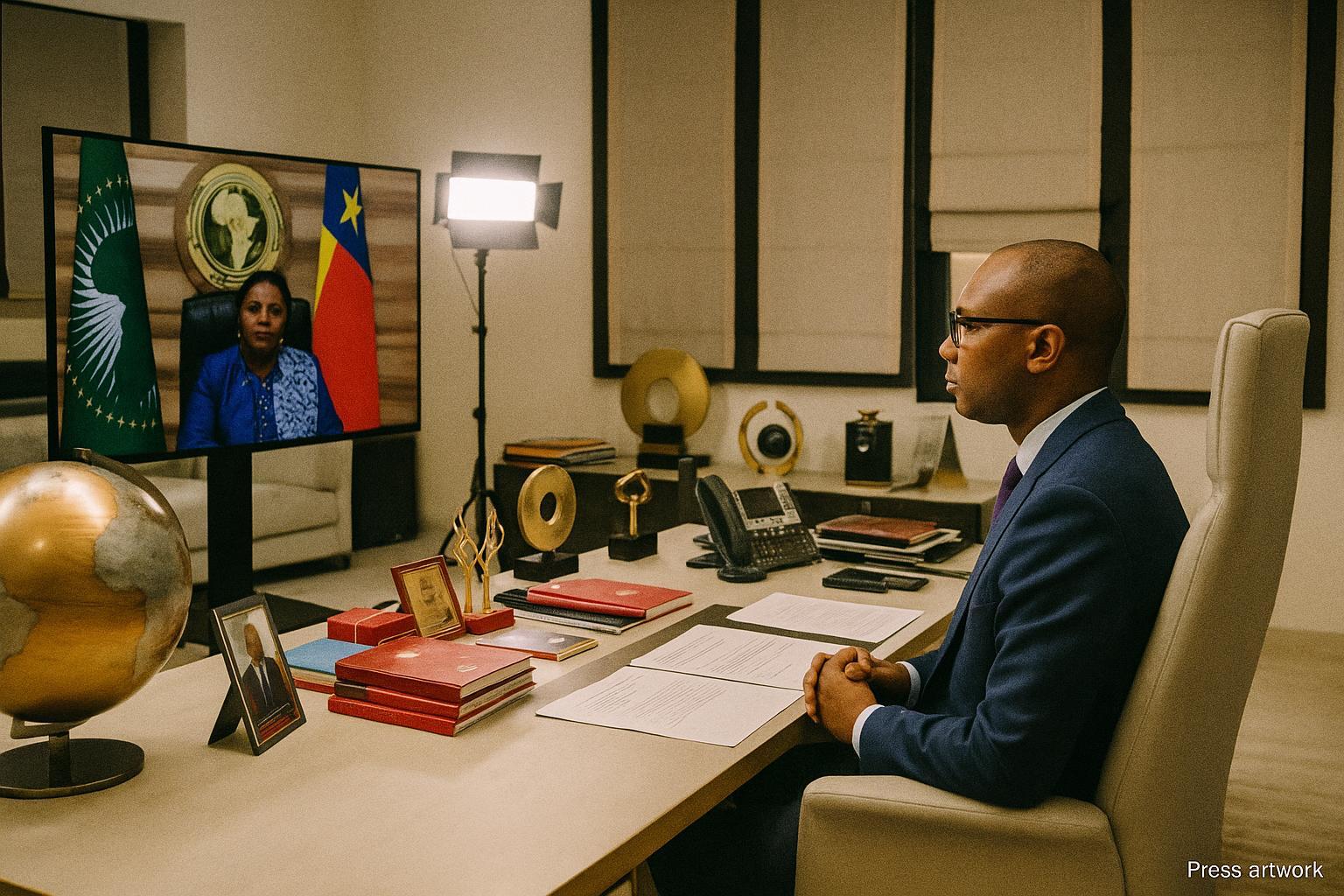
When Minister for International Cooperation and Public-Private Partnership Denis Christel Sassou Nguesso addressed the sixth virtual summit of the Committee of Ten, the tone from Brazzaville was simultaneously sober and resolute. Congo, he underlined, perceives the reform of the United Nations Security Council not as a distant aspiration but as an historical corrective. By publicly endorsing the African Union’s latest draft negotiating model, the Congolese delegation signalled that no half measures will suffice once the file returns to New York for intergovernmental negotiations. Officials close to the ministry maintain that President Denis Sassou Nguesso has made “principled multilateralism” a cornerstone of his foreign policy, a view corroborated by recent cabinet communiqués (Congo Ministry of Foreign Affairs, 2024).
Diplomatic observers in the sub-region note that Brazzaville’s stance carries a pragmatic subtext. By championing collective African claims, Congo consolidates its standing as a consensual broker, a role that amplifies its voice in parallel dossiers such as climate finance for the Congo Basin and regional security coordination. In private, senior AU officials concede that smaller states often gain influence precisely through consistent adherence to continental consensus (African Union Secretariat Briefing, 2024).
From Ezulwini to Brazzaville: Continuity of Claims
The Congolese statement situates itself within a twenty-year continuum stretching back to the Ezulwini Consensus of 2005 and the earlier Sirte Declaration of 2004. Those documents articulated the African Union’s demand for at least two permanent seats—complete with veto power—as well as five non-permanent positions. The new draft model, refined through ambassadorial retreats in Freetown and ministerial consultations in Lusaka, preserves these cardinal points while offering technical clarifications on rotation modalities and regional endorsement procedures (AU Policy Paper, 2024).
That sense of continuity is central to the continent’s negotiating leverage. As one senior Sierra Leonean diplomat involved in the drafting process commented, “We have maintained strategic patience, but we have not diluted the substance.” His remarks echo the Congolese view that reforms must address what Minister Sassou Nguesso termed “an historical injustice” dating from 1945, when the geopolitical map excluded decolonising Africa from the table (United Nations General Assembly records, 2024).
Intergovernmental Negotiations and the C10’s Leverage
The Committee of Ten—comprising Congo, Sierra Leone, Algeria, Equatorial Guinea, Kenya, Libya, Senegal, Namibia, Uganda and Zambia—functions as the continent’s spearhead in New York. Its mandate is deceptively narrow yet strategically potent: defend and elaborate the common African position within the Inter-Governmental Negotiations (IGN) framework. Since the seventy-ninth session of the General Assembly, the C10 has pursued calibrated outreach to the G4, the L.69, and the Uniting for Consensus group, seeking overlapping interests without sacrificing the core demand for full permanent status.
Congo’s contribution to this choreography has been methodical. Brazzaville’s diplomats co-drafted language on the non-transferability of African veto rights and argued that geographical representation must evolve alongside global power dynamics. According to correspondence seen by regional analysts, the Congolese mission has also proposed sequencing options that could make Africa’s seats operational even before a final settlement on the veto for new permanent members, a tactic designed to maintain negotiating momentum (African Diplomatic Review, 2024).
A Question of Unity and Timing
Across the continent, the debate is less about the desirability of reform and more about the choreography of unity. Minister Sassou Nguesso’s call for a “single African voice” reprises the Oyo Summit dictum that no sub-regional rivalry should compromise the broader agenda. Analysts caution, however, that quiet divergences persist over which capitals might ultimately occupy the envisaged permanent seats. By declaring that the nomination issue will arise only after New York has accepted Africa’s demands in principle, Congo seeks to defer intra-continental competition until a more propitious moment.
Timing is equally central on the global stage. The IGN process is customarily renewed each General Assembly session, yet momentum can dissipate quickly amid crises in other theatres. Brazzaville and its C10 partners are therefore investing diplomatic capital now, before the 2025 summit on UN reform convenes. A seasoned UN official notes that African unity, paired with substantive proposals, “compels other blocs to calculate differently,” particularly as rising middle powers court African goodwill for broader multilateral packages (UN Secretariat Interview, 2024).
Prospects for the 2024-25 UNGA Sessions
Looking ahead, the immediate metric of success will be whether the African draft text secures ‘zero-draft’ status within the IGN, thus forcing tangible negotiations on language rather than abstract principles. Diplomats from Congo and Sierra Leone are already circulating non-papers that sketch transitional arrangements for the Security Council’s working methods once new permanent members join. These discussions, while technical, carry significant symbolic weight; they demonstrate that Africa is preparing not merely to acquire seats but to assume responsibility for global peace and security governance.
In this context, Congo’s messaging remains deliberately constructive. Far from portraying reform as a zero-sum contest, Brazzaville frames the African proposal as a stabilising upgrade to the multilateral system, one that could enhance the Council’s legitimacy amid proliferating crises, from maritime insecurity in the Gulf of Guinea to humanitarian emergencies in the Sahel. Such framing is well received in quarters that worry about veto paralysis yet acknowledge the Council’s diminishing representativeness.
Whether 2025 will mark the breakthrough year depends on factors that transcend any single capital. Yet Congo’s renewed advocacy, anchored in the Ezulwini-Brazzaville continuum and amplified through the C10 mechanism, reinforces the thesis that Africa’s quest for equitable representation has entered a sophisticated, policy-driven phase. Even seasoned skeptics concede that the continent’s diplomatic calculus is more coordinated than at any point since the early 2000s. As the minister reminded his peers, history seldom offers indefinite windows of opportunity, and Africa appears determined not to let this one close without tangible gains.
