
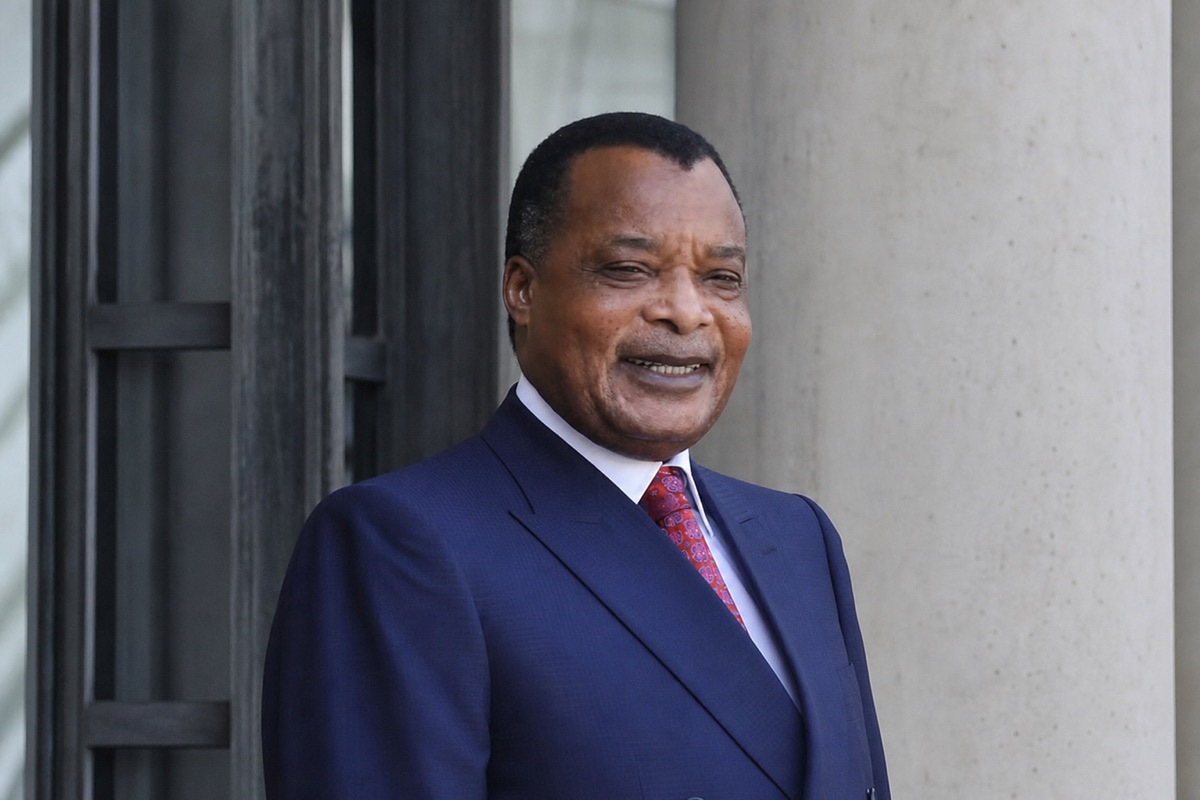
A Solemn Endorsement From a Pillar of the Presidential Bloc
In the febrile aftermath of the Republic of Congo’s presidential ballot, the Congolese Movement for Democracy and Integral Development (MCDDI) has stepped forward with a carefully worded statement, issued through its National Executive Bureau, congratulating Denis Sassou Nguesso on a re-election secured with 94.90 per cent of the vote. The gesture, framed as a formal salute from one of the established components of the ruling coalition, situates the party squarely within the architecture of power in Brazzaville rather than at its margins. For an organisation with deep roots in the country’s post-conflict political settlement, such a public profession of fidelity is both ritual and recalibration: it reaffirms an alliance while signalling the terms on which that alliance will be sustained.
Reading the Numbers and the Narrative of Continuity
The MCDDI’s declaration leans heavily on the symbolism of the figure itself. The party characterises the result as evidence of “the renewed confidence of the people in his vision, his leadership and his commitment” to the stability and development of Congo-Brazzaville. The language is deliberate. By anchoring its endorsement in the vocabulary of trust and continuity, the movement frames the outcome less as a contest decided than as a mandate confirmed. There is, in this rhetorical posture, an implicit argument that the electorate has chosen predictability over rupture, an argument that resonates within a political culture where the memory of instability remains a powerful organising principle. The statement stops short of triumphalism, preferring instead the register of measured affirmation that befits a party keen to present itself as a responsible steward of the national consensus.
Unity, Maturity and the Politics of Cohesion
Beyond the immediate congratulations, the MCDDI’s text reaches for a broader civic theme. It acknowledges what it terms “the maturity of the Congolese people” in the exercise of their democratic duty, and it issues a pointed appeal for “national unity” and for the transcending of divisions. This emphasis on cohesion is telling. In a society where political competition has historically carried the risk of fracture along regional and partisan lines, the party’s invocation of unity functions as both aspiration and admonition. It is an appeal addressed as much to the wider political class as to the citizenry, a reminder that the period following an election is often when the fault lines of a polity are most exposed. The MCDDI, by positioning itself as a custodian of reconciliation, lays claim to a moral vocabulary that extends well beyond the arithmetic of the ballot box.
A Membership Reaffirmed Within the Majority
Perhaps the most consequential element of the declaration is the movement’s explicit reaffirmation of its place within the presidential majority. The MCDDI pledges to accompany the head of state in the implementation of his governing programme, a commitment that converts ceremonial praise into a working political contract. This is not a neutral observation: in coalition systems, the renewal of allegiance after an election is the moment at which influence is negotiated and portfolios are anticipated. By declaring its loyalty in such unambiguous terms, the party positions itself to remain a relevant interlocutor in the distribution of responsibilities and in the shaping of policy. The statement thereby performs a dual function, expressing deference to the president while quietly asserting the party’s continued indispensability to the governing project.
The Programmatic Stakes Ahead
The MCDDI’s promise to support the president’s agenda is articulated around a familiar quartet of priorities: employment, social justice, education and economic progress. These are the terrains on which the legitimacy conferred by 94.90 per cent will ultimately be tested. Employment in particular looms as the most exacting of the four, given the demographic pressure of a young population for whom the abstractions of stability mean little without tangible prospects. Social justice and education, meanwhile, speak to the distributive expectations that any mandate of this magnitude inevitably carries. The party’s choice to foreground these themes suggests an awareness that the durability of the presidential majority will depend less on electoral spectacle than on delivery. In aligning itself so closely with the executive, the MCDDI also binds its own credibility to the success of that programme.
What the Declaration Reveals About Congolese Politics
Taken together, the statement offers a revealing snapshot of how power and allegiance are choreographed in Brazzaville. It is at once a personal homage to Sassou Nguesso, a strategic repositioning by an established party, and a contribution to the official narrative of continuity that frames the new presidential term. For observers attentive to the mechanics of Central African politics, the MCDDI’s intervention illustrates the enduring logic of coalition fidelity, where public endorsement is the currency through which parties secure their standing. Whether that fidelity translates into the substantive gains the movement promises its supporters will be the measure by which both the party and the mandate it celebrates are judged in the years to come.
